

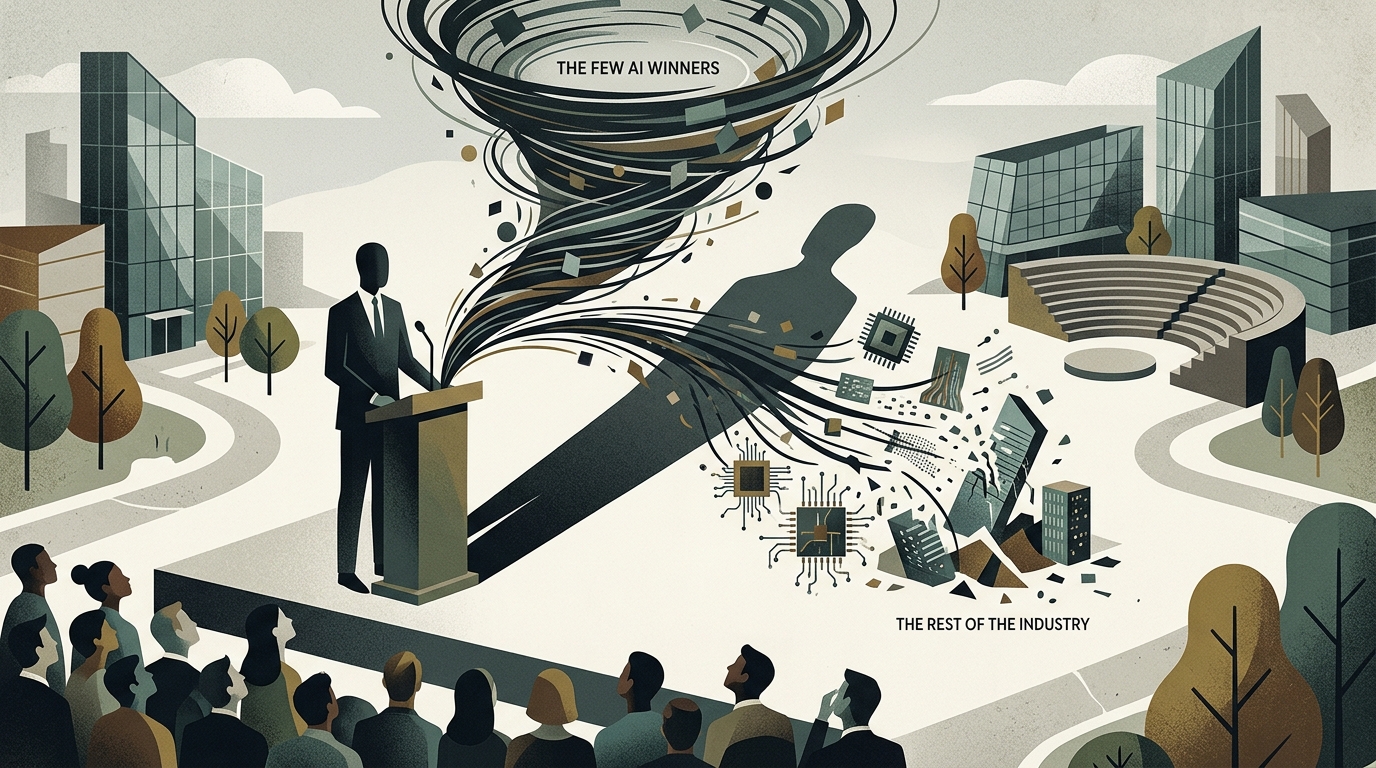
In an era where Artificial Intelligence (AI) is transforming every facet of the global economy, Satya Nadella, the man who steered Microsoft to the forefront of the AI race, has made a statement that resonated across international markets and regulatory bodies. During his recent address, Nadella warned that if the AI market ends up controlled by a mere handful of "winners," it could lead to the collapse of healthy competition and, ultimately, the destruction of the entire industry.
The "Winner-Takes-All" Trap
Nadella's concern centers on the economic model governing the development of Large Language Models (LLMs). Training these systems requires billions of dollars in investment for computing power and specialized talent. This massive barrier to entry creates a de facto oligopoly, where only companies with access to immense capital and vast cloud infrastructure can survive. The Microsoft CEO argued that if innovation is restricted to two or three players, the creativity of the broader ecosystem will run dry.
"The history of technology has taught us that closed ecosystems may thrive in the short term, but in the long run, they stifle progress," he noted. The irony was not lost on analysts, as Microsoft, through its partnership with OpenAI, is seen by many as the dominant player others are scrambling to catch. However, Nadella's rhetoric appears to target the need for open standards and interoperability, elements he considers essential for the survival of smaller software firms.
Regulatory Pressure and Strategic Maneuvering
This warning comes at a critical juncture, as antitrust authorities in the US, EU, and UK scrutinize partnerships between tech giants and leading AI labs. Many see Nadella's statements as an attempt to preempt regulatory interventions by portraying Microsoft as a "benevolent giant" that welcomes competition.
- The need to democratize access to GPUs.
- The importance of open-source models for safety and transparency.
- The risk of vertical integration, where one company controls everything from chips to the final application.
Nadella emphasized that the true value of AI will come from its application across thousands of different industries by thousands of different companies, rather than the concentration of intelligence in a single platform. If AI infrastructure becomes a "closed castle," the cost for other businesses will become prohibitive, leading to a form of digital feudalism.
The Future of the Ecosystem
For investors, the message is clear: the AI race is no longer just about who has the best model, but who can maintain a sustainable ecosystem around it. Microsoft seems to be betting on the logic of the "platform" rather than the "product." By providing tools via Azure to third parties, it seeks to ensure it remains indispensable, even as competition increases.
"If there is no room for new innovators to challenge the status quo, then the tech industry will lose its vitality," Nadella stated.
In conclusion, Satya Nadella's warning serves as a reminder that technological progress is neither self-evident nor guaranteed. It requires a framework that protects plurality and prevents the creation of insurmountable monopolies. Whether Microsoft's actions will align with these words remains to be seen, as the company continues to expand its influence into every corner of the digital universe.





