

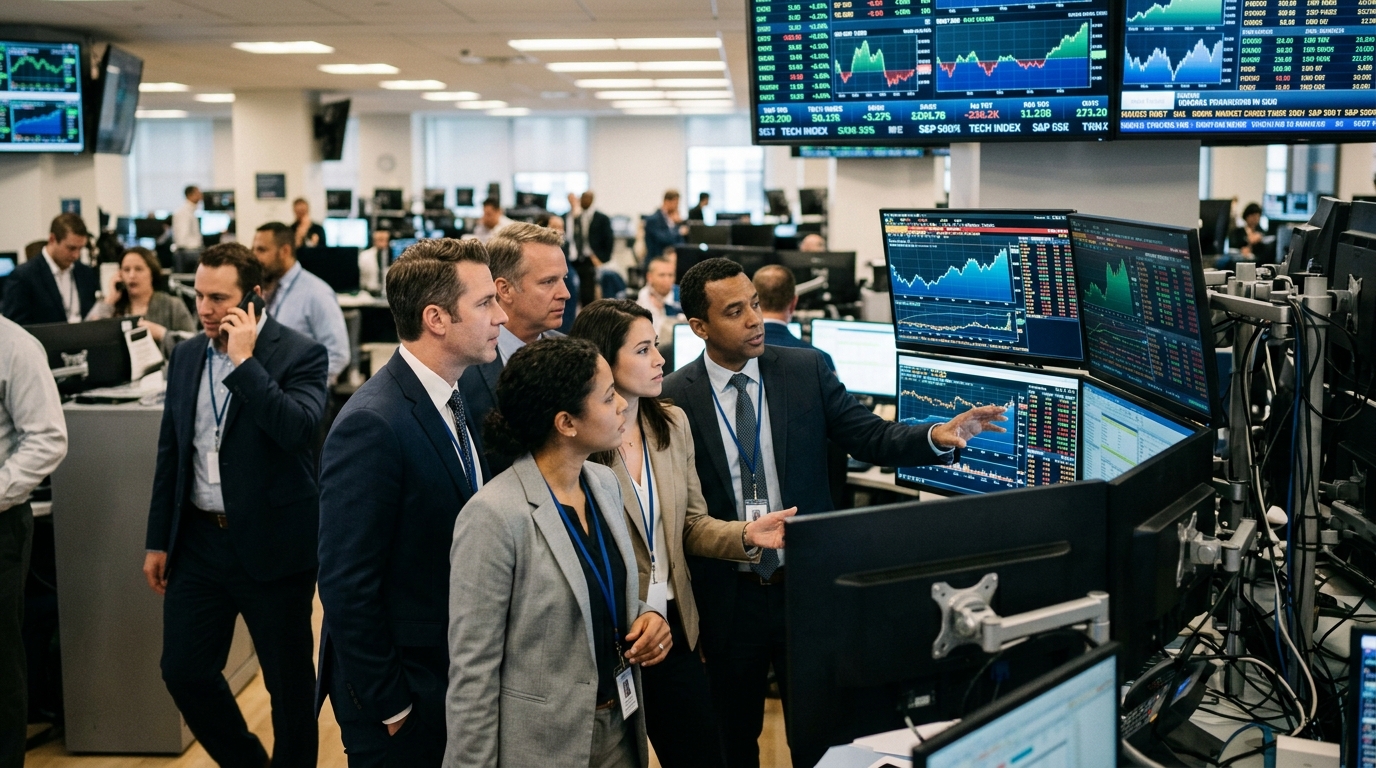
The era when an economics graduate could rely solely on knowledge of accounting or statistical analysis through traditional tools is officially over. The advent of Artificial Intelligence (AI) is not merely a technological addition; it is a structural upheaval reshaping the DNA of economic science and the labor market. As algorithms take over the processing of vast amounts of data in real-time, the economist's role is shifting from 'data collector' to 'strategic analyst' and 'ethical supervisor.'
The Economist's New Digital Toolkit
In today's competitive environment, familiarity with the Python programming language, an understanding of Machine Learning, and the ability to manage Big Data have become as vital as knowledge of macroeconomics. Businesses are now seeking professionals who can 'train' AI models to predict market trends, optimize supply chains, and identify financial fraud with precision that exceeds human capability.
- Predictive Analytics: Using AI to forecast consumer behavior and inflationary pressures.
- Accounting Automation: Offloading routine tasks to algorithms, freeing up time for high-value advisory services.
- FinTech and Blockchain: Integrating decentralized financial systems into traditional banking structures.
This shift does not only concern multinational corporations. Small and medium-sized enterprises (SMEs) are also required to adopt AI tools to remain viable, creating a massive demand for economists who can bridge the gap between technology and business strategy.
The Educational Challenge and Labor Market Dynamics
Academic institutions stand at a critical crossroads. Curricula that remain tethered to theories of the last century, without integrating digital skills, risk producing graduates who will be 'illiterate' in the new labor market. The need for interdisciplinarity is more urgent than ever. A modern economics student must understand not only how the market functions but also how the architecture of an algorithm can affect social justice or wealth distribution.
"AI will not replace the economist, but the economist who uses AI will replace the one who does not," market analysts frequently observe.
However, this transition also carries risks. Automation may render many low- and middle-skill jobs redundant, such as junior accountants or entry-level data analysts. The solution lies in reskilling and upskilling, with an emphasis on 'soft skills' such as critical thinking, negotiation, and ethical decision-making—areas where human intelligence still holds a distinct advantage.
Conclusions and Future Perspectives
The future of economic studies is inextricably linked to technological evolution. Countries that adapt quickly have the opportunity to lead this transformation, provided there is speed in adjusting educational structures and close cooperation between the academic community and the market. Artificial Intelligence offers the tools for a more equitable and efficient economy, as long as it is used with wisdom and a strategic plan. Young economists are called to become the architects of this new world, blending classical wisdom with digital innovation.





