Nvidia continues to shatter expectations, providing Wall Street with fresh reasons to believe in the momentum of the AI boom. For the second quarter of fiscal 2027, which ended July 26, 2026, the company reported revenue of $96.22 billion, a 106% year-on-year increase. Most significantly, Nvidia forecasts revenue growth of approximately 70% for the fiscal year ending January 2028, far outpacing analyst estimates of 44%. The long-term forecast boosted the stock, which rose nearly 5% in after-hours trading after an initial 1% dip.
Data Center Dominance and the Amazon Alliance
The Data Center division remains the primary engine, generating $89 billion in revenue, up 117%. For the third quarter, the company projects sales of $108 billion. Demand is expanding beyond major cloud providers; AI development labs are expected to represent a quarter of the business next year, while "neo-cloud" companies are scaling infrastructure significantly. Furthermore, a partnership with Amazon Web Services involves the installation of 2 million additional GPUs through 2028.
Production Constraints and the Cost of Success
Despite record figures, Nvidia faces challenges. CFO Colette Kress noted that memory shortages and production constraints limit the ability to meet all demand. These factors, along with rising component costs, are expected to lower gross margins to 71%-72% in the fourth quarter, compared to 75% in the second quarter and a projected 74% in the third.
The Vera Rubin Platform and China
The new Vera Rubin platform is a key upcoming test, with Nvidia estimating it will account for about 20% of data center revenue in the current quarter. However, China remains an uncertainty; the company's forecasts exclude data center revenue from that market due to ongoing export restrictions on advanced technology.
The Rumored $12.9 Billion Deal
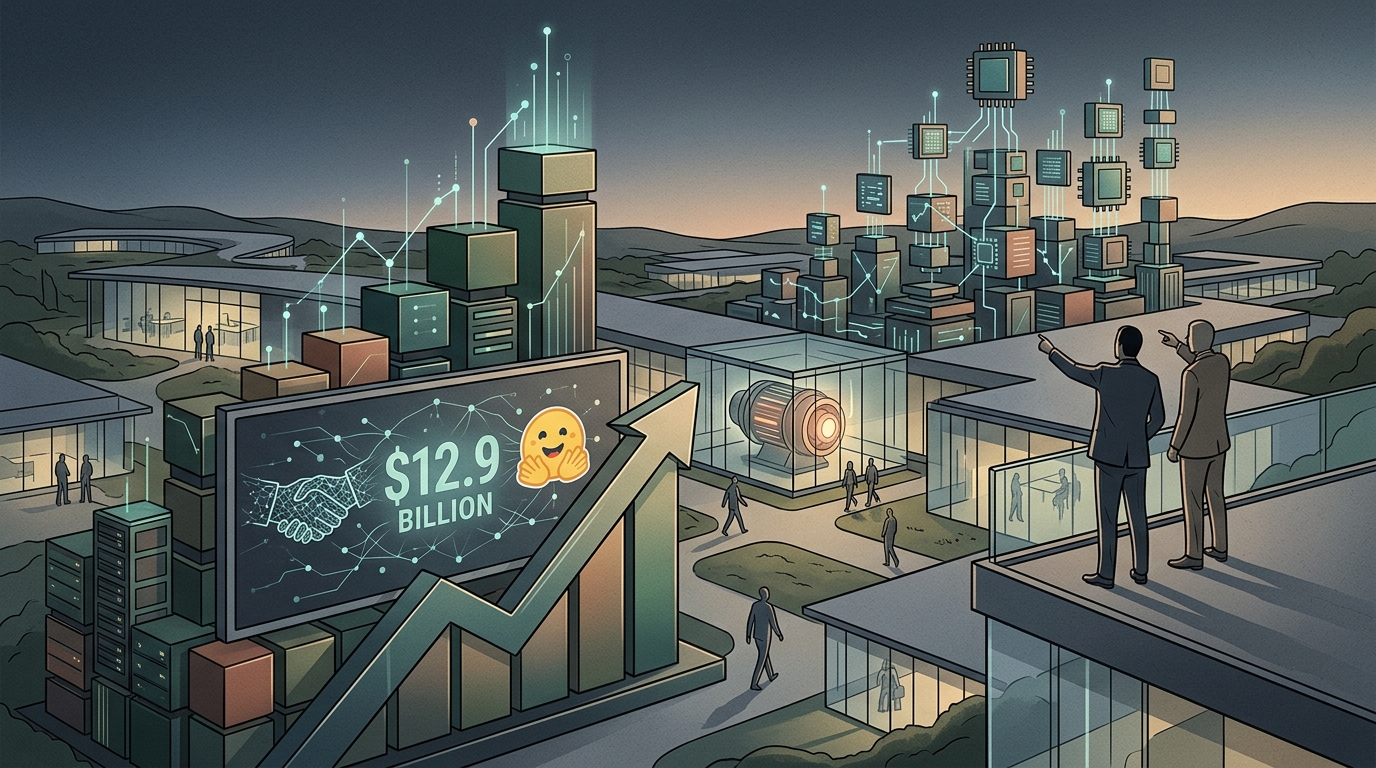
Reports have also surfaced regarding a major acquisition. According to The Information, Nvidia has allegedly agreed to buy the Hugging Face platform for $12.9 billion. While not officially confirmed, such a move would give Nvidia closer ties to the developer community and the AI models that drive hardware demand.
Jensen Huang describes artificial intelligence as a technology that is now transforming computing power into productivity and revenue, signaling a new phase for the market where infrastructure spending remains robust.