

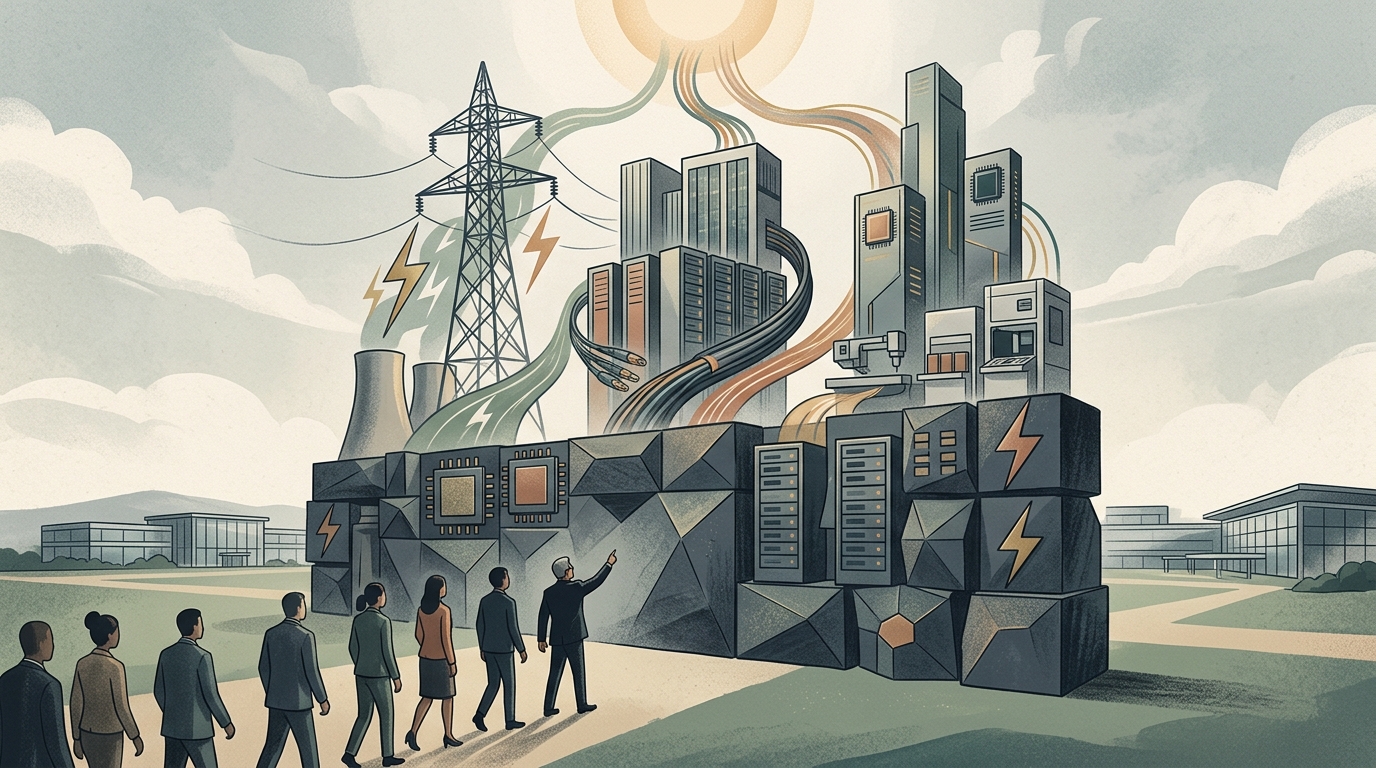
In the high-stakes world of technology, Jensen Huang's name has become synonymous with the meteoric rise of Artificial Intelligence. However, in his latest commentary, the Nvidia chief executive didn't just tout the capabilities of the new Blackwell chips; he highlighted a critical bottleneck that threatens to stifle the global digital revolution: infrastructure. As AI models grow exponentially larger, the sheer need for raw processing power is no longer the only hurdle. Power management and thermal dissipation have emerged as the new gatekeepers of progress.
The Shift from Software to Physical Constraints
For years, the AI narrative focused on algorithms, neural architectures, and datasets. But as Huang emphasized, we have entered the era of "AI Factories." These massive data centers do not merely require thousands of GPUs; they demand a comprehensive support architecture capable of sustaining unprecedented levels of power consumption. Nvidia is no longer just selling silicon; it is selling entire systems that resemble industrial power plants more than traditional server racks.
The problem is simple to state but complex to solve: modern GPUs consume vast amounts of electricity and generate heat that traditional air-cooling systems simply cannot handle. This creates a massive vacuum in the market for companies specializing in electrical infrastructure and liquid cooling. Without these physical solutions, the promise of AI-driven productivity will remain trapped within overheated, underpowered data centers.
Vertiv Holdings: The Liquid Cooling Vanguard
The first company emerging as a primary beneficiary of this bottleneck is Vertiv Holdings (VRT). Vertiv specializes in the infrastructure equipment that keeps data centers running, with a specific focus on thermal management. As Nvidia pushes liquid cooling as a mandatory requirement for its high-end Blackwell systems, Vertiv finds itself in an enviable position. The demand for its solutions is so high that analysts anticipate a multi-year growth cycle, driven by Big Tech's (Microsoft, Google, Meta) urgent need to retrofit and expand their physical facilities.
"Cooling is no longer a secondary utility; it is the fundamental enabler of computational density," note industry analysts.
Arista Networks: The Nervous System of the Cluster
The second major bottleneck is networking. When thousands of GPUs must communicate in real-time to train a model like GPT-5, the speed of data transfer within the data center becomes the limiting factor. Arista Networks (ANET) is a leader in high-performance networking solutions. While Nvidia dominates with its proprietary InfiniBand protocol, Arista is championing Ethernet as a more flexible, open-standard alternative, gaining significant traction in hyperscale AI environments. Its ability to minimize latency makes it an essential partner for any enterprise looking to scale its AI infrastructure.
Eaton Corporation: Powering the Revolution
Finally, no AI revolution can occur without a stable and abundant supply of electricity. Eaton Corporation (ETN) is a power management giant providing everything from transformers to uninterruptible power supplies (UPS). The electrical grids in the US and Europe are under immense strain due to the surge in data center demand, and Eaton is the company tasked with modernizing this grid. Its strategic positioning makes it a robust, defensive, yet high-growth play for those looking to invest in the physical reality of the tech boom.
Analysis: The Infrastructure Supercycle
Jensen Huang’s warning serves as a wake-up call for the broader market. AI is no longer just about code and clouds; it is about steel, copper, water, and electricity. As investors search for the "next Nvidia," the answer may not lie in another semiconductor firm but in the companies building the physical foundations of our digital future. 2026 is shaping up to be the year of the "Great Infrastructure Buildout," and companies like Vertiv, Arista, and Eaton are poised to be the primary beneficiaries of this structural shift.





