

In the high-tech corridors of Hangzhou, a recent internal directive from Alibaba Group Holding Ltd. has sent ripples through the global tech community. The e-commerce and cloud giant has officially moved to block its employees and developers from using Claude Code, the sophisticated AI-powered coding assistant developed by the US-based startup Anthropic. This decision is not merely a corporate policy update; it is a profound symptom of the deepening technological schism between the world’s two largest economies.
Data Sovereignty and the Fear of IP Leakage
Claude Code, backed by significant investments from Amazon and Google, represents the cutting edge of agentic AI—tools capable of writing, debugging, and refactoring complex software sequences with minimal human intervention. For Alibaba’s leadership, however, this utility comes with an unacceptable risk profile. The primary concern centers on data exfiltration and the protection of intellectual property (IP).
When developers interact with a Large Language Model (LLM) like Claude, snippets of proprietary code are transmitted to external servers for processing. Given that Anthropic’s infrastructure is rooted in the United States, Alibaba fears that its sensitive internal logic could inadvertently be used to train future iterations of American AI models. In an era where software architecture is a closely guarded competitive advantage, such a leak is viewed as a strategic vulnerability. Furthermore, China’s stringent Data Security Law mandates that critical data must remain within national borders, putting Alibaba in a precarious position if it continues to rely on foreign AI services.
The Push for Domestic Alternatives: The Qwen Factor
The ban on Claude Code serves a dual purpose: it acts as a defensive shield and a catalyst for Alibaba’s own AI ambitions. The company has been aggressively promoting its own suite of LLMs, known as Qwen (Tongyi Qianwen), which it claims rivals the performance of GPT-4 and Claude in specific benchmarks. By cutting off access to Western tools, Alibaba is effectively forcing its massive workforce of engineers to dogfood its internal products.
This "closed-loop" development environment is essential for the refinement of Chinese AI. As thousands of Alibaba developers switch to Qwen-based coding assistants, the resulting feedback and data will theoretically accelerate the model's maturity. This aligns perfectly with Beijing’s broader mandate for "technological self-reliance," a policy born out of the necessity to survive US export controls on high-end semiconductors, such as those produced by Nvidia. If China cannot rely on American hardware, it must ensure its software stack is entirely autonomous.
The Geopolitical Chessboard: AI as a Zero-Sum Game
The timing of Alibaba's move is significant. The Biden administration has been exploring new regulatory frameworks to limit Chinese firms' access to US-based AI via cloud computing providers—a move often referred to as the "cloud loophole" closure. Washington argues that advanced AI models could be weaponized for cyber warfare or biological research, posing a threat to national security. Conversely, Beijing views these restrictions as a coordinated effort to stifle China's economic and technological ascent.
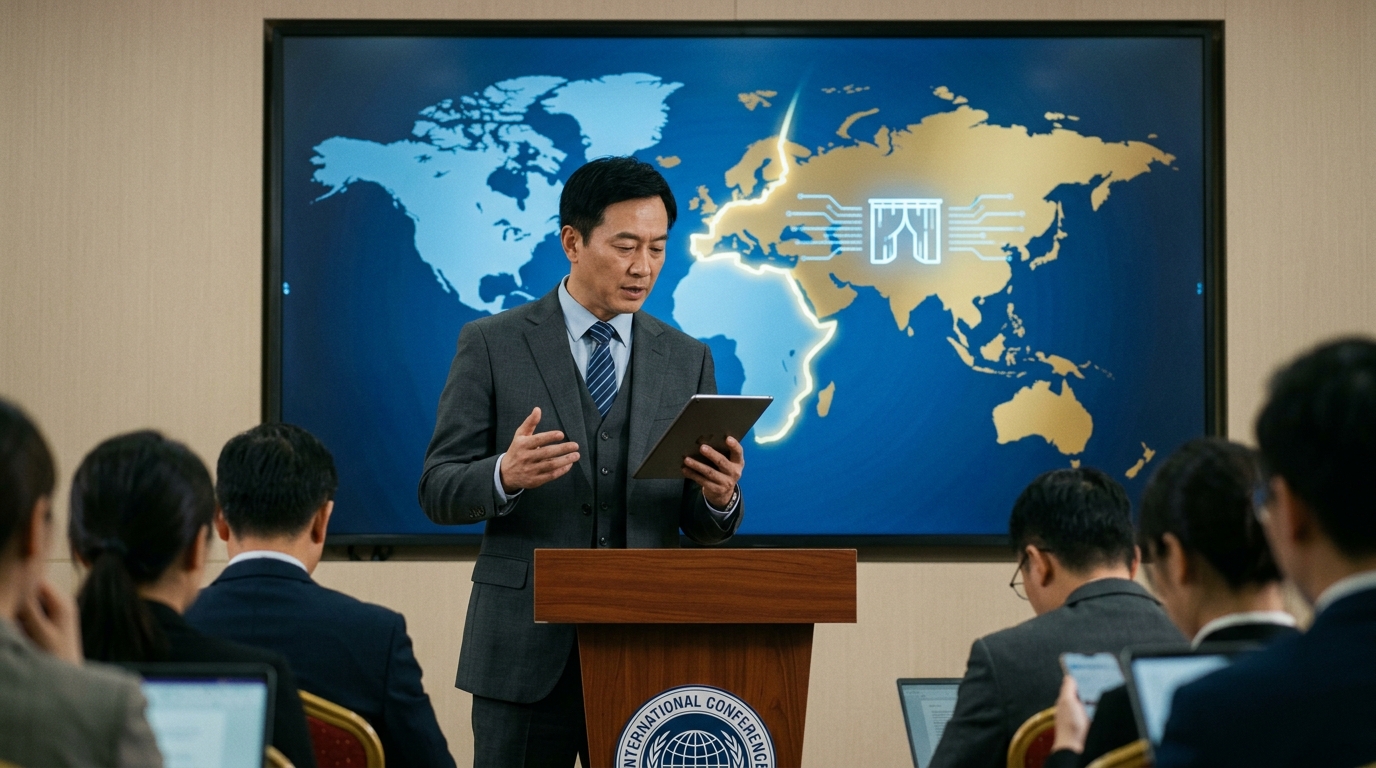
What we are witnessing is the emergence of a "Digital Iron Curtain." On one side, a Western ecosystem led by OpenAI, Anthropic, Google, and Meta; on the other, a Chinese ecosystem anchored by Alibaba, Baidu, Tencent, and Huawei. This bifurcation threatens to end the era of global open-source collaboration. For decades, the tech industry thrived on the free exchange of ideas and code across borders. Now, developers are being siloed into nationalistic tech stacks, using different tools, programming standards, and security protocols.
Conclusion: The End of Technological Universalism
Alibaba’s decision to block Claude Code marks the end of an era of naive globalism in the software industry. In this new geopolitical landscape, AI is viewed through the lens of zero-sum competition. For Alibaba’s engineers, the convenience of using Silicon Valley’s best tools is being sacrificed for the sake of national security and corporate independence. The long-term implications are clear: the world is moving toward two distinct AI realities. Whether these separate ecosystems can innovate as effectively as a unified global community remains to be seen, but the walls are undeniably going up, and they are built of code.





