In the high-stakes world of global finance, where a single decimal point can mean the difference between billions, freedom is often the enemy of precision. Morgan Stanley, a titan of Wall Street, has reached a conclusion that challenges the prevailing narrative of 'autonomous' AI agents. In its quest to automate profit and loss (P&L) reconciliation—one of banking’s most tedious and risk-laden workflows—the bank discovered that the path to success lies not in granting the machine total autonomy, but in strictly curtailing it.
The Challenge of P&L Reconciliation
P&L reconciliation is not merely a bookkeeping task; it is the backbone of banking integrity. Every day, banks must ensure that the figures on their ledgers match actual transactions and market movements. Any discrepancy must be identified, explained, and resolved within tight regulatory deadlines. Traditionally, this work required armies of analysts scouring vast datasets, searching for the proverbial needle in the haystack of accounting errors.
Morgan Stanley chose this process as the proving ground for the next generation of AI agents. However, instead of letting a Large Language Model (LLM) 'think' freely, the bank built a sophisticated 'orchestration' system. According to recent reports, this approach allowed the bank to slash the workload by 50%, while simultaneously eliminating the risk of 'hallucinations' that plague generative AI.
Less Autonomy, More Reliability
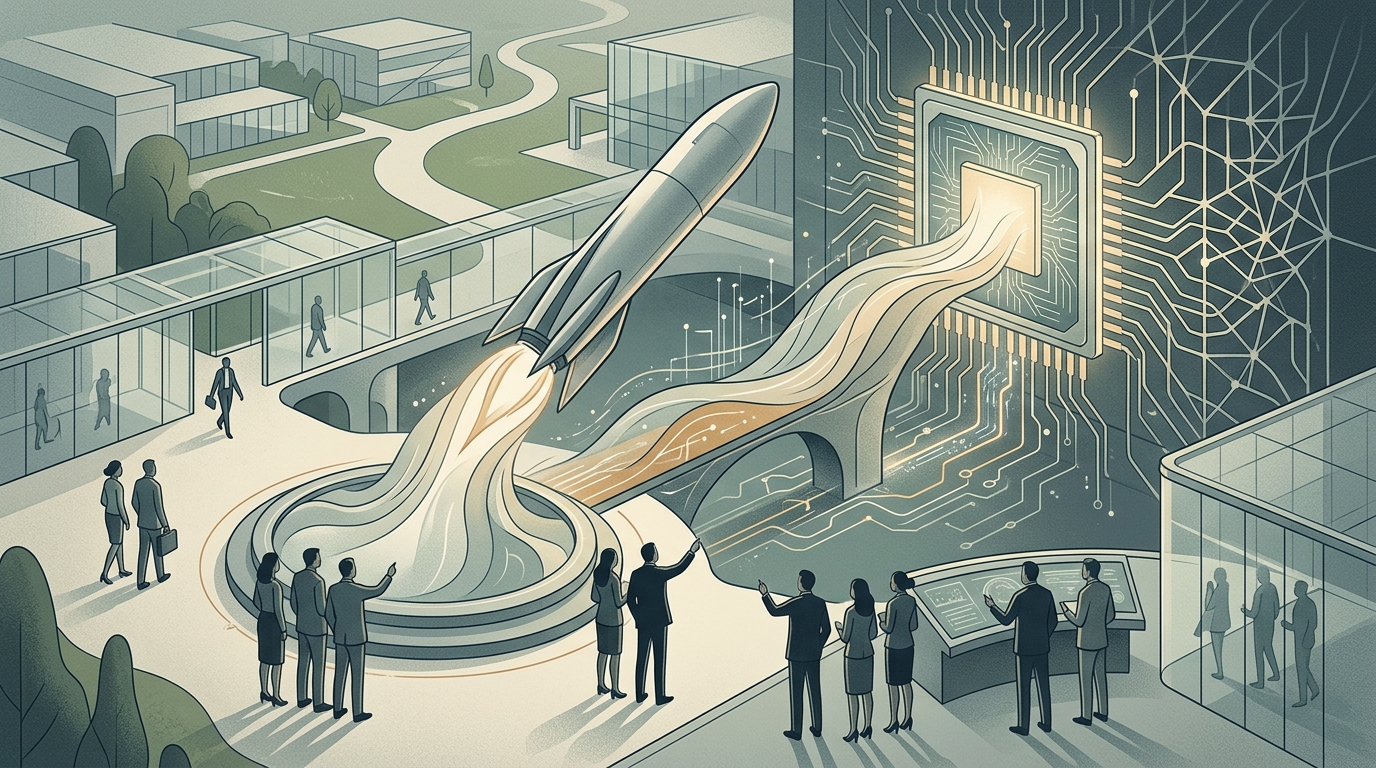
The key to their success lies in an approach Morgan Stanley calls 'constrained autonomy.' Instead of an AI agent deciding for itself which steps to follow, the system is built on predefined workflows. The agent is tasked with executing specific functions at each stage, with outputs immediately verified by deterministic algorithms and, where necessary, human oversight.
"We don’t want an agent improvising with our financial data. We want an agent that follows the protocol at the speed of light," sources within the organization suggest.
This strategy stands in stark contrast to Silicon Valley’s push for 'agentic AI,' where models are given high-level goals and left to determine the intermediate steps. For Morgan Stanley, autonomy is synonymous with risk. In their model, AI functions more like a highly intelligent assembly-line worker than a free-roaming analyst.
The Architecture of Orchestration
The technical implementation relies on a modular architecture. Each segment of the reconciliation process—from data retrieval to anomaly detection—is assigned to specialized sub-models. These models do not communicate haphazardly. Instead, a central 'orchestrator' manages the flow of information, ensuring each step is completed with 100% accuracy before proceeding.
- Data Retrieval: Connecting to multiple legacy sources and databases without manual intervention.
- Variance Analysis: Using AI to identify the 'why' behind a numerical discrepancy by comparing historical patterns.
- Verification: A secondary AI system audits the conclusion of the first, acting as a built-in compliance officer.
The 'human-in-the-loop' methodology remains central. The AI does not make the final decision to correct an error; instead, it presents the human analyst with a fully documented proposal, reducing the time required for decision-making from hours to mere minutes.
Conclusion: The Future of Enterprise AI
Morgan Stanley’s move serves as a blueprint for the corporate world. While the allure of fully autonomous AI is strong, the reality of enterprise operations demands control and accountability. Reducing the workload by 50% in such a critical process proves that AI can transform banking, provided we 'train' it to operate within the boundaries of human logic and regulatory frameworks. The future does not belong to the freest agents, but to the most disciplined ones.