

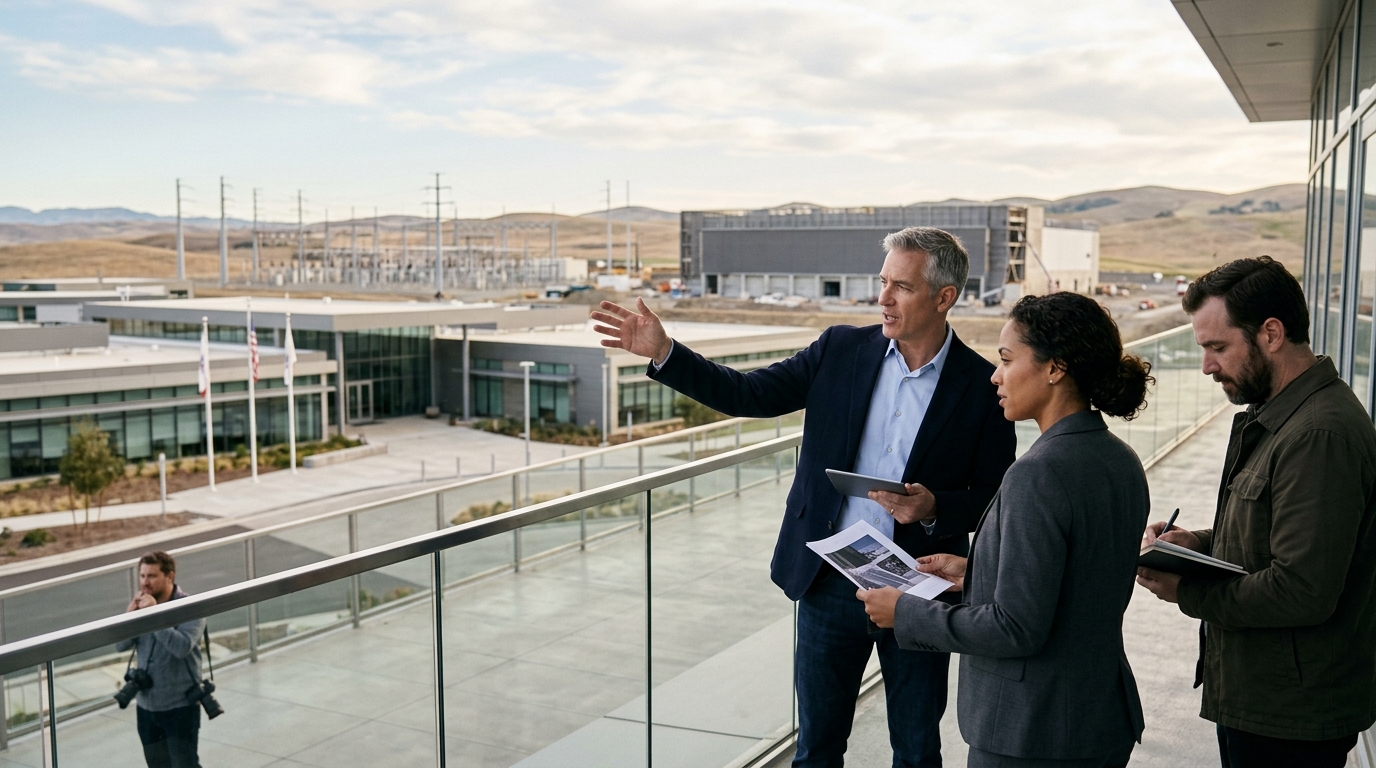
In a move that underscores the tech industry's insatiable hunger for raw computing power, Meta Platforms Inc. has entered into a multi-billion dollar multi-year agreement with Crusoe Energy Systems. The deal, first reported by Bloomberg and confirmed by Reuters, marks a significant shift in Mark Zuckerberg’s strategy as he looks to secure the infrastructure necessary for the next generation of artificial intelligence.
Meta will lease a massive data center complex in Texas, specifically designed to house the high-density GPU clusters required for training and deploying large language models. This isn't just another real estate deal; it is a strategic maneuver in an era where the bottleneck for AI progress has shifted from algorithmic ingenuity to energy availability and hardware access. Crusoe, a pioneer in utilizing stranded energy, provides Meta with a path to scale that bypasses many of the traditional constraints of the power grid.
The Strategic Value of Crusoe Energy
Crusoe Energy Systems rose to prominence by solving a specific environmental and economic problem: natural gas flaring. In many oil fields, gas is produced as a byproduct and, lacking pipelines, is simply burned off, wasting energy and emitting pollutants. Crusoe captures this gas to generate electricity on-site, powering modular data centers. While the company initially focused on cryptocurrency mining, the AI boom has provided a far more lucrative and strategic application for its technology.
For Meta, partnering with Crusoe offers a critical advantage: speed to market. Building a hyper-scale data center from scratch can take years and face immense regulatory scrutiny regarding power consumption. By leveraging Crusoe’s expertise in rapid deployment and off-grid power, Meta can accelerate the training of Llama 4 and beyond. Sources indicate the Texas facility will be a flagship site, capable of supporting tens of thousands of Nvidia’s Blackwell-class GPUs, which are essential for maintaining Meta's competitive edge against rivals like OpenAI and Google.
The Energy Crisis Looming Over Silicon Valley
As of June 2026, the AI industry is facing a reckoning. The efficiency gains in software are being overwhelmed by the sheer scale of computation. Meta’s capital expenditures (CAPEX) have reached unprecedented levels, reflecting the reality that AI is an infrastructure-heavy business. The deal with Crusoe highlights a growing trend: Big Tech companies are effectively becoming energy conglomerates.
This trend is visible across the board. Microsoft has recently made headlines with its focus on small modular reactors (SMRs) and geothermal energy, while Amazon has acquired data centers directly linked to nuclear power plants. Meta’s choice of Crusoe suggests a focus on unconventional energy sources that can be deployed faster than traditional grid upgrades. The American power grid is aging and increasingly congested; by going to the source of the energy—even in remote oil fields—Meta is insulating itself from the vulnerabilities of the public utility system.
Environmental Implications and Ethical Dilemmas
The narrative of "green AI" is a complex one. Crusoe argues that its process is environmentally beneficial because it combusts methane—a potent greenhouse gas—more efficiently than traditional flares. However, environmental advocates argue that this technology essentially subsidizes the fossil fuel industry by providing a revenue stream for what would otherwise be waste. For Meta, the calculation is clear: the risk of falling behind in the AI race outweighs the potential backlash over its energy sources.
Furthermore, the concentration of such massive computational resources within a handful of corporations raises profound questions about digital sovereignty and equity. When a single entity controls the energy, the hardware, and the algorithm, the barriers to entry for newcomers become nearly insurmountable. Meta’s public commitment to "open-source" AI via the Llama models is a clever strategic play to build an ecosystem, but the physical reality of its infrastructure remains a tightly guarded corporate fortress.
The Future of AI Infrastructure
The Meta-Crusoe deal is likely the first of many such partnerships as the industry hunts for the last remaining pockets of cheap, available power. We are witnessing a "land grab" for energy-rich sites, from the Permian Basin to the volcanic regions of Iceland. AI is no longer a ethereal concept living in the cloud; it is a physical entity made of concrete, copper, and cooling systems.
In conclusion, Meta’s massive commitment to Crusoe Energy signals that the path to Artificial General Intelligence (AGI) is paved with infrastructure innovation. Crusoe has successfully pivoted from a niche crypto-service to a linchpin of the global AI supply chain. As we move deeper into 2026, the success of these companies will be measured not just by their stock price, but by their ability to keep the lights on in the world’s most powerful server rooms. The question remains: can the planet sustain the energy demands of our digital ambitions?





