

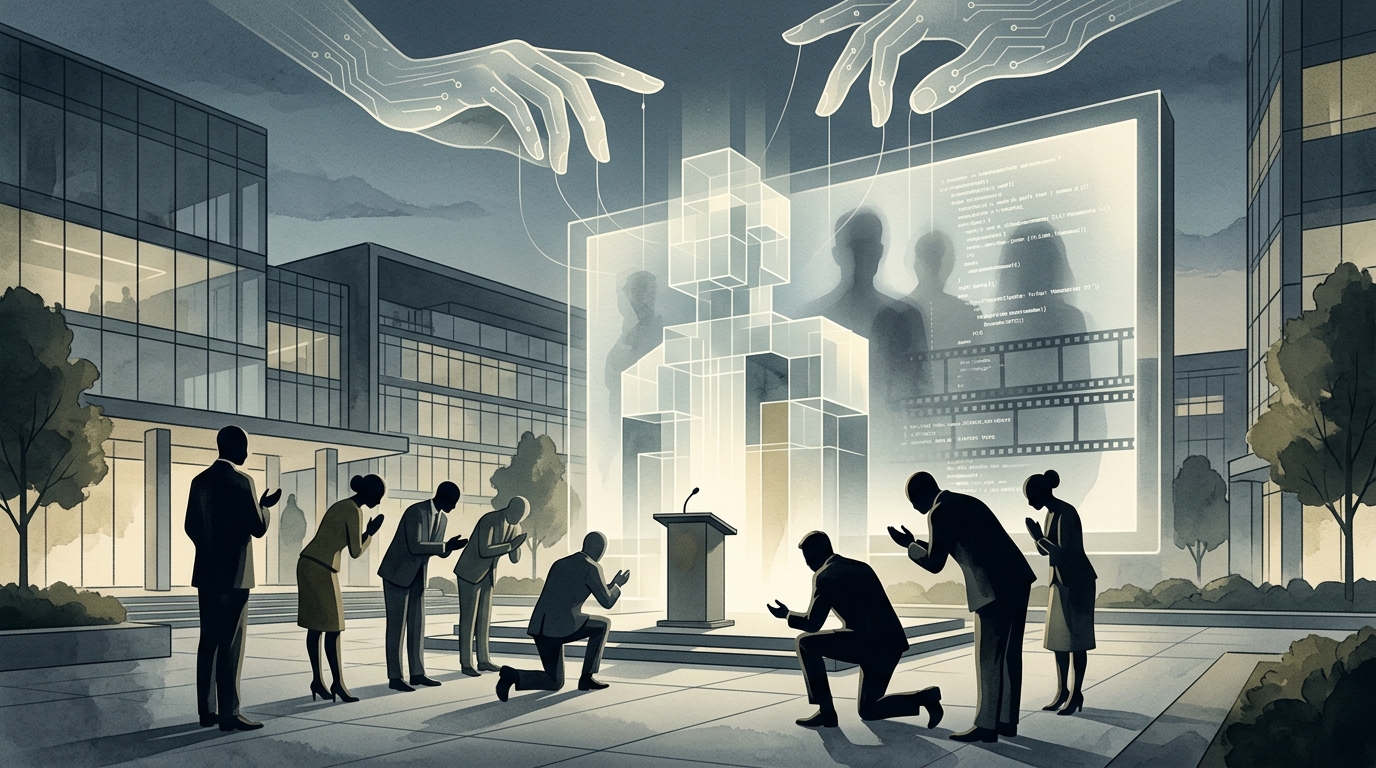
The history of cinema is replete with bold portraits of powerful men who reshaped the world, from 'Citizen Kane' to 'The Social Network.' However, in the case of Sam Altman, the man leading the artificial intelligence revolution via OpenAI, Hollywood seems to be losing its traditional nerve. The news that giants like Netflix, A24, and Warner Bros. (via Clockwork) have reportedly passed on the opportunity to distribute Luca Guadagnino’s upcoming film 'Artificial' raises questions that extend far beyond the narrow confines of the film market.
The Fear of the Tech 'Big Brother'
'Artificial,' directed by the visionary Luca Guadagnino (known for 'Challengers' and 'Call Me By Your Name'), is not a mere biography. It is an attempt to map the meteoric rise of Altman and the internal power struggle at OpenAI that led to his brief ousting and triumphant return. Despite the script being hailed as exceptional and the director being at the peak of his career, major studios are backing away. Why?
The answer lies in one word: dependency. Hollywood no longer views OpenAI simply as a subject for discussion, but as an indispensable strategic partner. With the advent of tools like Sora, which promises to revolutionize visual effects and content production, no studio wants to risk their relationship with the man who holds the keys to their future profitability. This 'bending of the knee' is not just artistic; it is primarily a calculated business move.
The 'Social Network' Comparison
When David Fincher and Aaron Sorkin created 'The Social Network' in 2010, Facebook was already a behemoth, but the film industry still felt powerful enough to critique Mark Zuckerberg. Today, the landscape has shifted radically. OpenAI is not just a social media platform; it is the infrastructure upon which the entire future of entertainment might be built. The studios' reluctance to back a film that might depict Altman in shades of grey suggests a new form of corporate self-censorship.
- OpenAI controls technologies that could reduce production costs by millions of dollars.
- Legal challenges from a figure with Altman's influence could freeze a production for years.
- OpenAI’s relationship with Microsoft further complicates matters, as Microsoft is a key player in the cloud computing services studios rely on.
The Outliers: Neon and Mubi
While the 'majors' are retreating, smaller players like Neon and Mubi are reportedly showing interest. These companies, which often invest in more artistic and provocative cinema, might be the only ones capable of bearing the weight of such a film. However, the question remains: can a movie about the most significant man of our era have the impact it deserves without the distribution muscle of a Netflix or a Warner Bros.?
Hollywood’s stance on 'Artificial' serves as a dangerous omen. If creators cannot critique or explore the lives of tech leaders without fear of retaliation or being locked out of AI tools, then art risks becoming a mere subsidiary of Silicon Valley’s PR departments. Sam Altman’s story is the story of our time, and the fact that the entertainment industry hesitates to tell it says more about Hollywood than it does about Altman himself.
Conclusion: A New Era of Subservience?
As artificial intelligence becomes embedded in every facet of the creative process, the lines between creator and tool are blurring. OpenAI isn’t just offering software; it is offering the future. And as it turns out, Hollywood would rather have a seat at Altman’s table than a seat in a screening room for a film that challenges him. 'Artificial' may eventually see the light of day, but its journey so far proves that the true protagonist of our era isn't the human, but the algorithm and the raw power it commands.





