

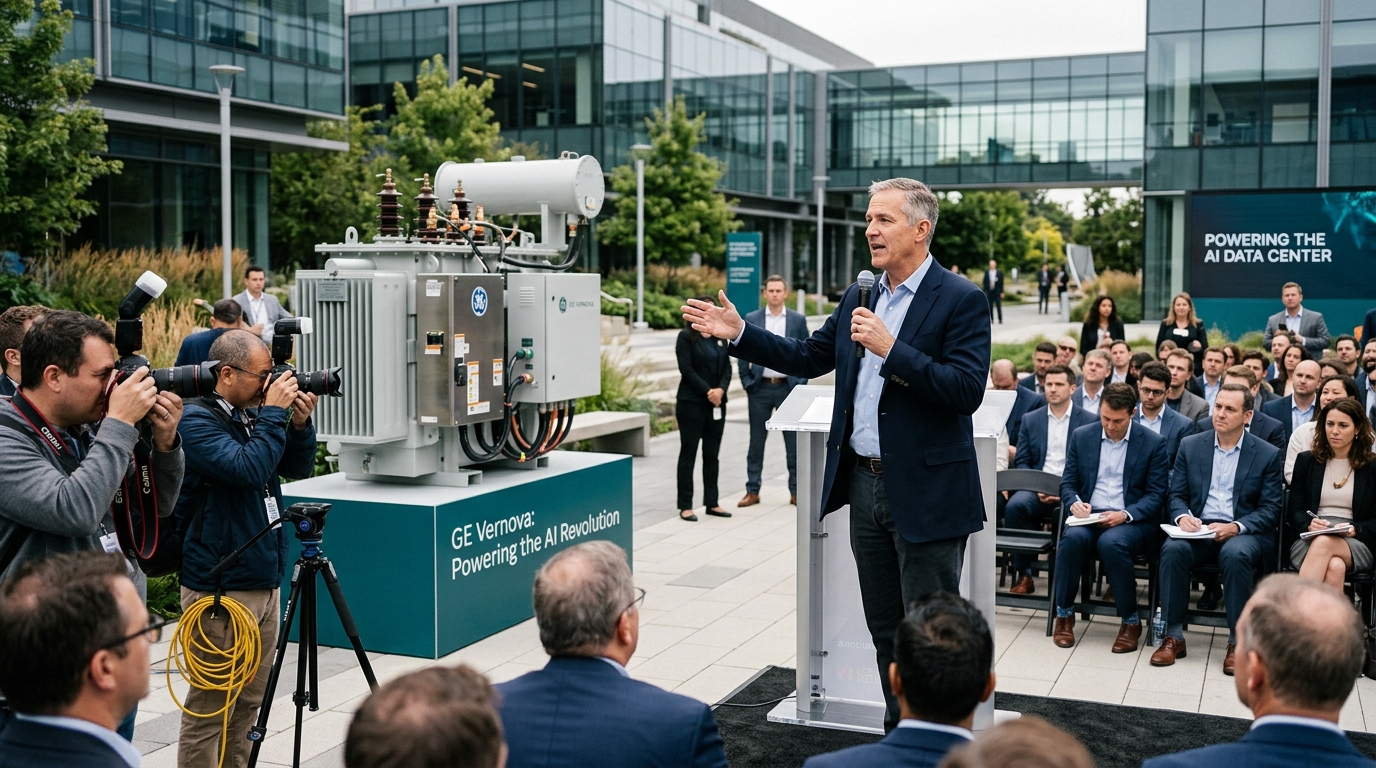
Behind every ChatGPT query and every AI-generated artwork lies a physical reality often ignored: staggering energy consumption. As tech giants like Microsoft, Google, and Amazon race to build next-generation data centers, GE Vernova is emerging as the critical player ensuring the "digital cloud" never runs out of juice. At the heart of this effort are HA-class gas turbines, engineering marvels that convert natural gas into steady, uninterrupted power.
The Renaissance of Natural Gas in the AI Era
For years, the Silicon Valley narrative focused exclusively on renewables. However, artificial intelligence has shifted the goalposts. AI workloads require "baseload power" — energy available 24/7, regardless of whether the wind is blowing or the sun is shining. This is where GE Vernova steps in. Its turbines, manufactured at the massive Greenville facility in South Carolina, provide the reliability that renewables currently cannot guarantee on their own.
The demand is unprecedented. According to Goldman Sachs analysts, data center power consumption is expected to double by 2030. GE Vernova, which spun off from General Electric in April 2024, is perfectly positioned to capitalize on this trend. The company isn't just selling machines; it’s selling the energy security required to prevent global grids from collapsing under the weight of Nvidia’s GPUs.
Technological Edge: The HA-Class Turbines
GE Vernova’s 7HA.03 gas turbine is the world’s most powerful and efficient model for 60Hz grids. These machines are capable of reaching full power in minutes, providing the flexibility needed to balance grids increasingly reliant on intermittent wind and solar energy. Furthermore, GE Vernova is investing in hydrogen combustion technology, allowing these turbines to potentially run on zero-carbon fuel in the future, offering a bridge to Net Zero.
- High efficiency that lowers the cost per kilowatt-hour generated.
- Hydrogen-readiness to future-proof investments against carbon regulations.
- Rapid-start capabilities to stabilize grids with high renewable penetration.
"We cannot have an AI-driven economy without a robust industrial base for power generation," industry experts note, highlighting GE Vernova's pivotal role.
The Clash of Ambitions: AI vs. Climate Goals
The rise of GE Vernova brings a difficult truth to light: AI progress may be slowing down decarbonization. While Microsoft and Google have set ambitious carbon-negative goals, the physical reality of data centers is forcing them to rely more heavily on natural gas. GE Vernova argues that gas is the "partner" to renewables, providing the stability they lack.
However, critics worry that building new gas infrastructure will "lock in" carbon emissions for decades to come. The company’s response lies in electrification and Carbon Capture and Sequestration (CCS), technologies it is developing alongside its turbines. The bet is whether technology can become "green" enough before the climate crisis renders energy expansion unsustainable.
Conclusion: The Return of Heavy Industry
The case of GE Vernova proves that the digital revolution is inextricably linked to heavy industry. The ability to build massive, precision-engineered steel machines is just as vital as the ability to write sophisticated code. As AI continues to evolve, its success will depend on whether companies like GE Vernova can continue to innovate in the energy sector, keeping the lights on in a data-hungry world.





