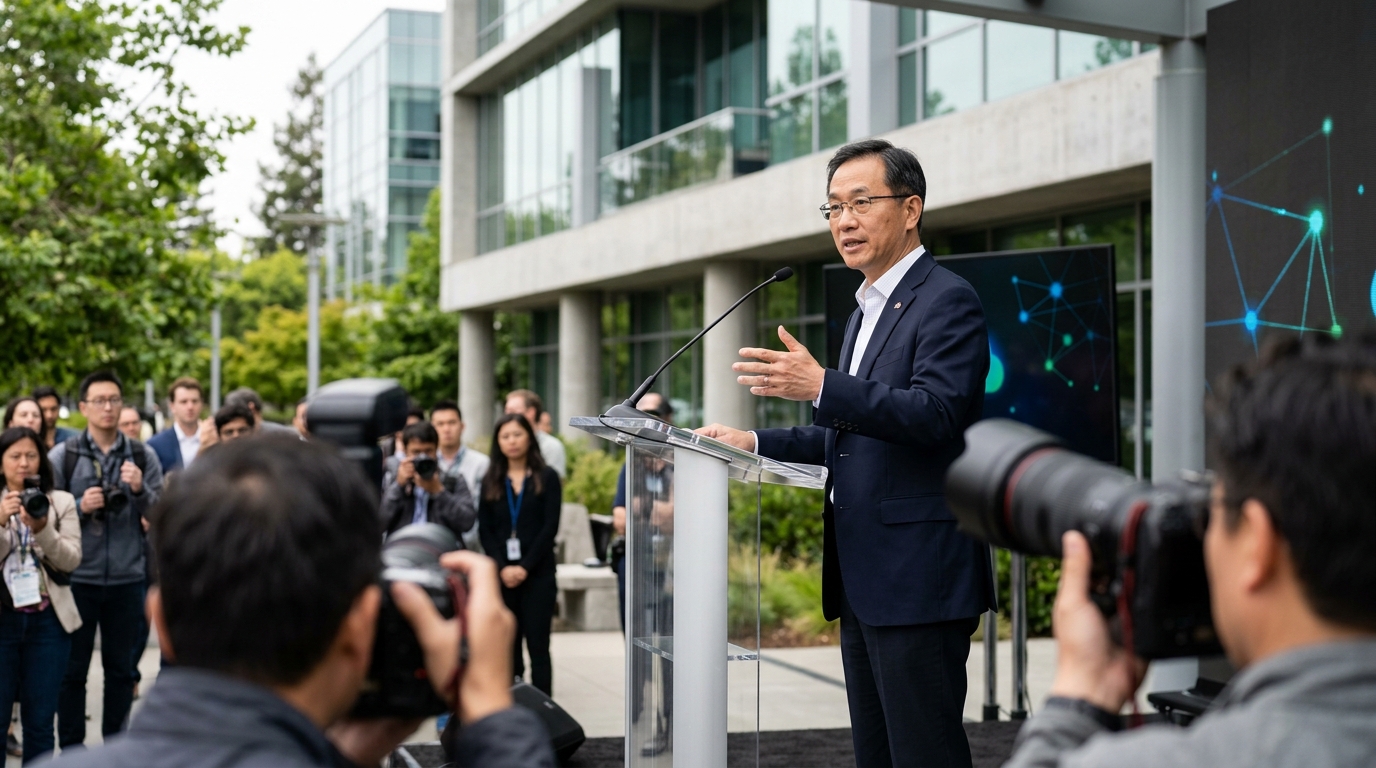
The history of Artificial Intelligence will likely record 2025 and 2026 as the years when the global balance of power shifted decisively eastward. DeepSeek, the Chinese firm that once styled itself as a lean research lab dedicated to algorithmic efficiency, has completed a breathtaking metamorphosis. Bolstered by a fresh $7 billion funding round and a recruitment drive aimed directly at the heart of Silicon Valley, Liang Wenfeng’s company is no longer just asking for a seat at the table; it is looking to rewrite the entire menu.
The Strategy of 'Intelligent' Power
Until recently, DeepSeek was the darling of developers and academics. While OpenAI and Google spent billions on raw compute, DeepSeek proved with its V3 and R1 models that clever architecture could outperform the brute force of massive GPU clusters. However, the idealism of "efficiency above all" appears to be giving way to a more traditional, albeit hyper-aggressive, corporate expansion.
The $7 billion figure is not just a milestone; it is a war chest. According to sources close to the deal, these funds come from a mix of sovereign wealth funds and tech titans who view DeepSeek as the only credible threat to the American monopoly on Large Language Models (LLMs). The strategy is shifting: DeepSeek is now investing heavily in its own infrastructure, attempting to bypass US chip export controls while forging deeper ties with domestic semiconductor manufacturers.
The Talent War: From Mountain View to Beijing
Perhaps the most unsettling development for Western tech giants is DeepSeek’s predatory hiring campaign. The company is offering compensation packages that significantly outstrip the standards of Google and Meta, specifically targeting engineers specialized in low-level optimization and distributed systems architecture.
"We aren't just hiring code; we are hiring the institutional memory of Silicon Valley," a company executive reportedly stated in an internal meeting.
This brain drain is creating a new dynamic. DeepSeek is no longer a localized Chinese effort but a multinational entity operating with the speed of a startup and the resources of a nation-state. The focus has pivoted from pure research to commercial application, with a particular emphasis on enterprise solutions and the integration of AI into heavy industry and the financial sector.
Geopolitics and the Future of Open Source
DeepSeek earned the global community's trust by releasing its model weights. However, with $7 billion on the line, a critical question arises: how "open" will it remain? Investors demand returns, and returns in the AI sector often stem from closed ecosystems and subscription models. Furthermore, pressure from the Chinese government for technological self-reliance may force DeepSeek to align its agenda with national priorities, potentially compromising its image as an independent research beacon.
In conclusion, DeepSeek is transitioning from a rebellious adolescence to a dominant adulthood. This transition is fraught with risk; maintaining innovation in an organization that is ballooning in size is a challenge that even OpenAI struggles to manage. What is certain is that the AI map now has two distinct poles, and the Eastern one is more formidable than ever.