

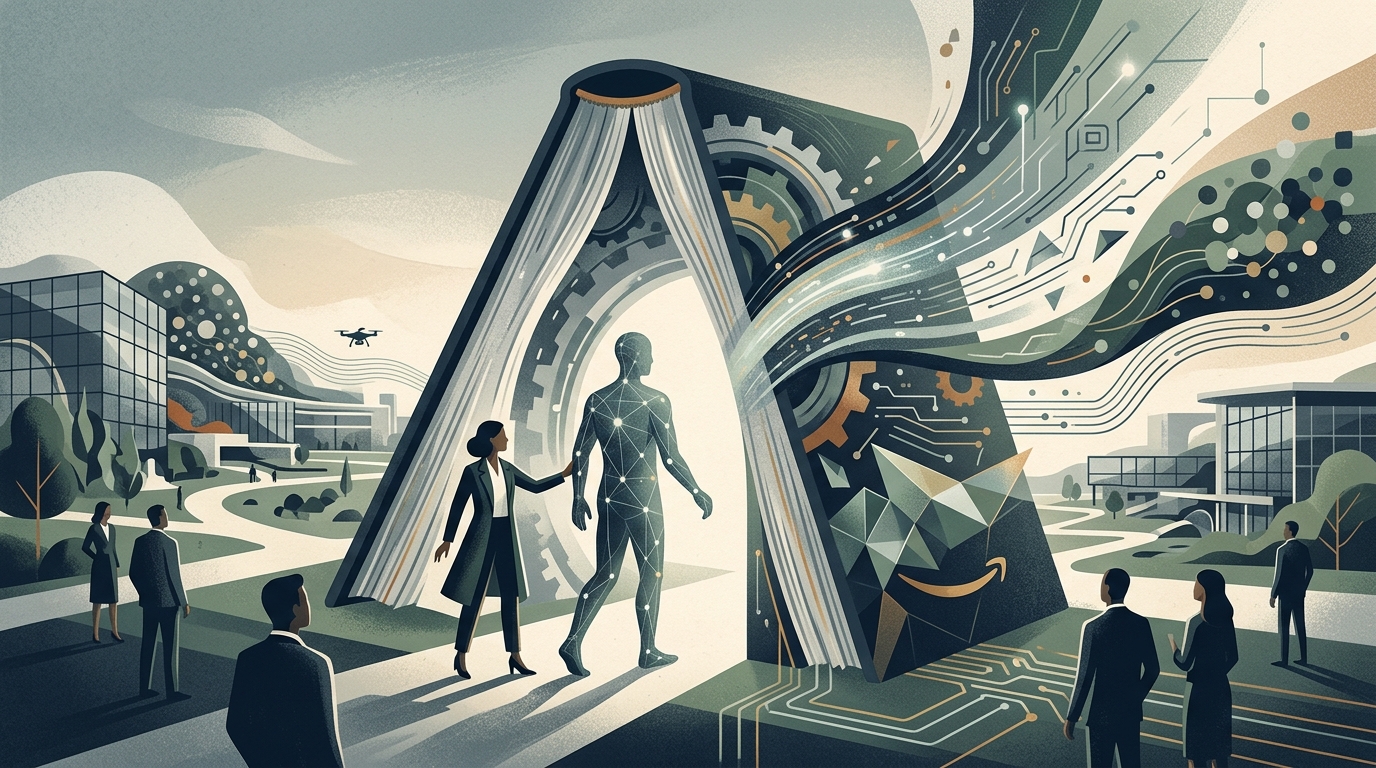
When Andy Jassy took the reins of Amazon from Jeff Bezos in 2021, many viewed him as a steady hand—a capable administrator focused on operational efficiency and cost-cutting. However, the seismic shift triggered by generative AI has forced Jassy to abandon his cautious roadmap and execute a radical overhaul of the Amazon playbook. Today, in May 2026, Amazon is no longer just a retail powerhouse or a cloud provider; it is transforming into an AI-first infrastructure organism.
The Infrastructure Revolution: Beyond AWS to Custom Silicon
The core of Jassy’s strategy lies within Amazon Web Services (AWS). While Microsoft and Google captured early headlines through high-profile partnerships with OpenAI and Anthropic, Jassy chose a more foundational path. Amazon is funneling billions into the development of its proprietary AI chips, Trainium and Inferentia. This vertical integration is a strategic masterstroke designed to reduce reliance on Nvidia’s expensive and supply-constrained GPUs, offering AWS customers a more cost-effective and optimized alternative.
According to recent Bloomberg reports, Amazon’s capital expenditures for 2026 are projected to hit record highs, with the lion's share dedicated to building next-generation data centers capable of supporting massive Large Language Models (LLMs). Jassy understands that in the AI era, compute power is the ultimate currency. Amazon Bedrock, the platform allowing enterprises to build AI applications using diverse models, serves as the central hub of this ecosystem, positioning Amazon as the neutral Switzerland of the AI wars.
"AI is not just an add-on feature; it is the bedrock upon which every future service we offer will be built," Jassy remarked in a recent leadership summit.
Reinventing Alexa and the Consumer Experience
On the consumer front, Amazon faced a long-standing dilemma with Alexa: a popular but financially bleeding service. Under Jassy’s direction, Alexa is undergoing its most significant evolution since its 2014 debut. The new "Remarkable Alexa," powered by advanced generative AI, has transitioned from a simple voice assistant that sets timers to a sophisticated autonomous agent. It can now handle complex multi-step tasks, from planning intricate travel itineraries to managing smart home ecosystems through natural, context-aware dialogue.
Furthermore, Rufus, Amazon’s AI-powered shopping assistant, has fundamentally altered the e-commerce experience. Moving away from traditional keyword searches, consumers now engage in nuanced conversations, asking questions like "What's the best telescope for a beginner in a high-light-pollution area?" and receiving curated, intelligent advice. This shift toward "conversational commerce" is vital for Amazon to maintain its retail dominance against emerging AI-driven competitors.
Operational Efficiency and the 'Jassy Culture'
Despite the massive R&D spending, Jassy hasn't abandoned his obsession with the bottom line. Amazon is now leveraging AI to optimize its supply chain to a degree previously thought impossible. From hyper-accurate demand forecasting to guiding autonomous robots in fulfillment centers, AI is slashing delivery times and operational overhead. However, this drive for efficiency has come with a cultural price, including strict return-to-office mandates and a streamlining of middle management layers.
Jassy is building an Amazon that is leaner, faster, and more demanding. His strategy is a high-stakes gamble: he is betting that Amazon can shed its reputation as a slow-moving giant and emerge as the indispensable backbone of the AI economy. If successful, Amazon will not only control where we shop but also the very infrastructure through which the global digital economy thinks and operates.
The Road Ahead: Challenges and Risks
The primary challenge for Jassy remains the delicate balance between breakneck innovation and sustainable profitability. Regulators in the US and the EU are closely monitoring Amazon's AI expansion, wary of potential monopolistic behavior in the cloud and chip markets. Meanwhile, the competition from Google and Microsoft shows no signs of slowing down. The next two years will determine whether Jassy’s new playbook secures Amazon’s dominance for the next generation or if the Seattle giant will find itself struggling to keep pace with the very revolution it helped ignite.





