

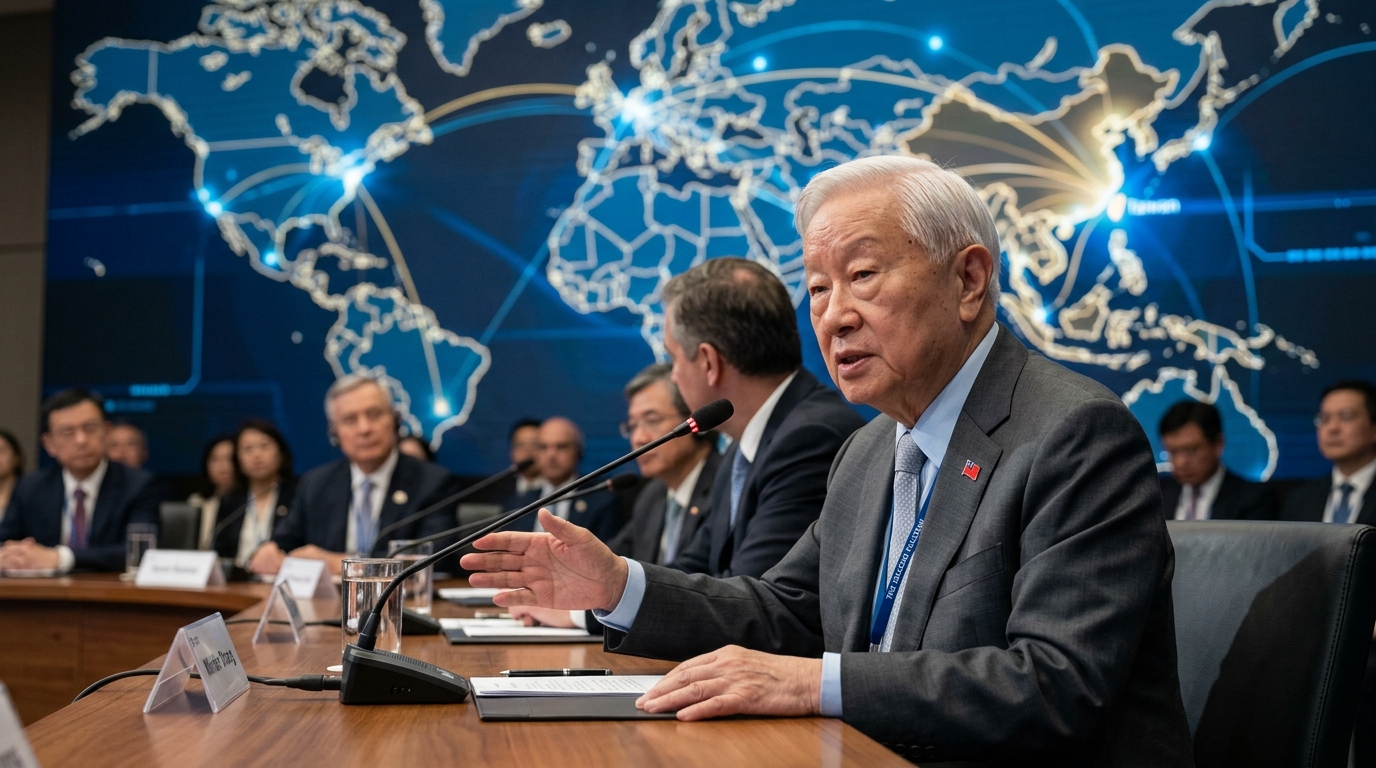
In the 21st century, the power of nations is no longer measured solely by the size of their armies or their oil reserves, but by their ability to process data at the scale of nanometers. A recent report by the Center for a New American Security (CNAS) underscores a truth that the tech industry knows well, but global diplomacy struggles to manage: Taiwan is the irreplaceable hub of the Artificial Intelligence (AI) revolution. Without this tiny island, the promise of generative AI, autonomous systems, and quantum computing would remain a theoretical exercise on paper.
The Monopoly of Technical Excellence
The heart of the issue—or opportunity, depending on one's perspective—lies with TSMC (Taiwan Semiconductor Manufacturing Company). As of May 2026, TSMC controls over 90% of the world's production of the most advanced semiconductors (below 3nm). These chips are the "fuel" for NVIDIA’s H100 and B200 processors, as well as custom silicon from Google and Microsoft. Taiwan’s technological lead is not just a result of capital; it is the product of decades of specialization, a unique ecosystem of suppliers, and the technical "magic" of extreme ultraviolet (EUV) lithography.
As CNAS points out, Western reliance on Taiwan creates a paradoxical vulnerability. While the US and Europe lead in algorithm design and AI software, the physical manifestation of these systems depends on a geographic region under constant threat. Taiwan doesn't just manufacture chips; it manufactures the future of the global economy.
Silicon Geopolitics: USA vs. China
The battle for AI dominance is inextricably linked to US-China strategic competition. For Washington, ensuring access to Taiwan’s fabs is a matter of national security. The CHIPS Act has funneled billions into building factories on American soil, but the reality of 2026 shows that transferring this expertise is slower than anticipated. Fabs in Arizona face labor and supply chain challenges, leaving Taiwan as the only reliable provider for the current AI boom.
On the other hand, Beijing views Taiwan not just as a territorial claim, but as the "golden ticket" to bypassing US sanctions. If China were to gain control—or even the ability to disrupt production—at TSMC, the global balance of power would shift overnight. What CNAS calls the "Silicon Shield" is the theory that Taiwan’s importance to the global economy deters military conflict. However, this same shield makes it the primary target in the event of escalation.
The Challenge of Diversification and the Future
As we move into the latter half of the decade, the concept of "friend-shoring"—moving production to allied nations—is becoming the new normal. Japan and Germany are investing billions to attract TSMC, hoping to mitigate risk. However, the CNAS report warns: AI doesn't wait. The speed at which Large Language Models evolve requires immediate scaling of production capacity, something only the infrastructure in Taiwan can currently provide.
- Taiwan’s dominance isn't just about fabrication, but also advanced packaging technologies like CoWoS, which are essential for AI clusters.
- Any disruption in the Taiwan Strait would trigger a global economic depression more severe than the 2020 pandemic.
- AI requires immense amounts of energy, and Taiwan is struggling to balance its energy policy with the needs of its power-hungry fabs.
Ultimately, Taiwan is the critical link in a chain connecting Silicon Valley innovation with global geopolitical stability. AI dominance will not be decided only in the offices of OpenAI or Google, but in the clean rooms of Hsinchu and Tainan. Humanity has placed its most valuable intellectual achievements atop one of the planet's most fragile geopolitical fault lines.





