

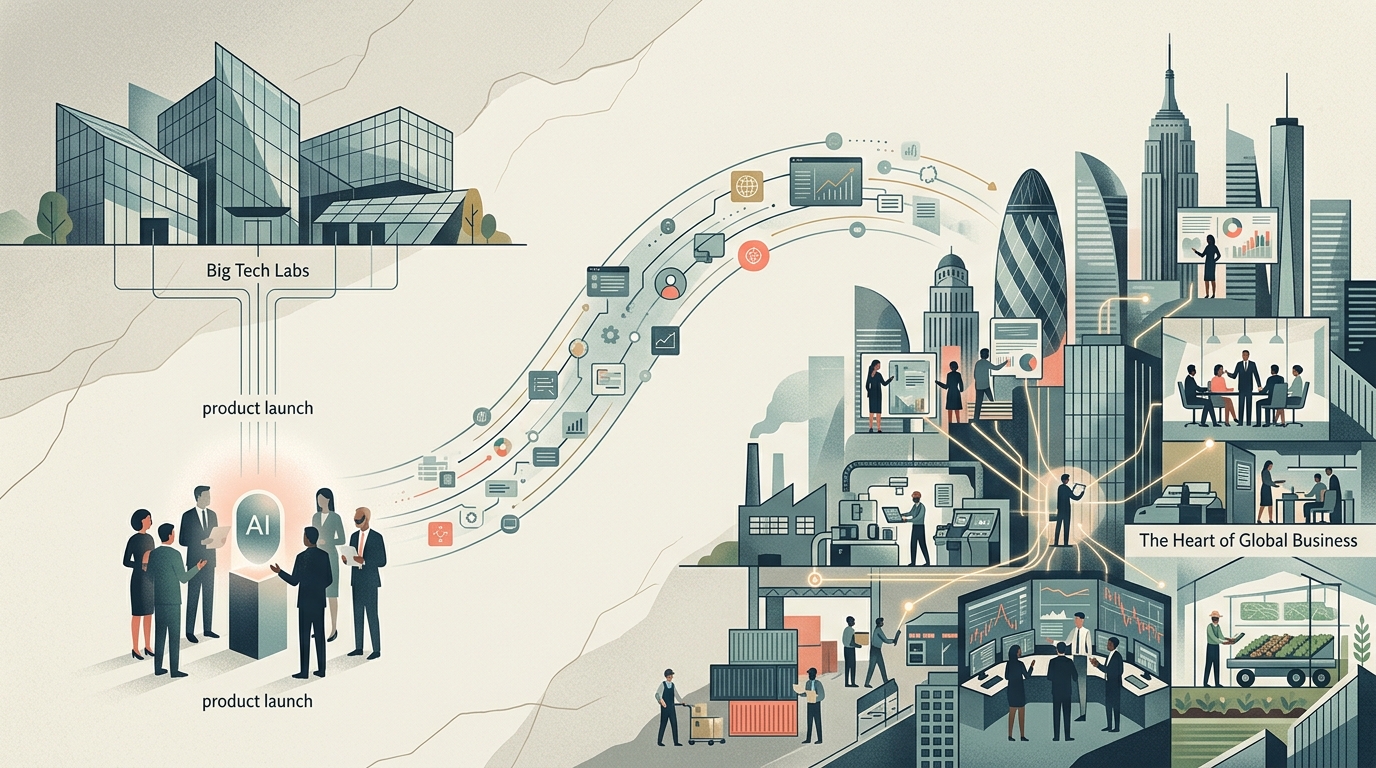
The history of technological progress often begins at the top of the pyramid, where resources are abundant and risks are calculated. For years, Artificial Intelligence (AI) was seen as the exclusive playground of the few: Google, Microsoft, Meta, and Amazon. However, as we move through 2026, the landscape has fundamentally shifted. News emerging from rising economies like Vietnam is not merely a local anecdote; it is a symptom of a global transformation. AI is no longer an inaccessible fortress but a toolkit available to every entrepreneur, regardless of scale.
The Collapse of Barriers to Entry
Just a few years ago, building a machine learning model required armies of data scientists and multi-million dollar investments in cloud infrastructure. Today, the rise of open-source software and low-code platforms has leveled these barriers. Small workshops in Hanoi and startups in Athens are now utilizing pre-trained models to optimize supply chains or automate customer service. This democratization is not just about access to code; it's about the demystification of the technology itself.
The strategic decision by major players to release their foundational models (such as Meta’s Llama series) to the public has sparked an ecosystem where innovation happens at the periphery. Small and Medium Enterprises (SMEs) possess the advantage of agility; they can integrate AI solutions within weeks, while multinational giants often find themselves bogged down by bureaucratic inertia and legacy systems that refuse to die.
From Efficiency to Survival
For a small business, adopting AI is no longer a matter of prestige; it is a matter of survival. In the context of global competition, the ability to predict demand or personalize marketing through algorithms allows smaller entities to "punch above their weight." In Vietnam, for instance, we see agricultural firms using AI to analyze soil quality and predict commodity prices, reducing waste and increasing profits by 20%.
This trend upends the traditional development model. Previously, developing nations relied on cheap labor to attract investment. Now, AI offers the possibility of "leapfrogging"—jumping over intermediate stages of industrial development directly into the digital economy. Technology acts as the great equalizer, provided that digital literacy and basic connectivity infrastructure are in place.
"Artificial Intelligence is the electricity of the 21st century. Just as electricity once allowed every small workshop to mechanize, AI today allows every office to achieve intelligence at scale."
The Challenges of the New Era
Despite the optimism, the road ahead is not without hurdles. Dependency on major cloud platforms (AWS, Azure) remains a risk, as pricing policies can alter an SME's operating costs overnight. Furthermore, there is the issue of data quality. A small business often lacks the massive data volumes available to a conglomerate, making the training of specialized models more difficult.
However, the solution seems to be emerging through collaboration. We are witnessing the creation of "data cooperatives" and industry-specific hubs where businesses share anonymized data to train common AI models. This collective approach is perhaps the most interesting development of 2026, shifting the focus from individual competition to collective intelligence.
Conclusion: The Future is Local and Smart
Artificial Intelligence is ceasing to be an exotic technology arriving from Silicon Valley to dazzle us. It is becoming a quiet, utilitarian tool running in the background of an accounting firm in the provinces or a food processing plant. The real AI revolution is not happening in the ultra-modern data centers of California, but in the thousands of small decisions made daily by entrepreneurs who have learned not to fear the algorithm, but to employ it as a partner.





