

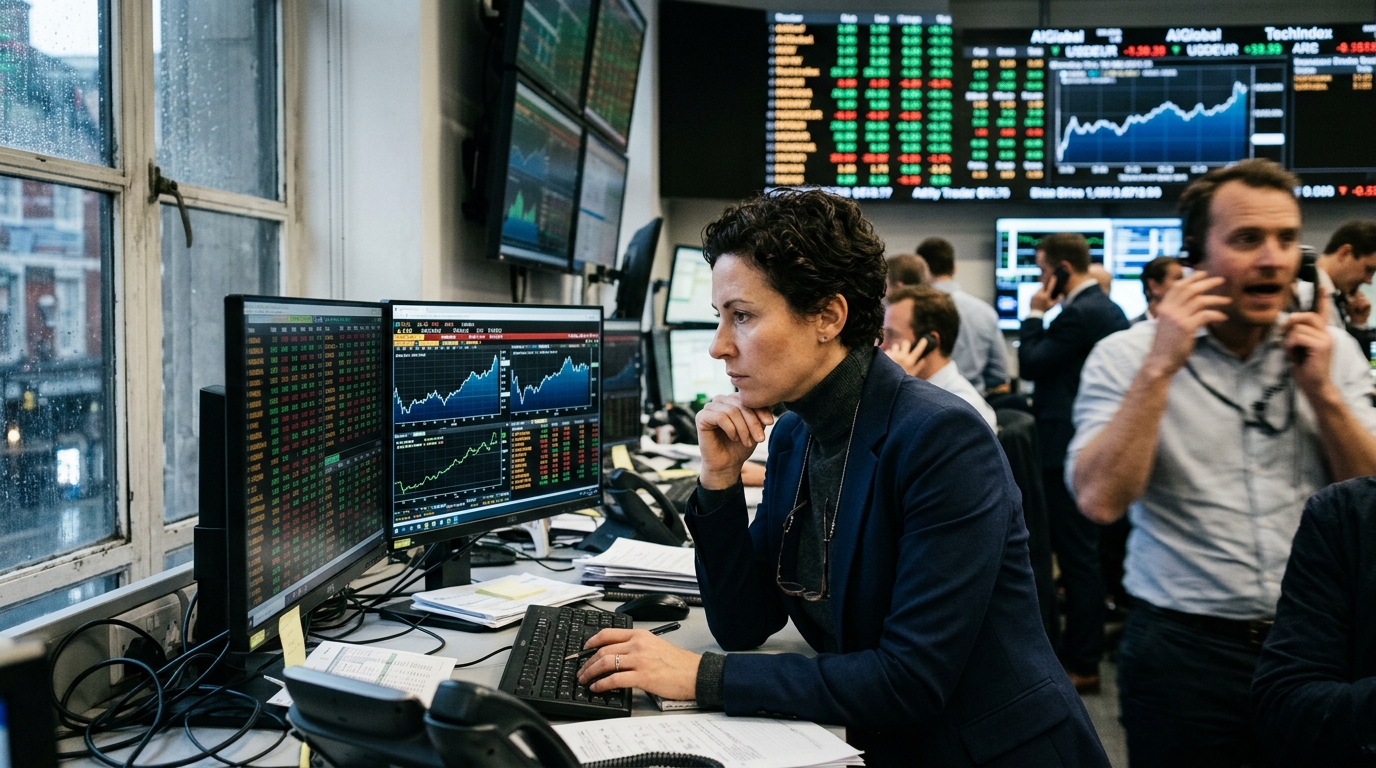
In today's globalized economic landscape, the fate of national currencies rarely depends solely on interest rates and trade balances. By mid-2026, a new, unpredictable factor has emerged as the primary driver of currency strength: Artificial Intelligence (AI). The relationship between US technological supremacy and the continued rise of the dollar is no longer a theoretical hypothesis, but a reality forcing central bankers from Frankfurt to Tokyo to rethink their strategies.
Productivity as the New 'Gold Standard'
Basic economic theory holds that a country's currency reflects the productivity of its economy. The integration of Generative AI into the US corporate sector has begun to bear fruit that exceeds expectations. While Europe struggles with regulatory hurdles and China faces demographic challenges, the US has managed to turn innovation into immediate economic efficiency. American businesses, from healthcare to heavy industry, are reporting significant reductions in operating costs and increases in output per hour worked, thanks to advanced AI models.
This 'productivity explosion' creates an environment where inflation can remain low despite strong growth – the so-called 'Goldilocks scenario.' For foreign investors, this makes US assets irresistible. When capital flows into Wall Street to buy shares of NVIDIA, Microsoft, or the new AI 'unicorns,' the demand for dollars skyrockets, strengthening the currency's value against its competitors.
The Magnetic Pull of Capital
It is not just productivity that supports the dollar, but also the massive concentration of capital. The AI market requires billions in infrastructure – from data centers to specialized semiconductors. The US remains the top destination for Venture Capital globally. This inflow of investment creates a self-reinforcing cycle: technological superiority attracts capital, capital strengthens the dollar, and a strong dollar allows the US to import talent and raw materials more cheaply, further cementing its dominance.
- Investment Safety: In times of uncertainty, the dollar remains the 'safe haven,' but it is now combined with the high returns of the tech sector.
- Energy Advantage: AI requires vast amounts of energy. US energy self-sufficiency (natural gas and nuclear power) offers a cost advantage that Europe is unable to match.
- Monetary Policy: The Federal Reserve, backed by a robust economy, has the leeway to keep interest rates higher for longer than the ECB, making the dollar more attractive to bondholders.
Risks and the 'Dutch Disease' of Technology
However, this dynamic is not without risks. Many analysts warn of a modern form of 'Dutch Disease,' where excessive concentration in one sector (in this case, AI) leads to an overvalued currency that hurts other export sectors of the US economy, such as agriculture and traditional manufacturing. Furthermore, the dollar's dependence on the 'promise' of AI means that any disappointment regarding the technology's profitability could trigger a violent correction.
"The dollar is no longer just a reserve currency; it is a bet on the future of human intelligence," says a leading analyst at Goldman Sachs.
In conclusion, the dynamic between AI and the dollar appears to have depth. As long as the US maintains the reins of the technological revolution, the dollar will continue to enjoy an 'innovation premium.' However, history teaches us that markets tend to exaggerate. The challenge for 2026 and beyond will be the transition from speculative euphoria to real, sustainable growth that justifies current valuations.





