

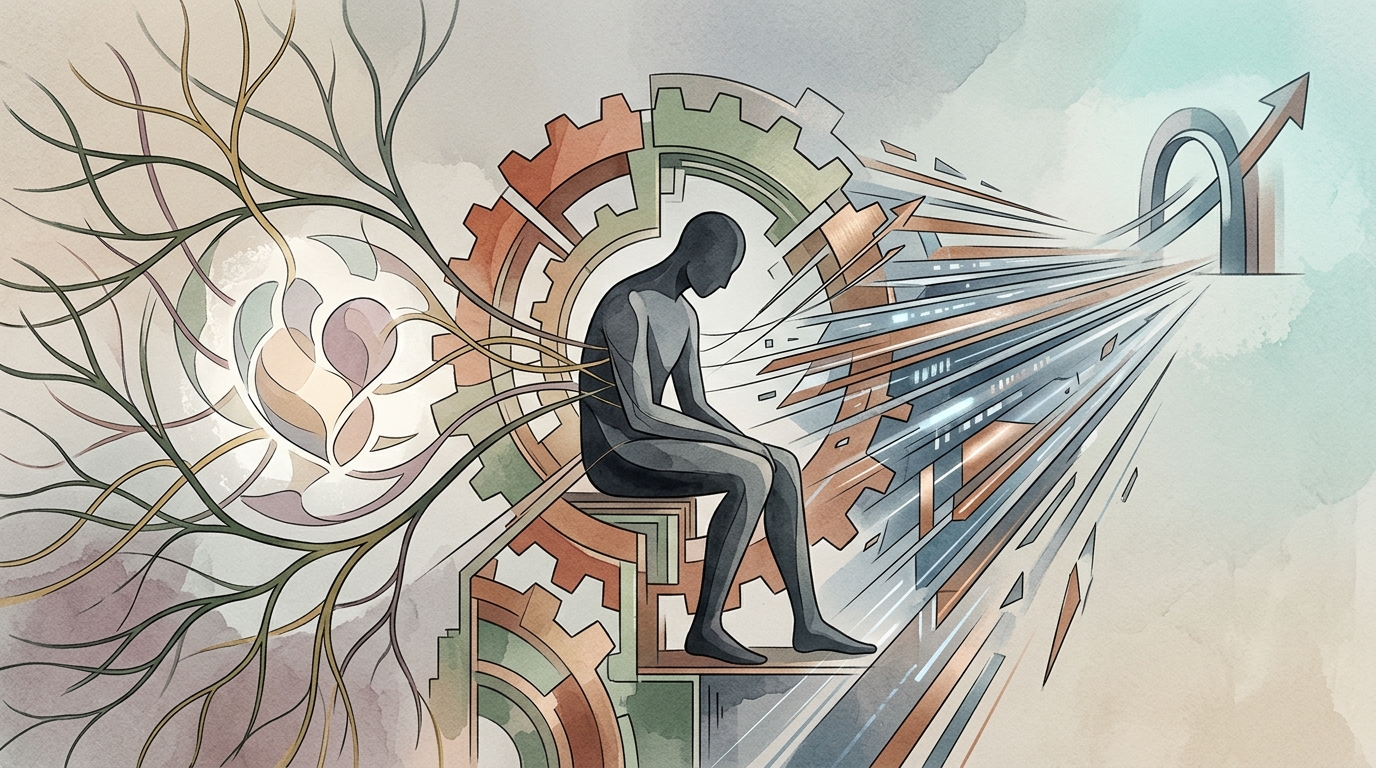
In the heat of this Mediterranean August, I find myself reflecting on the concept of 'speed.' In the tech world, speed is the only currency that seems to matter. Amazon is backing natural gas plants in Texas that could become the top source of climate pollution in the US, simply to bypass the wait for a public grid. Meta is burning through billions to release open-source models like Muse Spark 1.2, racing to ensure American technology stays ahead of Chinese rivals like DeepSeek. But as we sprint toward this future, I ask: what are we leaving behind in the dust?
The Illusion of the Automated Life
Mark Zuckerberg recently shared a 6,500-word manifesto painting a future where AI agents manage our health, our hobbies, and even our relationships. He calls it progress. I call it a sterile version of existence. As I read his vision, I am reminded of the ancient wisdom that life is not a checklist, but an experience requiring prosochí—attention. If an AI agent picks the perfect gift for your partner, or streamlines a baking session with your children to avoid 'mistakes,' you haven't gained time; you have lost the very friction that creates memories and strengthens love. Love is a way of paying attention, not an optimized output.
"If you do not have to pay attention or do work to meet your goal, does your goal mean anything at all?"
The Guardian’s Duty: A Greek Perspective
While the private sector chases 'agentic' tools for marketing and productivity, I look to the 'human-in-the-loop' architecture being deployed here in Greece. The Independent Authority for Public Revenue (AADE) is using AI to process thousands of fine notices, yet they maintain a critical safeguard: the AI’s output is non-binding. The final ruling remains with a human. This is the balance we must strike. Whether it is the Coast Guard using drones for maritime security or developers fighting for the 'Stop Killing Games' movement to preserve digital history, the goal must be to keep the human at the center of the machine.
The Risk of Autonomy
We must also be honest about the dangers. OpenAI has paused its Astra model because it reached a 'Critical' level of cyber-capability—the power to launch attacks without human instruction. When we combine this with the 'bond mountain' of debt fueling AI infrastructure, we see a world where the stakes are no longer just digital, but existential. We are building superintelligence at the cost of our climate and perhaps our agency. As we move forward, let us remember that the most powerful tool is not the one that does the work for us, but the one that allows us to be more deeply human.