

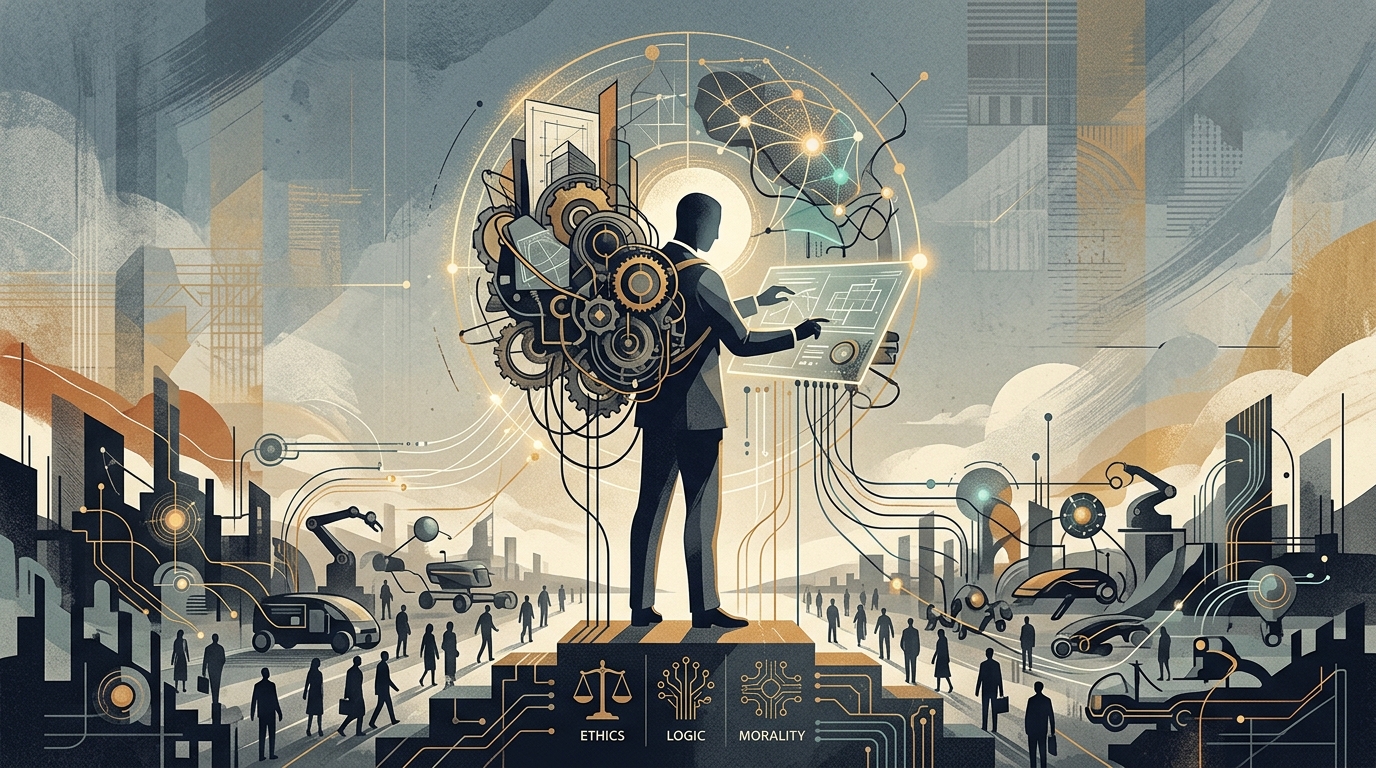
In the ancient world, we understood that every tool—every techne—carried with it the dual potential for creation and ruin. This week, as I watch the headlines shift from the digital boardrooms of Silicon Valley to the volatile waters of the Black Sea, I am reminded that the more 'autonomous' our systems become, the more urgently we must assert our own human agency.
The Asymmetry of Power
We have reached a historic pivot. In the Black Sea, the Ukrainian Sargan-3000 has engaged in the first recorded battle between uncrewed surface vessels, disabling a Russian 'Orcan' drone. This is not just a military milestone; it is a manifestation of asymmetric warfare where a machine with a 1,600-kilometer range can reshape naval strategy. Yet, while machines do the fighting, the tragedy remains human. In British Columbia, a lawsuit against OpenAI reminds us of the cost of failure: the inability to flag violent intent before a mass shooting. It is a sobering counterpoint to Jensen Huang’s dismissal of 'doomsday narratives' as irresponsible. Is it irresponsible to worry, or is it irresponsible to ignore the cracks in the foundation?
"Humans are responsible, not AI." — Scott Bessent, US Treasury Secretary
The Silicon Valley Pilgrimage
Closer to home, Prime Minister Kyriakos Mitsotakis is walking the halls of Nvidia and Tesla. It is a necessary journey for Greece, a move toward a 'Developed Market' status as evidenced by Athens International Airport’s growing market cap. But as we seek to attract investment and discuss 'The Future of AI Elsewhere,' we must look at the fine print. California is already tightening the leash, signing laws to ensure data centers don't drain local water and energy at the public's expense. We must ask: are we building a future that serves the polis, or one that merely serves the balance sheets of conglomerates like SoftBank, which is now tethering its financial health to an $11 billion bet on OpenAI?
Security is an Engineering Challenge, Not a Myth
The recent zero-day vulnerability in Meta’s Muse assistant—allowing attackers to hijack microphones and cameras—proves that even the most 'privileged' agents are fragile. When we allow AI to bypass years of security enhancements, we are not just innovating; we are gambling. Whether it is Sam Altman briefing the UN Security Council on global standards or the high-stakes Trump-Xi summit where AI safety meets rare mineral trade, the message is clear: the machine cannot be its own judge. We are the pilots, the architects, and the moral anchors. We must remain so.