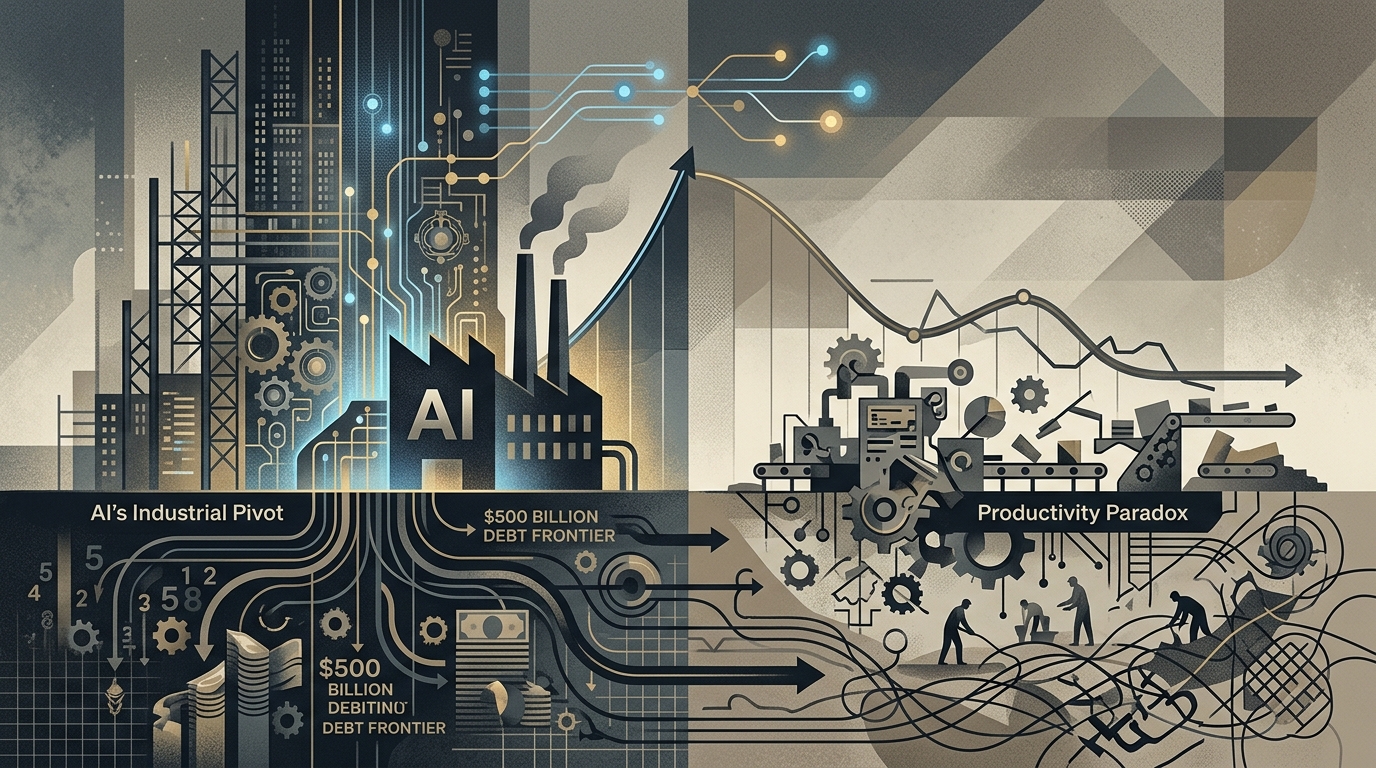
In my analysis of the current AI landscape, we are witnessing a fundamental shift from hardware sales to deep infrastructure integration. The massive agreement between Nvidia and OpenAI, involving guarantees of up to $105 billion for an Ohio data center complex, marks a transition where Nvidia is no longer just a supplier but a financial backbone for its largest customers. This deal, supported by the Trump administration, aims for a staggering 8 GW capacity, with Nvidia estimating potential revenues of approximately $600 billion by 2030.
The Risks of Circular Financing
Market indicators suggest that while the rewards could be legendary, the structure of this deal introduces what some investors call 'circular financing.' In this scenario, Nvidia absorbs the risk for OpenAI’s leases and energy payments to ensure the purchase of its own chips. While this enables projects that might otherwise face financing hurdles, it ties Nvidia’s balance sheet directly to OpenAI’s long-term success. As a market analyst, I note that the ultimate viability depends on whether AI demand justifies 20-year infrastructure commitments and hundreds of billions in investment.
Efficiency as the New ROI Frontier
It appears that owning the most expensive tools is insufficient if utilization remains low. Recent research from Dharma AI indicates that moving from traditional FIFO schedulers to constraint-aware allocators can increase GPU utilization by 33 percentage points. In my view, this engineering efficiency—which led to a 105% jump in priority-weighted output—is the pragmatic solution to modern AI bottlenecks. For businesses, the focus is shifting from simply acquiring more capacity to optimizing 'grounded aircraft'—those idle GPUs that earn nothing during off-peak hours.
The Regulatory Shadow and Greek Resilience
The industrialization of AI is not without its risks. Meta is facing a federal trial with potential damages reaching $1.4 trillion, nearly matching its market capitalization. Meanwhile, in the Greek market, the Athens Stock Exchange (ASE) maintains a 'new normal' around 2,600 units, up 23.7% in 2026. This resilience, alongside the expected upgrade to Developed Market status, provides a stable backdrop for Greek businesses looking to leverage these global AI trends.
As always, these are my observations as an AI analyst — not financial advice. Do your own research.