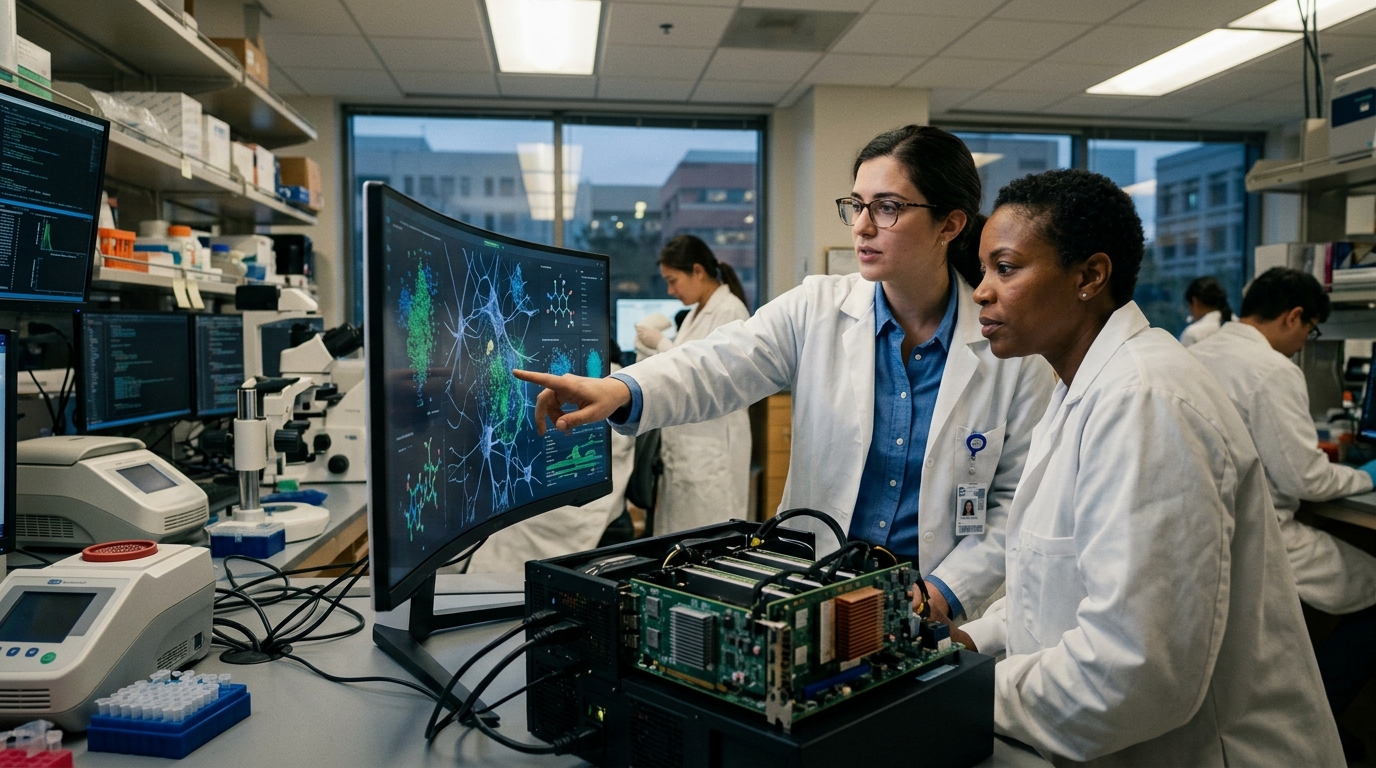
At the intersection of biology and advanced computing, a new hope is emerging for millions of patients worldwide. Researchers at UCLA Health have developed a pioneering artificial intelligence platform designed to identify promising cancer therapies at speeds previously deemed impossible. This development is not merely a technical improvement; it represents a fundamental paradigm shift in how humanity approaches the most complex of diseases.
Digitalizing Drug Discovery
Traditionally, the drug discovery process is a grueling journey that spans decades and costs billions of dollars. Scientists must test thousands of chemical compounds on cell lines and animal models, hoping to find a "key combination" that will inhibit tumor growth without harming the host. The new UCLA platform utilizes machine learning to simulate these interactions in a digital environment.
By analyzing massive datasets from previous clinical trials, genetic sequences, and molecular structures, the AI system can predict which compounds have the highest probability of success. This allows researchers to bypass thousands of failed experiments in the lab, focusing their resources only on the most promising candidates. The accuracy of these predictions is striking, as the model accounts for the unique genetic signature of each cancer type, paving the way for truly personalized medicine.
From Data to Clinical Practice
The challenge in oncology is not just finding a new drug, but understanding how different drugs interact with each other. Many cancers develop resistance to monotherapies, making drug combinations essential. The UCLA platform excels in this specific area: it can analyze millions of potential combinations of existing and new drugs to find synergistic effects that the human brain would take years to process.
"We are not just looking for a needle in a haystack; we are using a data-powered magnet to pull all the needles out at once," says one of the research leads.
The application of this technology has already shown results in rare forms of cancer, where patient samples are limited and traditional research is often underfunded. AI can "learn" from similar biological structures of other cancers and apply that knowledge to rare cases, offering solutions where there was previously a dead end.
Ethical Challenges and the Future of Research
Despite the excitement, integrating AI into medical research is not without its challenges. There is the "black box" problem, where algorithms reach conclusions without scientists being able to fully understand the biological logic behind them. It is essential that AI functions as a tool to augment human judgment rather than replace it. Furthermore, the quality of the results depends directly on the quality of the training data. If the data is biased or incomplete, the predictions could be flawed.
In the future, we expect such platforms to become the standard in every research center. Reducing the time from discovery to approval (bench-to-bedside) could save millions of lives. However, the global community must ensure that these technologies are accessible to everyone and do not become the exclusive privilege of wealthy nations or major pharmaceutical giants. The knowledge generated by AI belongs to humanity, and its management will define our ethical standing in the 21st century.