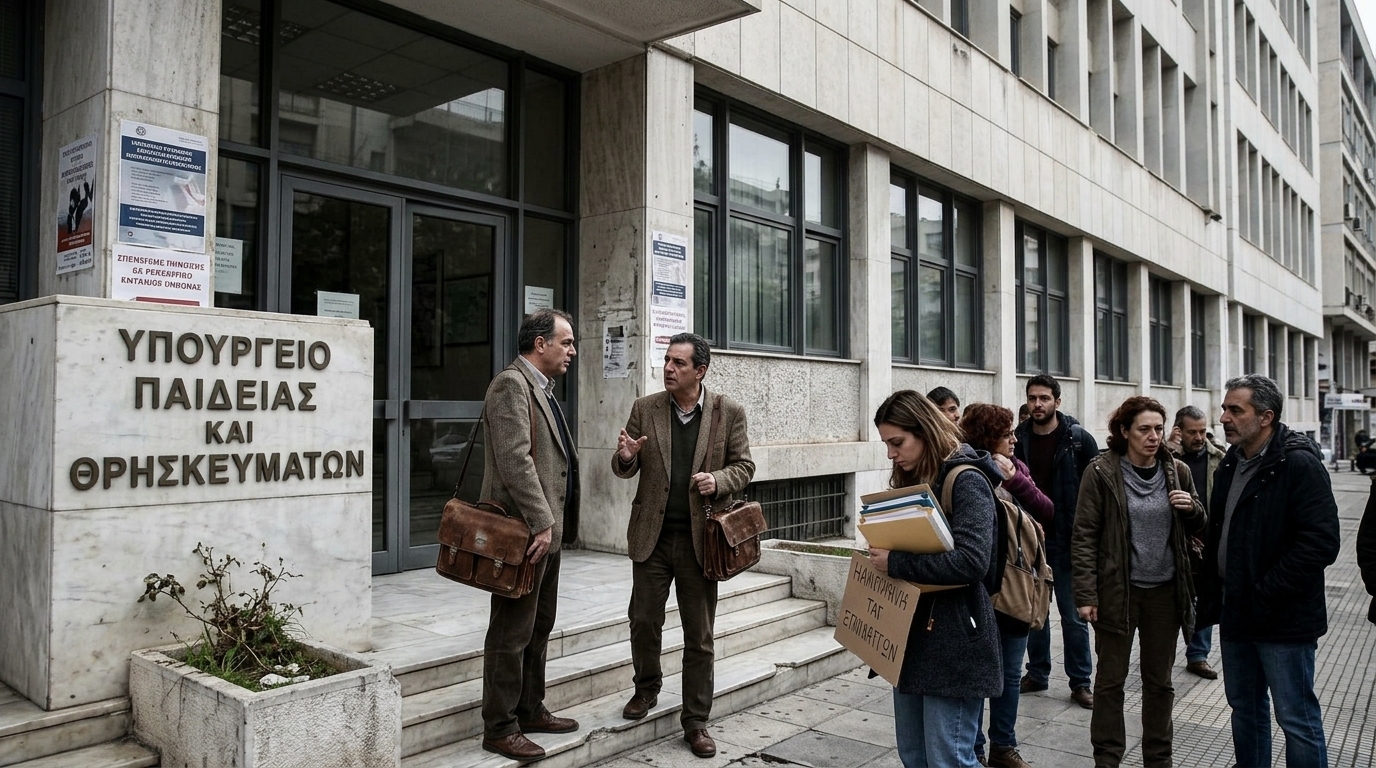
In the Greece of 2026, the word "innovation" has become one of the most overused clichés in political discourse. From government benches to chamber of commerce seminars, Research and Development (R&D) is presented as the "engine" that will transform the Greek economy. However, behind the glossy PowerPoints and grandiose declarations lies a reality that resembles a survival struggle in a hostile environment rather than an organized national strategy. Recent critiques in the press, sparked by the state of research centers and universities, highlight the vast chasm between "loving research" and actually "investing in research."
The Paradox of Excellence Under Persecution
The most striking element of the Greek research ecosystem is its resilience. Despite Greece traditionally lagging behind the EU average in R&D spending as a percentage of GDP, Greek researchers continue to excel internationally. According to data from the European Research Council (ERC), Greek applications and success rates in competitive programs are disproportionately high relative to the state funding they receive. This, however, is not the result of a fertile system but of the personal sacrifice of scientists working in laboratories with inadequate equipment, facing a mountain of bureaucratic obstacles.
Research in Greece is left "to its own devices," as aptly noted. If a researcher can withstand the delays of NSRF (ESPA) funds, if they manage to overcome the absurdity of procurement rules that require months for a simple reagent or a computer, then they might produce work. This "survival of the fittest" approach is not a strategy; it is a form of institutional Darwinism that pushes the country's brightest talent toward either resignation or emigration.
Bureaucracy as a Shackle on Innovation
One of the greatest thorns remains the legal and administrative framework. While science moves at the speed of light, especially in the fields of Artificial Intelligence and Biotechnology, Greek public administration moves at the pace of past decades. The Special Accounts for Research Funds (ELKE) in universities, despite steps toward simplification, remain trapped in a web of audits that treats the researcher as a potential suspect of embezzlement rather than a producer of national wealth.
- Delays in the disbursement of approved funds reaching up to two years.
- Inability to hire specialized personnel with flexible contracts.
- Excessive administrative burden on scientific leads, who are forced to become accountants instead of scientists.
This situation creates an environment of "wild learning." One learns to survive, but not to create under the conditions required by international competition. When a researcher at MIT or ETH Zurich has their administrative issues resolved within hours, their Greek colleague begins a marathon of signatures. The result is predictable: a loss of competitiveness.
The Cost of Indifference: Brain Drain and Economic Stagnation
The "love" for research that remains only in words carries a heavy economic price. Greece continues to export ready-made scientific talent, educated with Greek taxpayers' money, to staff the economies of Germany, the USA, and the Netherlands. This Brain Drain is not just a social wound; it is a massive economic hemorrhage. In the era of the 4th Industrial Revolution, the wealth of nations is not hidden in the soil, but in algorithms and patents.
"If you do not invest in research today, you condemn your economy to be a mere consumer of others' technology, remaining on the periphery of development."
The link between research and production also remains problematic. Despite efforts to create spin-off companies, the gap between the academic lab and the market is wide. Businesses in Greece, mostly small and medium-sized, lack the culture or the capital to invest in long-term research, while the state fails to act as an effective catalyst.
Conclusion: From Words to Action
To change the situation, more than an increase in funds is required. A radical paradigm shift is needed. Research must be treated as a national priority for security and growth. This means autonomy for research centers, a drastic reduction in bureaucracy, tax incentives for private R&D investment, and, above all, stable funding that does not depend on the fluctuations of political cycles. If we continue to "love" research in the same way we leave it to its fate, then the country's future in the digital age will be just as random and uncertain.