In today's industrial landscape, production is no longer a static equation of machines and raw materials. As we move through 2026, market volatility and the pace of technological advancement have made the human element—specifically workforce skills—the most critical yet unpredictable component of the supply chain. A recent publication on ArXiv (2606.17266) titled "SkillChain-Gym" addresses a significant gap in operations research literature by proposing a framework where reskilling is treated not as a secondary cost, but as a central decision variable.
The Challenge of Dynamic Capability
Traditionally, Production-Inventory Control (PIC) models treated the workforce as a fixed capacity. Workers were seen as "units" producing at a specific rate. However, reality is far more complex. Skills decay if not used, certifications expire, and the introduction of new products requires expertise that the current workforce may lack. SkillChain-Gym introduces a new approach: "reskilling-awareness."
The problem the algorithm aims to solve is a classic optimization dilemma. When an employee is trained in a new skill, they are removed from the production line. This reduces immediate production capacity, potentially increasing product shortages. Conversely, avoiding training leads to a workforce unable to meet future demands or sudden disruptions. SkillChain-Gym utilizes Reinforcement Learning (RL) to find the optimal balance in this dynamic environment.
SkillChain-Gym: A Tool for Resilience
The proposed simulation environment allows researchers to test AI agents in scenarios of intense disruption. These disruptions can include sudden shifts in demand, supply chain interruptions, or technological leaps that render current skills obsolete. The innovation of SkillChain-Gym lies in modeling training as an investment with lead time and uncertainty regarding the outcome.
- Certification Management: Real-time tracking of skill expiration.
- Resource Competition: The conflict between production and learning for the same worker.
- Adaptability: The system's ability to rearrange the training plan following a supply chain crisis.
According to the researchers, results show that agents trained with reskilling-awareness manage to maintain lower safety stock levels, as workforce flexibility acts as a "skill buffer" that can be activated at any time.
From Theory to Practice: Industry 5.0
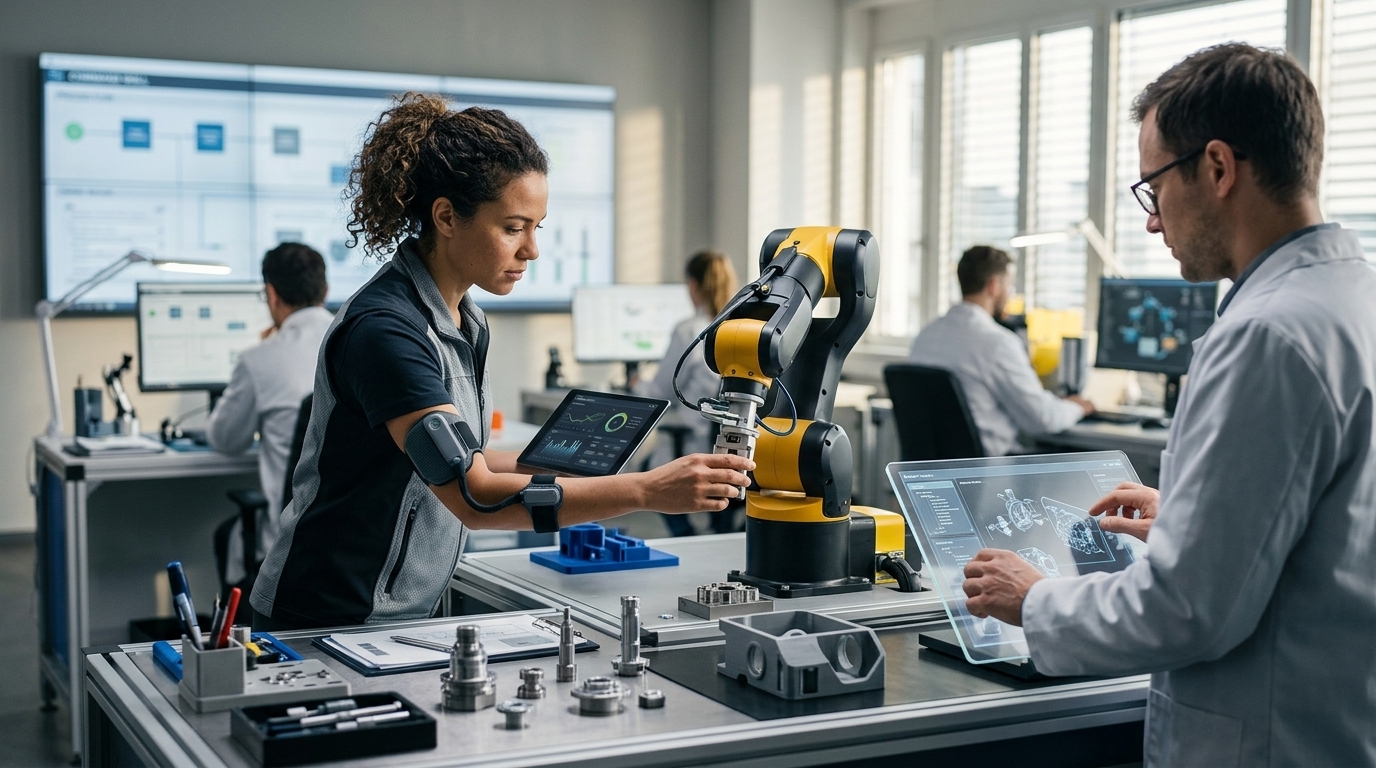
This study aligns perfectly with the principles of Industry 5.0, which places humans at the center of industrial production. Rather than full replacement of workers by robots, SkillChain-Gym suggests a symbiotic relationship where AI assists in managing human evolution. The strategic importance of this approach is immense for global industry, which faces demographic aging and shortages of skilled personnel.
"A company's ability to transform its workforce faster than the competition is the new comparative advantage in the age of AI," the research team notes.
In conclusion, SkillChain-Gym is not just a technical tool for AI developers. It is a roadmap for production managers and HR professionals, proving that learning is a productive activity just as important as assembling a product. Integrating these models into the ERP (Enterprise Resource Planning) systems of the coming years is expected to radically change how we perceive efficiency in the factory of the future.