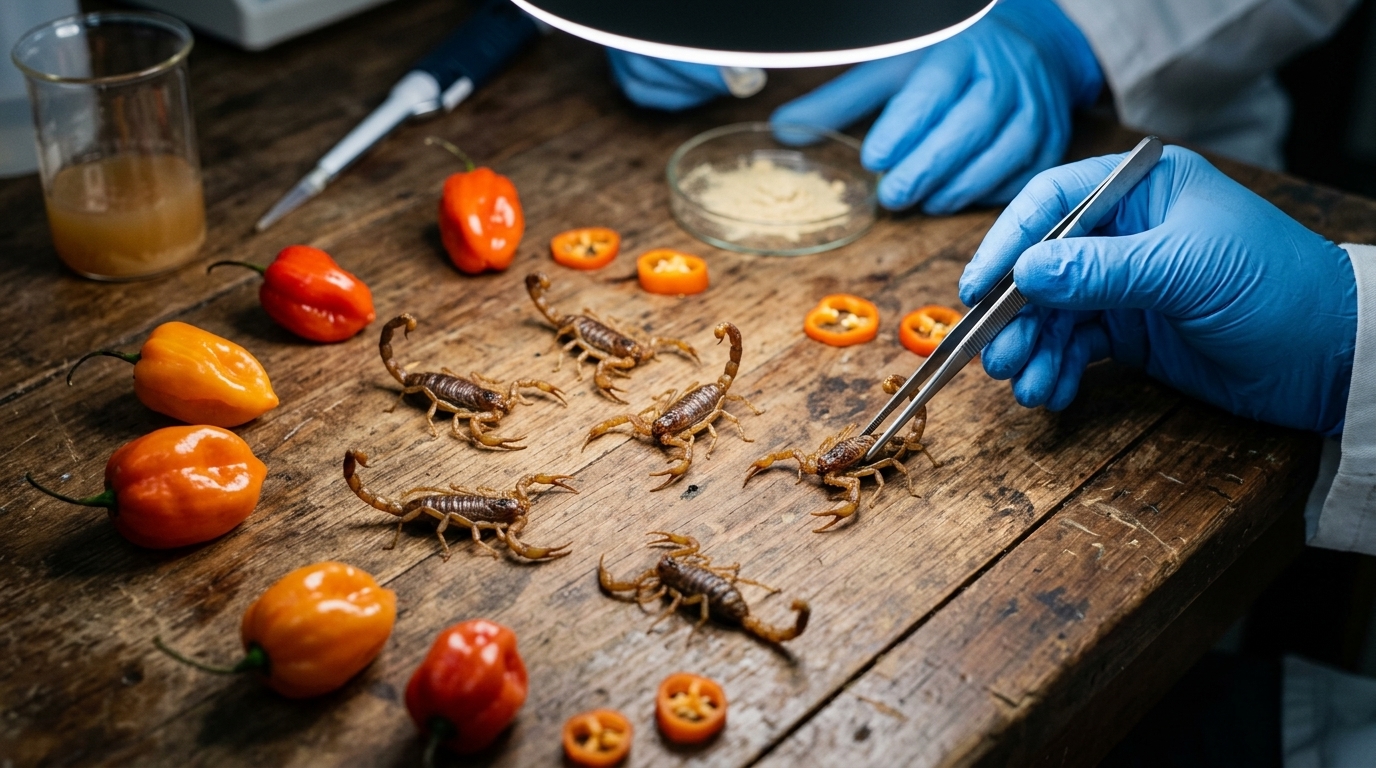
In a high-tech laboratory at the National Autonomous University of Mexico (UNAM), science is meeting the wild in a way that resembles 21st-century alchemy. As the world faces the "silent pandemic" of antimicrobial resistance (AMR), a team of researchers is turning to two of the most potent elements of Mexican biodiversity: scorpion venom and the habanero pepper. This unusual partnership between biology and chemistry promises to provide a solution where traditional antibiotics have begun to fail spectacularly.
The Crisis of Antimicrobial Resistance and the Need for Innovation
Antimicrobial resistance is no longer a science fiction scenario; it is a grim reality that threatens to return us to the pre-antibiotic era, where a simple infection could be fatal. According to the World Health Organization, drug-resistant microbes are responsible for millions of deaths annually, with tuberculosis (TB) remaining one of the leading causes of death worldwide from a single infectious agent. The development of new antibiotics has stagnated over the last few decades, as pharmaceutical companies often view research in this field as economically non-viable due to low returns on investment compared to chronic disease medications.
This is where the team led by Dr. Lourival Possani, a world-renowned toxin expert, steps in. After decades of studying scorpions of the genus Centruroides, his team discovered two chemical compounds (benzoquinones) in the venom that have the ability to kill bacteria without damaging human tissue. Simultaneously, the use of capsaicin derivatives from habanero peppers offers a complementary action, enhancing the penetrative power of these compounds through bacterial cell walls.
From Stinger to Lab: The Chemistry of Success
The process begins with the "milking" of scorpions, a delicate operation requiring precision and nerves of steel. Researchers isolate the peptides and quinones contained within the venom. What is striking is that these compounds do not act like classical antibiotics. While penicillin and its derivatives often target specific metabolic pathways of bacteria—which bacteria eventually learn to bypass—the substances from scorpion venom physically attack the structure of the pathogen's cell membrane.
- Targeted Action: The compounds proved effective against Mycobacterium tuberculosis, the bacterium that causes TB, even in strains that are resistant to existing first-line drugs.
- Synergy with Capsaicin: The addition of derivatives from the habanero pepper acts like a "Trojan horse," allowing the antibiotic molecules to penetrate deeper into bacterial colonies and biofilms.
- Low Toxicity: Unlike the raw venom, the isolated and synthetically produced compounds showed no adverse side effects in animal models, clearing a major hurdle for future clinical trials.
Using biodiversity as a source for pharmaceuticals is not a new concept, but this specific approach highlights the vital importance of ecosystem conservation. Mexico, a "megadiverse" country, offers a treasure trove of genetic information that we are only beginning to decode. The ability to synthesize these molecules in the lab means we can harness nature's power without threatening the survival of the species themselves.
Challenges and the Future of Therapy
Despite encouraging laboratory successes, the road from the lab bench to the pharmacy shelf is long and fraught with obstacles. Producing these compounds on an industrial scale requires massive investment and rigorous Phase I-III clinical trials. However, the researchers have already successfully synthesized the substances artificially, eliminating the need for constant venom collection from live scorpions—a process that would be practically impossible and environmentally damaging at scale.
"Nature has spent millions of years perfecting these molecules for defense and predation. We are simply learning to read its notes," says one of the lead researchers.
The significance of this research extends far beyond tuberculosis. The same principles could be applied to combat Methicillin-resistant Staphylococcus aureus (MRSA) and other hospital-acquired infections. Furthermore, the success of the Mexican scientific community sends a powerful message: innovation is not the exclusive domain of wealthy Northern nations. Leveraging local knowledge and natural resources can lead to global solutions that benefit all of humanity.
Conclusion: New Hope from the Shadows
As humanity struggles to stay one step ahead of bacterial evolution, the answer may finally lie in the most unlikely of places: in the tail of a scorpion lurking in the desert or the searing heat of a pepper in a Mexican market. This research reminds us that science is a continuous process of reinvention, where the primal and the cutting-edge merge. If we can successfully harness the power of these natural weapons, we may gain a much-needed reprieve in the war against infection, ensuring a future where medicine remains effective for generations to come.