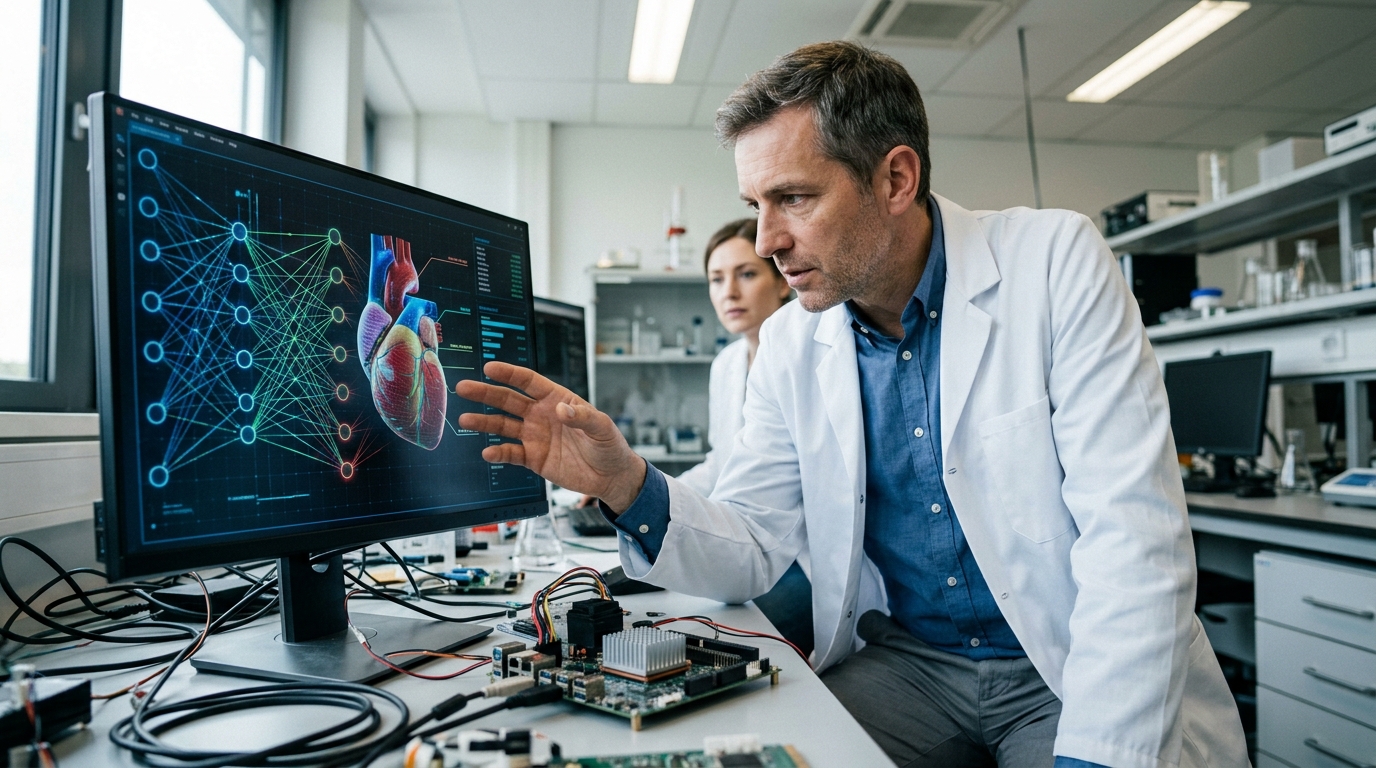
Medical science is standing at the precipice of a structural transformation where information is no longer just accessible, but active and diagnostic. OpenEvidence, a platform that has already earned the trust of the medical community as the "authoritative alternative" to general search engines, has announced the integration of FDA-cleared artificial intelligence algorithms for the detection of heart disease. This move is not merely a technical upgrade; it represents a fundamental shift in how clinicians interact with digital tools at the point of care.
The Transition from Information to Diagnosis
Until now, OpenEvidence functioned primarily as a sophisticated natural language processing (NLP) mechanism, synthesizing answers based on current medical literature. However, the addition of diagnostic tools for the heart changes the game entirely. These new algorithms focus on analyzing electrocardiograms (ECGs) to identify conditions that often escape the human eye, such as heart failure with reduced ejection fraction or occult atrial fibrillation.
The significance of FDA clearance cannot be overstated. In a world flooded with AI-generated "medical advice," certification from a regulatory body provides the necessary layer of safety and clinical validity. Physicians are no longer just looking for "what the study says," but rather "what this specific result indicates for my patient."
Addressing the Crisis of Physician Burnout
One of the most significant problems in the modern healthcare system is physician burnout, which often stems from the massive volume of data that must be analyzed in minimal time. The integration of AI into OpenEvidence promises to act as a "second reader," reducing the cognitive load on cardiologists and primary care physicians alike.
- Speed: Analysis occurs in seconds, allowing for immediate decision-making during patient consultations.
- Precision: Algorithms have been trained on millions of clinical cases, identifying patterns that are statistically invisible to humans.
- Accessibility: It allows primary care physicians to have access to diagnostic power previously reserved for specialized centers.
"AI will not replace the cardiologist, but the cardiologist who uses AI will replace the one who does not," technology advocates often state, and OpenEvidence's move confirms this trajectory.
Challenges and Ethical Dilemmas
Despite the excitement, the integration of diagnostic AI raises serious questions. Chief among them is the "black box problem": how can a doctor trust a diagnosis when they cannot trace the algorithm's logical path? OpenEvidence claims its platform remains committed to evidence-based medicine, providing citations for every conclusion drawn.
Furthermore, there is the risk of "automation bias," where clinicians might stop questioning the machine's results. Maintaining critical thinking remains the final frontier of human medicine. OpenEvidence must balance providing powerful tools with avoiding the alienation of the doctor from the clinical practice. The human-in-the-loop model is not just a safety feature; it is an ethical necessity.
The Future of Digital Health
This move by OpenEvidence is expected to trigger chain reactions in the digital health industry. Already, giants like Google and Microsoft are investing billions in medical AI models. However, OpenEvidence's focus on specialized clinical knowledge and compliance with FDA standards gives it a strategic edge. In the future, the platform may expand into other fields, such as oncology or neurology, creating a holistic digital ecosystem for the modern physician. The era of the "digital medical assistant" is no longer a futuristic concept—it is a present reality that demands rigorous oversight and continuous adaptation.