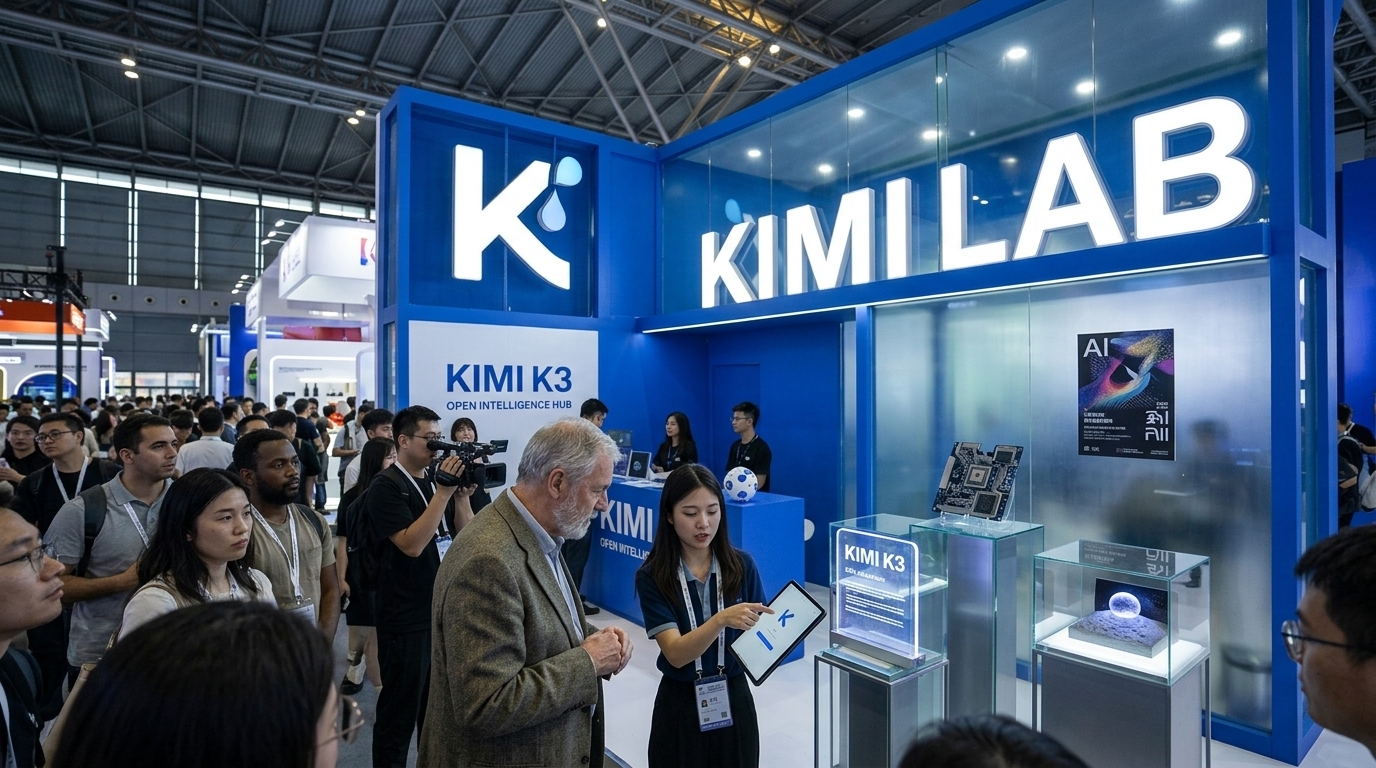
Global markets experienced a second "DeepSeek shock" on Friday after Moonshot AI, a Beijing-based startup named after Pink Floyd’s iconic album, unveiled its Kimi K3 model. As the largest open-weight model ever released, K3 promises performance rivaling Anthropic’s Fable 5 at a fraction of the operating cost.
Closing the Performance Gap
Moonshot AI claims K3 "substantially outperformed" OpenAI’s GPT 5.6 Sol and Anthropic’s Opus 4.8 in internal benchmarks. While industry figures like Anthropic CEO Dario Amodei and Tesla’s Elon Musk predicted Chinese labs were at least six months behind US frontiers, the K3 launch has rapidly collapsed that timeline. One independent benchmark from Arena.AI even ranked K3 as the best model currently available.
The financial disruption stems largely from pricing: K3 is offered at $15 per million output tokens, compared to $50 for Anthropic’s Fable 5.
Market Selloff and Investor Fear
The debut rattled investors who previously believed that massive US capital expenditure on compute would guarantee a permanent lead. The resulting market reaction was swift:
- TSMC shares fell 7% despite reporting a 77% jump in quarterly profit.
- SoftBank, often viewed as a proxy for OpenAI, dropped 9%.
- Nvidia fell 1.2%, briefly losing its spot as the world’s most valuable company to Apple.
- Meta shares plunged by over 2.4%.
Efficiency Born of Constraint
Analysts suggest that US export controls may have backfired by forcing Chinese labs to innovate under pressure. Restricted from the most advanced processors, companies like Moonshot and Meituan—which recently trained a 1.6 trillion-parameter model on domestic hardware—have focused on squeezing efficiency out of less capable chips. Lower power costs and a national commitment to open-source development have further bolstered the Chinese ecosystem.
Speaking at the World Artificial Intelligence Conference in Shanghai, President Xi Jinping reaffirmed China’s commitment to open-source AI, while criticizing the practice of "overstretching the concept of national security" to hinder technological cooperation.