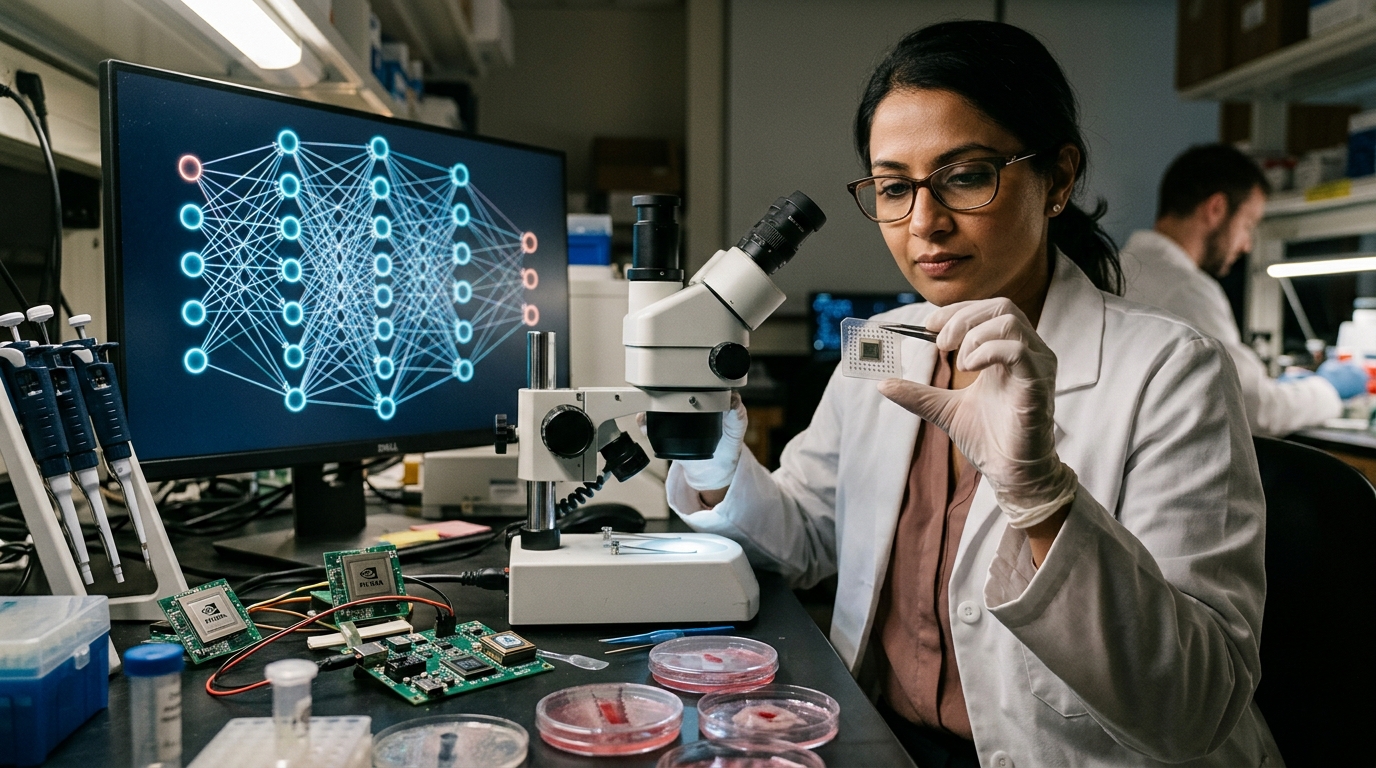
At the intersection of materials science, biomedical engineering, and artificial intelligence, a solution is emerging for one of modern medicine's most persistent challenges: chronic diabetic ulcers. For millions living with diabetes, a minor scrape on the foot can escalate into a life-threatening condition, often leading to amputation due to poor circulation and impaired tissue regeneration. However, a new study unveiling AI-guided microneedles that "bend" and adapt to body temperature promises to fundamentally shift this paradigm.
Technological Innovation: Memory Polymers and Intelligence
The core of this innovation lies in "smart" materials. Researchers have developed a microneedle array composed of shape-memory polymers (SMPs). These materials possess the unique ability to alter their geometry when exposed to specific stimuli—in this case, human body heat. When the patch is applied to the skin, the microneedles painlessly penetrate the epidermis. Upon reaching the body's natural temperature of 37°C (98.6°F), the needles undergo a programmed deformation, bending slightly to create a mechanical "anchor" within the tissue. This locking mechanism ensures the patch remains stable even on mobile body parts, facilitating consistent and controlled drug delivery.
This is where Artificial Intelligence plays a pivotal role. The use of AI extends beyond the initial design of the needles to the optimization of drug release kinetics. Machine learning algorithms analyzed thousands of variables—ranging from needle tilt angles and penetration depths to varied release rates—to determine how these factors influence healing speed. The result is a system that does not function passively like a traditional bandage, but actively adapts its therapeutic action to the specific requirements of the wound microenvironment.
From Laboratory Bench to Clinical Reality
Diabetic ulcers are notorious for their resistance to conventional treatments. High blood glucose levels create an environment that promotes chronic inflammation and inhibits angiogenesis (the formation of new blood vessels). Traditional topical ointments often fail to reach deeper tissue layers, while systemic treatments like oral medications can cause unintended side effects in other organs.
AI-guided microneedles offer a solution of localized precision. In preclinical trials, this technology demonstrated an ability to accelerate healing by up to 40% compared to existing methods. The needles deliver growth factors and antibiotics directly beneath the ulcer's surface, bypassing the barrier of necrotic tissue. Furthermore, the needles' ability to bend reduces mechanical irritation, allowing new cells to proliferate without being disrupted by the friction of the patch.
"This is not merely a better bandage; it is a bio-interactive platform that understands the physics of the wound," the study's lead researchers noted.
Socio-Economic Implications
The significance of this development transcends biology. The cost of managing diabetic foot complications burdens healthcare systems worldwide with billions of dollars annually. In regions with high Type 2 diabetes prevalence, the introduction of such technologies could mean the difference between a productive life and permanent disability. However, the critical question remains: will this technology be accessible to the masses, or will it remain a luxury for the few?
Paradoxically, integrating AI into the manufacturing process may help drive costs down in the long run. Through digital design and simulation, researchers can bypass expensive "trial and error" phases, reaching optimized product iterations faster. Additionally, the potential for patients to self-apply these patches at home reduces the burden on hospitals and specialized wound-care centers, potentially lowering the overall cost of care.
The Future of Personalized Medicine
Looking ahead, the logical next step is the integration of sensors within the microneedles themselves. Imagine a patch that not only treats but also "senses" pH levels and glucose concentrations in the wound in real-time, transmitting data to a physician's smartphone via Bluetooth. AI could then dynamically adjust the drug dosage, offering a truly personalized therapeutic experience.
The era of medicine based on generalized protocols is nearing its end. The convergence of AI and nanotechnology allows us to intervene in biology with the precision of a surgeon but the convenience of a simple adhesive strip. For diabetic patients, this is more than just a scientific headline; it is a tangible hope for a life lived without the constant shadow of the next wound.