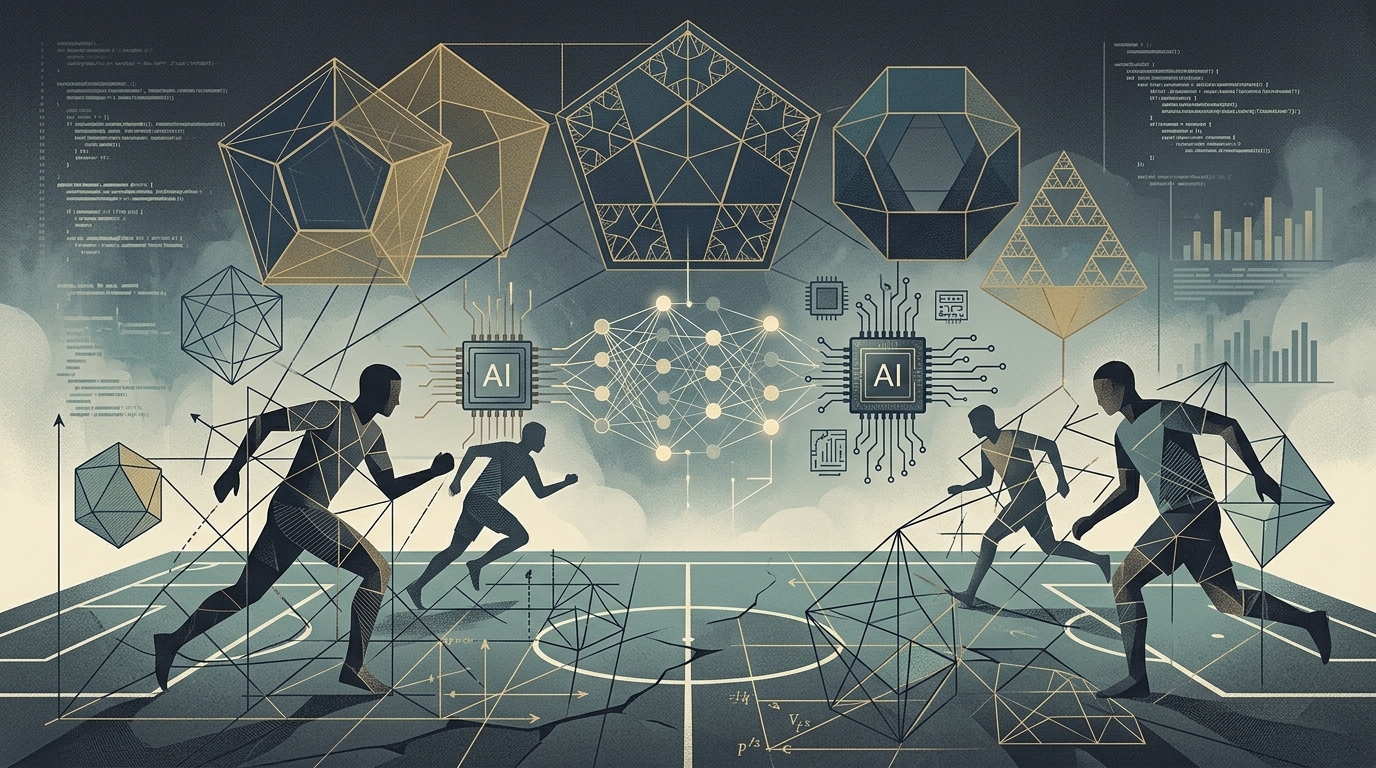
Spain's World Cup victory was not merely a result of athletic prowess but a triumph of mathematics over individual talent. While teams like Mbappé's France and Messi's Argentina often rely on the brilliance of their stars, Spain imposed a "geometric" rhythm that neutralized its opponents.
The Power of Triangles
According to Conor Boland, a professor at Dublin City University (DCU), Spain's secret lay in the constant formation of passing triangles. In their 2-0 semi-final win over France and the final against Argentina, Spanish players created a network that gave the impression they had more players on the pitch. Every time a player received the ball, two teammates immediately provided receiving angles, forcing defenders into constant uncertainty.
This geometry was not about aesthetics but about controlling space and time. If three players are in a straight line, a defender can cover two options. However, when a triangle is formed, the defender must choose: press the ball or close the passing lane? By the time they decided, the ball had already moved.
Data and Dynamic Maps
Modern analysis uses tracking data to calculate who is most likely to reach the ball first, considering speed and acceleration. Spain's second goal in the semi-final by Pedro Porro (58th minute) was the perfect example: an exchange of passes with Dani Olmo that created a new angle that the French defense failed to recognize in time.
From Football to Basketball
This approach mirrors the famous "triangle offense" of Phil Jackson's Chicago Bulls in basketball. The core principle remains the same: triangles always maintain more than one option, making the defense vulnerable in case of a communication breakdown, as Kylian Mbappé admitted following France's defeat.