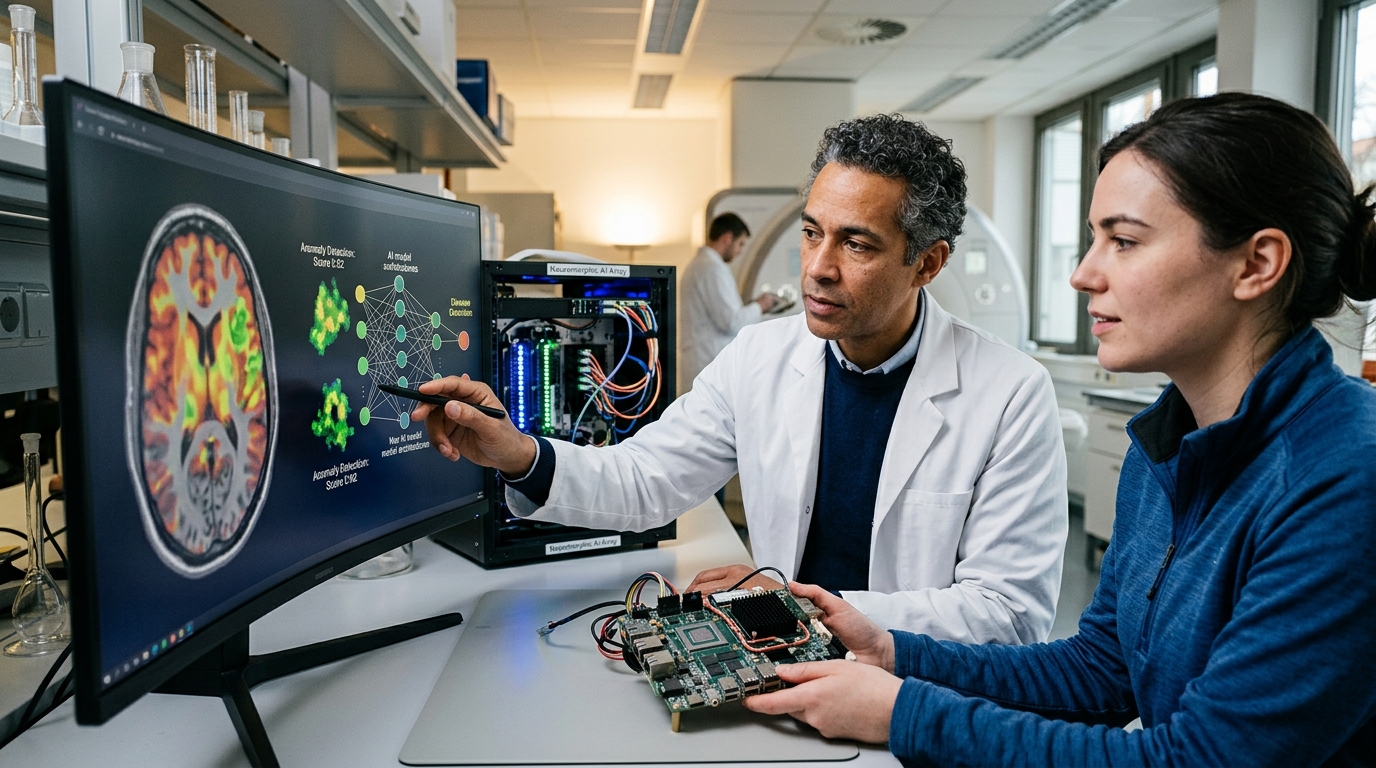
The medical community is standing on the precipice of one of the most significant shifts in its history, as Artificial Intelligence (AI) transitions from a theoretical concept to an active partner in clinical practice. Recently, during a briefing for physicians at OSF HealthCare, the vision of "Dr. GPT" was presented—a metaphor for the Large Language Models (LLMs) and advanced algorithms that promise to reshape disease detection and patient care.
The Revolution in Early Detection
One of the most promising applications of AI in medicine is its ability to analyze vast amounts of data with a speed and precision that exceeds human capabilities. At OSF HealthCare, experts argue that AI can function as a "second pair of eyes" for radiologists and pathologists. For instance, machine learning algorithms can detect subtle anomalies in CT scans or mammograms that might escape the human eye during the early, most treatable stages of a disease.
Early detection is not limited to oncology. AI is already being utilized to predict cardiovascular events by analyzing electrocardiograms and identifying patterns in biochemical tests that suggest the onset of autoimmune diseases. The transition from reactive medicine—treating symptoms after they appear—to proactive, preventative medicine is finally within reach.
"Dr. GPT" as a Digital Assistant
The term "Dr. GPT" does not imply replacing doctors with a chatbot, but rather adopting tools that can synthesize medical information in seconds. Today's physicians spend a disproportionate amount of time on Electronic Health Record (EHR) documentation and administrative tasks. AI can automate these processes, allowing clinicians to focus on what matters most: the human patient.
"AI will not replace physicians, but physicians who use AI will replace those who do not," was a key takeaway from the briefing.
Furthermore, LLMs can assist in translating complex medical jargon into plain language for patients, improving treatment compliance and health literacy. This "democratization" of medical knowledge is a double-edged sword, as the accuracy of information remains the primary concern for healthcare providers.
Challenges, Ethics, and the "Hallucination" Problem
Despite the enthusiasm, the integration of AI into healthcare is fraught with risks. The phenomenon of "hallucinations," where AI models produce plausible but factually incorrect information, is particularly dangerous in a clinical setting. A wrong diagnosis or an incorrect medication recommendation can have fatal consequences.
- Data Privacy: Using sensitive medical data to train algorithms requires rigorous security protocols and adherence to privacy laws (such as HIPAA in the US or GDPR in Europe).
- Algorithmic Bias: If training data is not representative of the general population, AI may exhibit bias against specific ethnic or socioeconomic groups.
- Legal Accountability: Who is liable for a medical error guided by an algorithm? The physician, the software developer, or the healthcare institution?
At OSF HealthCare, the approach is clear: AI is viewed as "Augmented Intelligence." The human physician remains the final arbiter and decision-maker. The technology is the tool, not the authority.
The Future of Personalized Care
Looking ahead, AI promises to make medicine truly personalized. Instead of a "one-size-fits-all" approach, algorithms will be able to analyze an individual's genetic profile, lifestyle, and environment to suggest the ideal therapeutic regimen. What we are witnessing today with "Dr. GPT" is merely the dawn of a new era, where technology and humanity must walk hand-in-hand to ensure a healthier future for all.