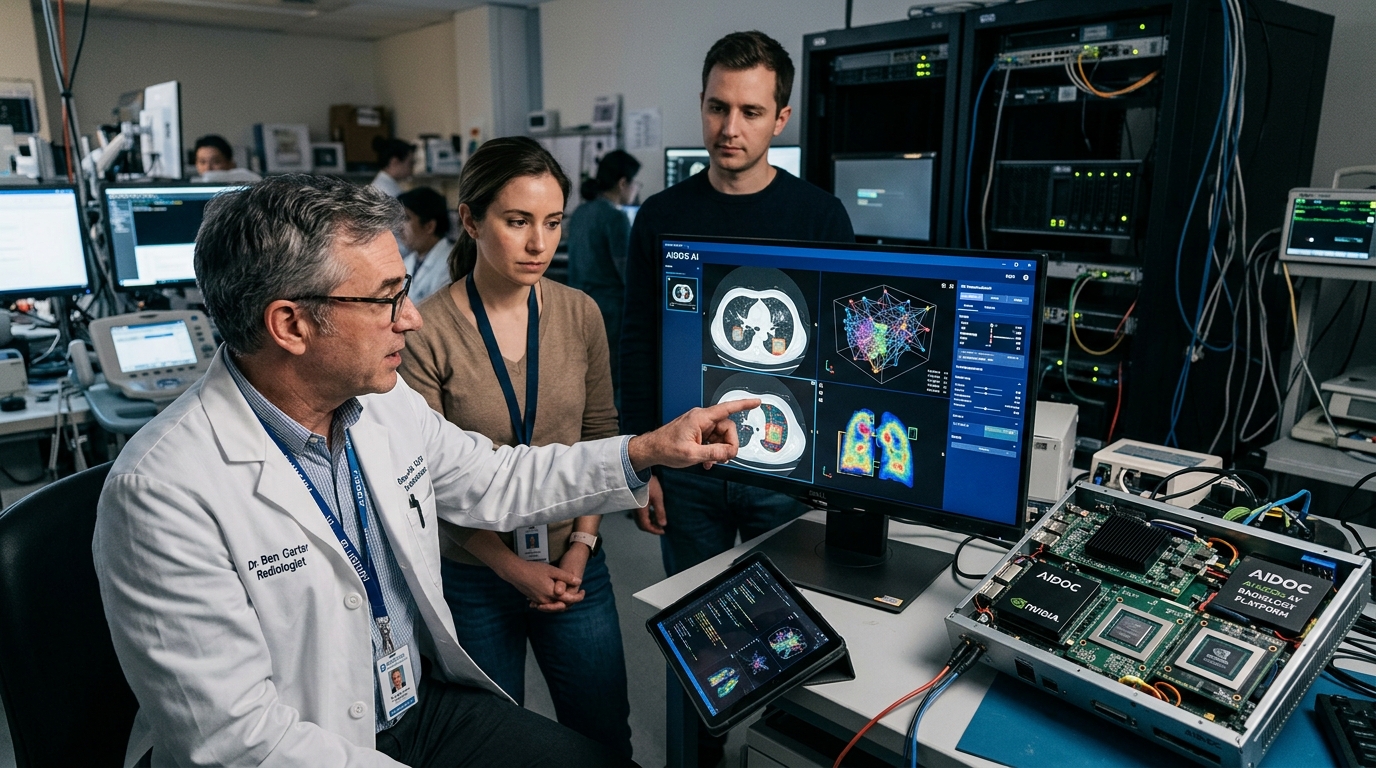
In an era where technology investments are scrutinized with unprecedented rigor, Aidoc, a pioneer in clinical AI for radiology, has successfully closed a $150 million Series D funding round. Led by Goldman Sachs Asset Management with participation from General Catalyst, this capital infusion is more than just a liquidity boost; it is a resounding vote of confidence in the maturation of the digital health sector. Aidoc is no longer merely promising "smart algorithms"; it is deploying a comprehensive "AI Operating System" (AIOS) designed to serve as the backbone of modern hospital infrastructures.
The Shift from Tool to Platform
For years, medical imaging AI operated in silos. An algorithm for detecting brain bleeds here, another for pulmonary embolisms there. This fragmented approach led to "dashboard fatigue" among radiologists, who found themselves juggling multiple interfaces and disjointed notifications. Aidoc disrupted this paradigm by introducing the platform concept. Its system integrates directly into the existing workflow, automatically scanning every image in the background and only alerting the physician when urgent findings are detected.
The new funding is expected to accelerate the expansion of this ecosystem. The company plans to push its capabilities beyond radiology, venturing into cardiology and oncology. The goal is to weave a unified digital fabric that connects patient data in real-time, enabling clinicians to make data-driven decisions rather than relying solely on empirical observation. In global healthcare systems plagued by burnout and staffing shortages, such technology serves as a force multiplier, reducing diagnostic delays and mitigating human error.
Goldman Sachs and the Economics of Healthcare AI
The involvement of Goldman Sachs indicates that healthcare AI has moved past the experimental stage and entered the scaling phase. Investors are no longer chasing the next "shiny" startup; they are looking for companies with proven clinical utility and robust commercial penetration. Aidoc already boasts over 15 FDA clearances, providing a significant competitive moat. This financial backing allows the company to transition from a startup to an enterprise-grade utility.
However, the industrialization of radiology brings its own set of complexities. Reliance on large-scale platforms can lead to "vendor lock-in," where hospitals find it prohibitively expensive to switch providers. Furthermore, the ethical implications of data ownership remain a hot-button issue. Who owns the patient data used to train these predictive models? Aidoc maintains that its approach is "open," allowing third-party developers to integrate their own algorithms into its platform—a strategy reminiscent of Apple’s App Store, but tailored for the high-stakes environment of an emergency room.
Ethics, Data, and the Future of the Radiologist
Despite the technological fervor, the debate over machines replacing doctors remains relevant, albeit more nuanced. Aidoc does not position itself as a replacement, but as a "co-pilot." In an environment where medical data volume doubles every few months, the human brain simply cannot process every pixel with consistent speed and accuracy 24/7. AI takes over the "grunt work" of triage, allowing the radiologist to focus on complex interpretation and patient care strategy.
The future of Aidoc, and by extension digital health, will be judged by its ability to prove that its technology not only saves lives but also reduces the overall cost of care. With an additional $150 million in its coffers, the company has the resources to transform radiology from an art of observation into a data-driven science of precision. The ultimate challenge remains maintaining a human-centric approach within an increasingly automated medical landscape.