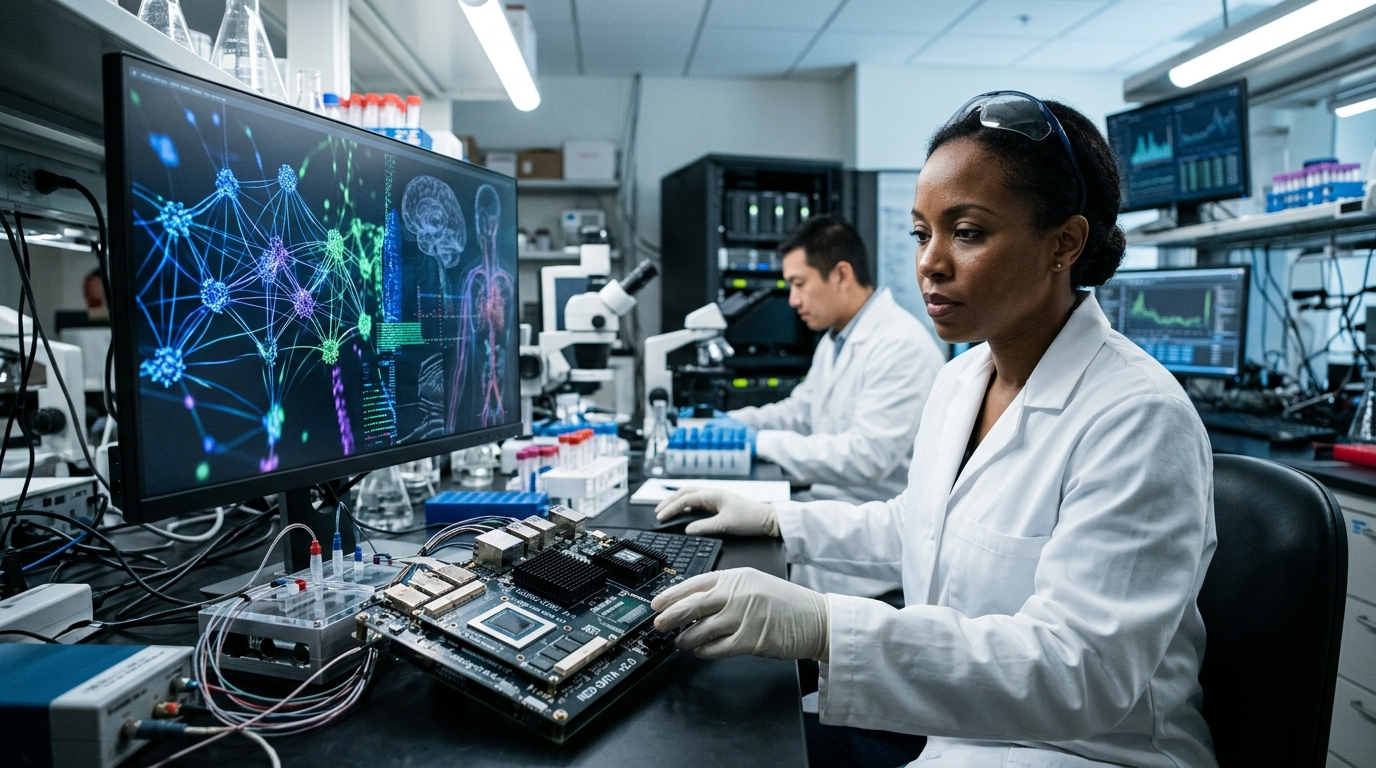
As of June 15, 2026, the landscape of American medicine is undergoing a seismic shift that few could have predicted even five years ago. A comprehensive new study suggests that Artificial Intelligence (AI) is no longer a peripheral innovation but the very backbone of a restructured healthcare system. The findings indicate that we are witnessing a fundamental transformation in how care is delivered, managed, and perceived in the United States.
Clinical Breakthroughs: The Era of Precision Medicine
The study highlights that AI's most profound impact is currently felt in diagnostic accuracy. Machine learning models, now trained on decades of longitudinal patient data and high-resolution imaging, are outperforming human specialists in early detection of conditions ranging from diabetic retinopathy to complex neurological disorders. In radiology, AI integration has led to a 30% reduction in diagnostic errors, providing a safety net that was previously non-existent.
Beyond diagnosis, AI is driving the surge in precision medicine. By synthesizing genomic data with environmental factors, AI allows clinicians to move away from the 'one-size-fits-all' approach. We are seeing oncology treatments that are specifically engineered for the molecular profile of a single patient's tumor, drastically improving survival rates for previously terminal diagnoses. This speed of analysis—moving from weeks to mere minutes—is the new standard in 2026.
Healing the Healers: Combating Physician Burnout
Perhaps the most immediate relief provided by AI is in the administrative sphere. For decades, the 'electronic health record (EHR) tax' has been a leading cause of physician burnout. The study notes that the widespread adoption of generative AI scribes has fundamentally changed the clinical encounter. These systems capture the nuances of patient-doctor dialogue, automatically generating clinical notes and coding them for billing with near-perfect accuracy.
- Administrative overhead has decreased by an estimated 40% in participating hospitals.
- AI-driven predictive scheduling has reduced patient wait times in emergency departments by 25%.
- Prior authorization processes, once a source of friction between doctors and insurers, are now largely automated.
By removing the digital barrier of the computer screen, AI is paradoxically making healthcare more human again. Doctors are reporting higher job satisfaction, as they can finally focus on the patient sitting in front of them rather than the data entry tasks that once consumed their day.
The Ethical Minefield: Bias and Accountability
However, the transition is not without significant friction. The study warns of the 'black box' problem—where the reasoning behind an AI's clinical recommendation remains opaque. There is also a pressing concern regarding algorithmic bias. If AI models are trained on datasets that lack diversity, they risk perpetuating systemic inequities in healthcare delivery, particularly for marginalized communities.
"We are at a crossroads where the efficiency of the machine must be tempered by the ethics of the human. An algorithm can identify a pattern, but it cannot understand the context of a human life," notes Dr. Alan Jameson, lead author of the study.
Conclusion: A Permanent Transformation
The study concludes that American healthcare is being rebuilt from the ground up. While the economic implications are staggering—with projected savings in the hundreds of billions—the true measure of success will be the democratization of high-quality care. As we move further into 2026, the focus must shift toward robust governance and ensuring that the AI revolution benefits every American, regardless of their zip code or insurance plan. The stethoscope of the future is digital, but the heart of medicine must remain human.