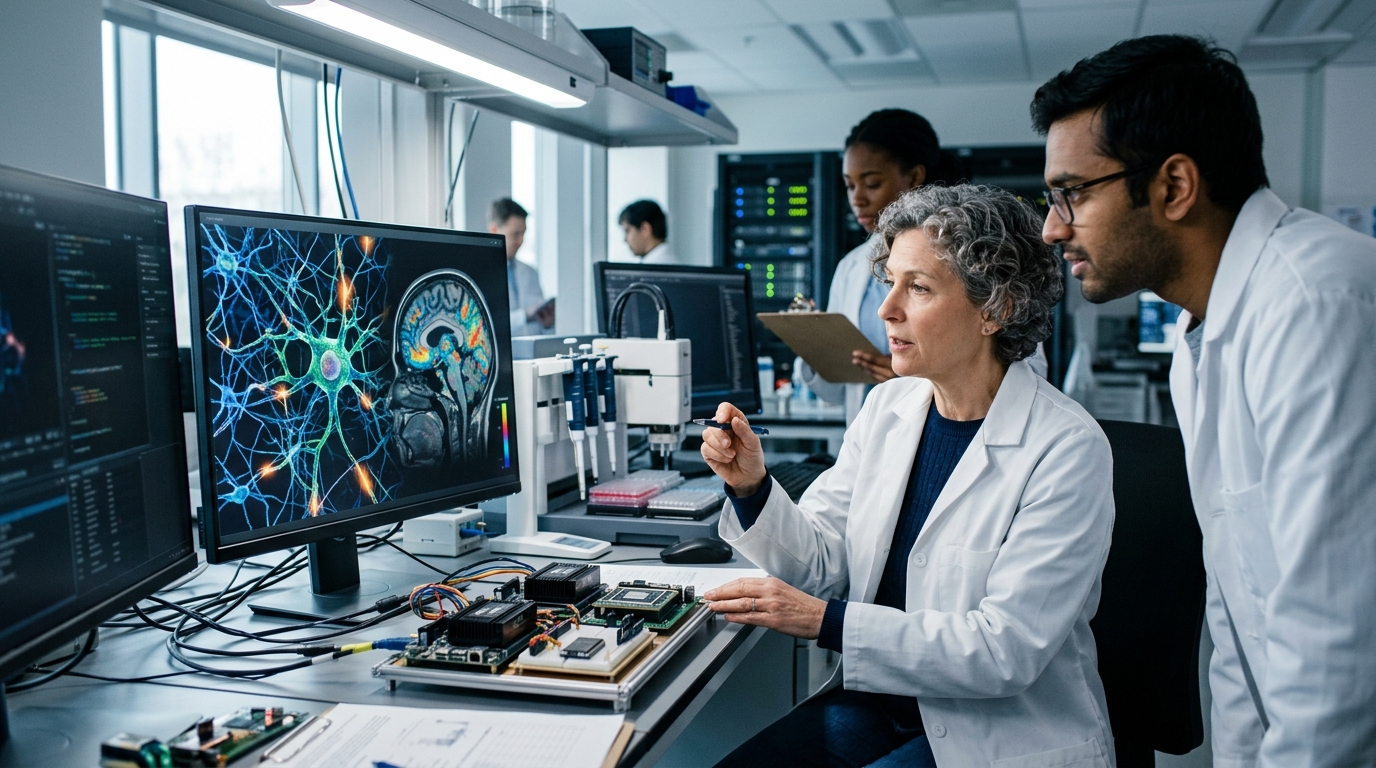
The battle against Alzheimer’s disease, one of the most intractable challenges in modern medicine, is entering a new, digital phase. A bold $6 million research project has recently been announced, aimed at leveraging Artificial Intelligence (AI) to identify novel therapeutic targets. In a world where traditional drug discovery methods often hit dead ends after decades of research and billions in spending, the promise of algorithms offers a beacon of hope for millions of patients and their families.
The Revolution of Computational Biology
The project, funded by a consortium of academic institutions and private stakeholders, does not merely focus on testing existing drugs but on rewriting how we understand the disease's underlying biology. AI has the unique capability to analyze massive datasets—ranging from genomic sequences to proteomic profiles—that are impossible for the human brain to process with comparable speed and precision.
Using machine learning models, researchers intend to map the complex protein interactions within the brain. The focus is no longer solely on amyloid plaques, which have been the center of research for years with limited success, but on more obscure biological pathways, such as neuroinflammation and neuronal metabolic dysfunction.
From Laboratory to Clinical Practice
The critical question posed by this $6 million initiative is whether AI can bridge the so-called 'Valley of Death' in drug development—the gap between discovering a target in the lab and a successful clinical trial. According to experts, AI can predict the toxicity and efficacy of compounds before they even enter human trials, saving invaluable time and resources.
- Large-scale biological data analysis to identify new biomarkers.
- Simulation of cellular responses to various chemical compounds.
- Personalization of treatment based on the patient's genetic profile.
This approach allows scientists to 'fail fast and cheap' in the digital realm, ensuring that investment is directed only toward the most promising solutions in the physical world. It is a strategy that is fundamentally changing the rules of the pharmaceutical industry.
Ethical Challenges and the Future of Care
Despite the excitement, the use of AI in medical research brings significant questions to the fore. Who owns the intellectual property of a drug 'discovered' by an algorithm? How do we ensure that the data used to train these models is representative of the entire population and does not incorporate racial or ethnic biases?
"Artificial Intelligence is not a panacea, but a powerful magnifying glass that allows us to see the disease at levels of detail previously unimaginable," states one of the project leads.
In conclusion, this $6 million project represents an investment in the future of precision medicine. While the sum may seem modest compared to the budgets of 'Big Pharma,' its strategic application in the AI sector could yield results of disproportionately high value, paving the way for an era where Alzheimer’s is no longer an inevitable fate, but a manageable condition.