In an era where the global economy is being rapidly reshaped by Artificial Intelligence and emerging technologies, the debate over education in Greece takes on a new, existential dimension. The recent proposals by Alexis Tsipras are not merely a collection of campaign promises; they represent an attempt to redefine the social contract through education. The core idea is clear: a transition from an exam-centric system to a model that treats knowledge as a universal right rather than a privilege for the few.
Beyond the Panhellenic Exams: A New Gateway to Knowledge
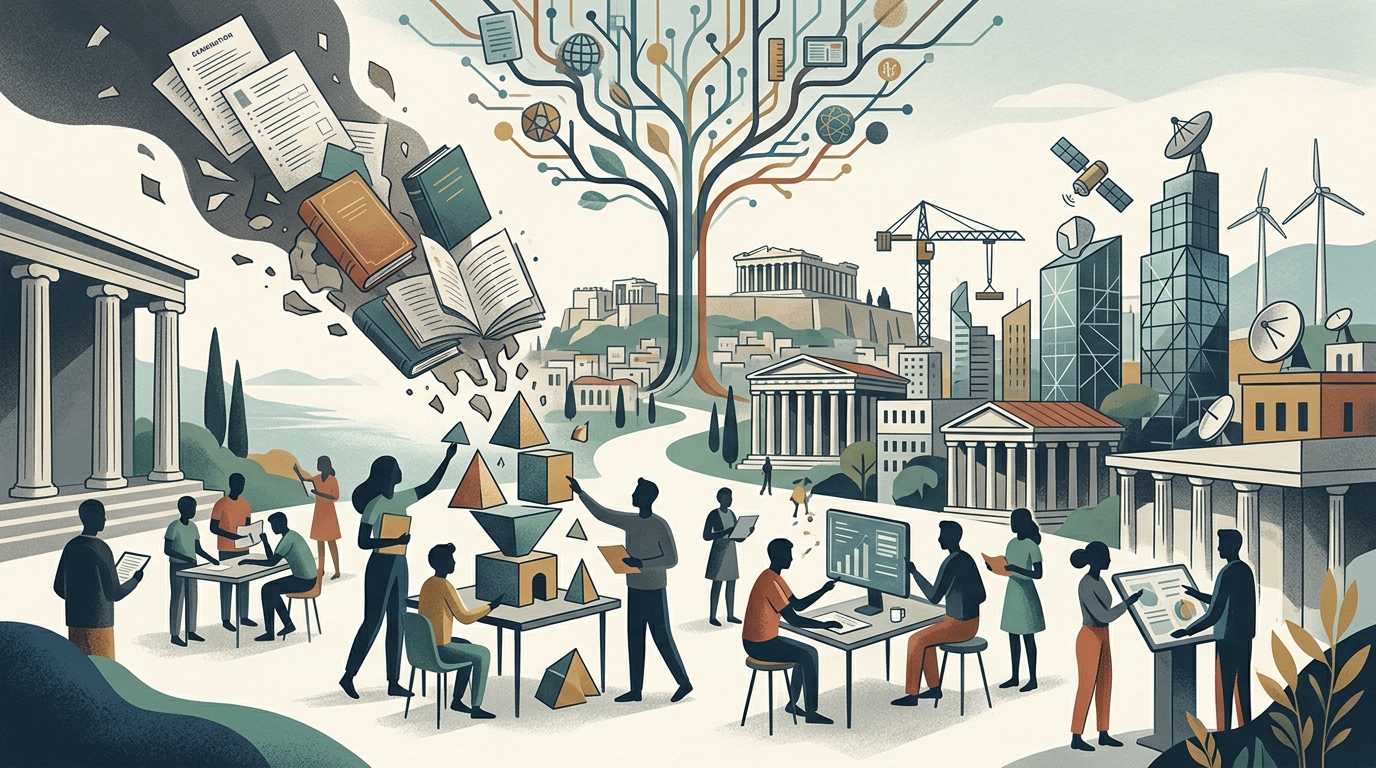
The abolition of the Panhellenic examinations is perhaps the most "explosive" proposal in the current public discourse. For decades, this system has functioned as the "sacred cow" of Greek education—a mechanism that, despite its indisputable integrity, has been blamed for student burnout and the financial exhaustion of families through private tutoring (frontistiria). Tsipras argues that free access to higher education will decompress high schools, allowing them to regain their pedagogical role.
However, the challenge remains: how can quality and meritocracy be ensured without a centralized entrance filter? The proposal implies a structural change in universities, which would need to absorb a larger volume of students, requiring a massive boost in infrastructure and personnel. This transition demands meticulous planning to prevent the devaluation of degrees, ensuring that the "right to knowledge" translates into a meaningful asset for the labor market.
Empowering Educators: The Fiscal and Moral Case for Salary Hikes
No educational reform can succeed without the educators themselves. The proposal for significant salary increases for teachers addresses a long-standing injustice. Greek teachers remain among the lowest-paid in the Eurozone, a fact that leads to professional burnout and makes it difficult to attract young scientists to public schools.
- Restoring the purchasing power of educators after a decade of austerity.
- Providing incentives for service in remote areas and islands.
- Linking salary progression with continuous training and educational output.
This investment is not just moral; it is economic. In an age where human capital is a nation's most vital resource, ensuring that teachers work with dignity is a prerequisite for growth. Increasing their compensation is a direct injection into the quality of teaching and, by extension, the future of the next generations.
A Ministry for the Future: Elevating Research and Innovation
The creation of an autonomous Ministry of Research and Innovation signals a commitment to decoupling scientific advancement from the bureaucracy of the traditional Ministry of Education. Greece possesses exceptional scientific talent, which is often forced to emigrate (brain drain) due to a lack of resources and vision. A dedicated ministry could act as an accelerator, linking university research with production and entrepreneurship.
"Our goal is to make knowledge a value and Education a right for everyone," Alexis Tsipras emphasizes, highlighting the need for a state that invests in its future rather than recycling its past.
This new ministry would be responsible for managing European funds and charting a national strategy for AI, the green transition, and biotechnology. It is a move aligned with international best practices, where research is treated as the primary pillar of national competitiveness.
The Implementation Gap: Political Ambition vs. Economic Reality
Despite the attractive vision, the pressing question remains: the cost. Abolishing exams and raising salaries requires billions of euros annually. In an environment of fiscal discipline, finding these resources necessitates either a reallocation of spending or revenue growth through economic expansion. Critics argue that such promises could lead to fiscal slippage, while supporters believe that failing to invest in education is the greatest cost a country can bear in the long run.
In conclusion, Tsipras’ proposals strike at the heart of Greece's structural issues. The country needs a bold educational reform to survive in the 21st century. Whether these proposals are the right vehicle or a utopian approach remains to be seen, but the debate they have sparked is more necessary than ever.