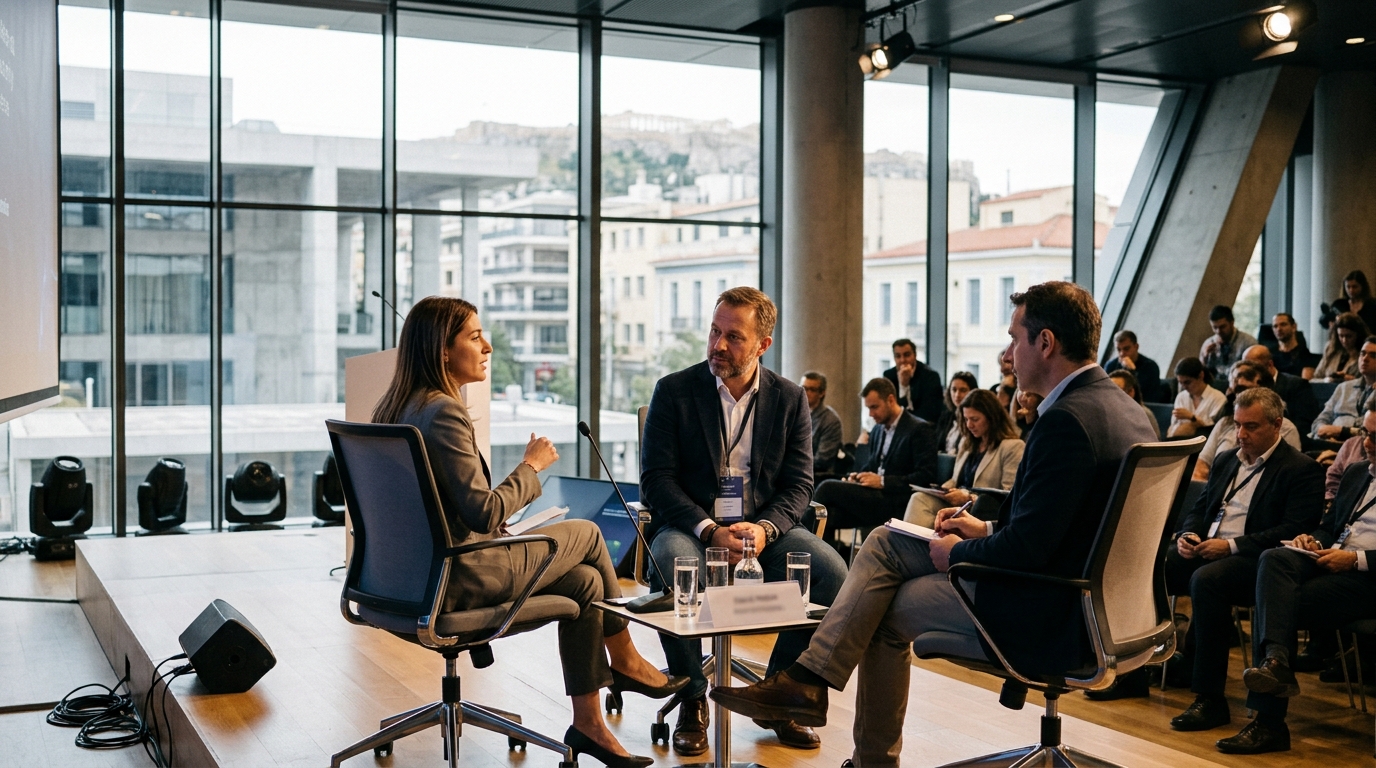
In an era where digital fortification is a matter of national and corporate survival, the conference organized by the newspaper "Makedonia tis Kyriakis" and emakedonia.gr brought to the fore the transformative impact of Artificial Intelligence (AI) on cybersecurity. The keynote speaker, Panagiotis Sarigiannidis, Professor at the Department of Electrical and Computer Engineering of the University of Western Macedonia, vividly described how AI is no longer a futuristic tool but the current reality reshaping the digital battlefield.
The Dual Nature of AI in Cyber Threats
Professor Sarigiannidis emphasized that AI acts as a "double-edged sword." On one hand, cybercriminals are now using sophisticated algorithms to automate their attacks, making them more frequent, more targeted, and extremely difficult to detect by traditional systems. The use of Large Language Models (LLMs) to create convincing phishing campaigns and the development of self-adapting polymorphic malware are just the tip of the iceberg.
However, the same technology offers the most potent defense. AI's ability to analyze vast volumes of data in real-time allows for the detection of anomalies that the human eye or static rules would fail to perceive. "The revolution lies in speed and prediction," it was noted during the conference, highlighting that proactive cybersecurity is now only achievable through machine learning.
The University of Western Macedonia as a Hub of Innovation
A particularly significant aspect of the conference was highlighting the role of Greek academic institutions. The University of Western Macedonia, under the guidance of researchers like Professor Sarigiannidis, has managed to lead in European programs (such as Horizon Europe), developing solutions exported across the continent. This proves that Greece possesses the human capital to lead in developing algorithms that protect critical infrastructure, from the power grid to healthcare systems.
"It's not just about code; it's about protecting the very functioning of our society," the professor stressed, referring to the need for closer cooperation between the academic community and the business world.
Challenges for Greek Enterprises
Despite the optimism regarding technological developments, the conference did not fail to address the challenges. Small and Medium Enterprises (SMEs) in Greece remain the "weak link," as they often lack the resources and expertise to integrate AI-based solutions. The need for staff training and investment in modern infrastructure is imperative, as ransomware attacks become increasingly sophisticated.
- Automating Incident Response reduces reaction time from days to seconds.
- User and Entity Behavior Analytics (UEBA) helps prevent insider threats.
- The ethical use of AI remains a critical issue, with the EU setting the framework through the AI Act.
In conclusion, the conference sent a clear message: Cybersecurity in the age of AI is not a static product one buys once, but a continuous process of adaptation and learning. Greece, through its universities, is showing the way, but the state and the market must follow at a faster pace.