

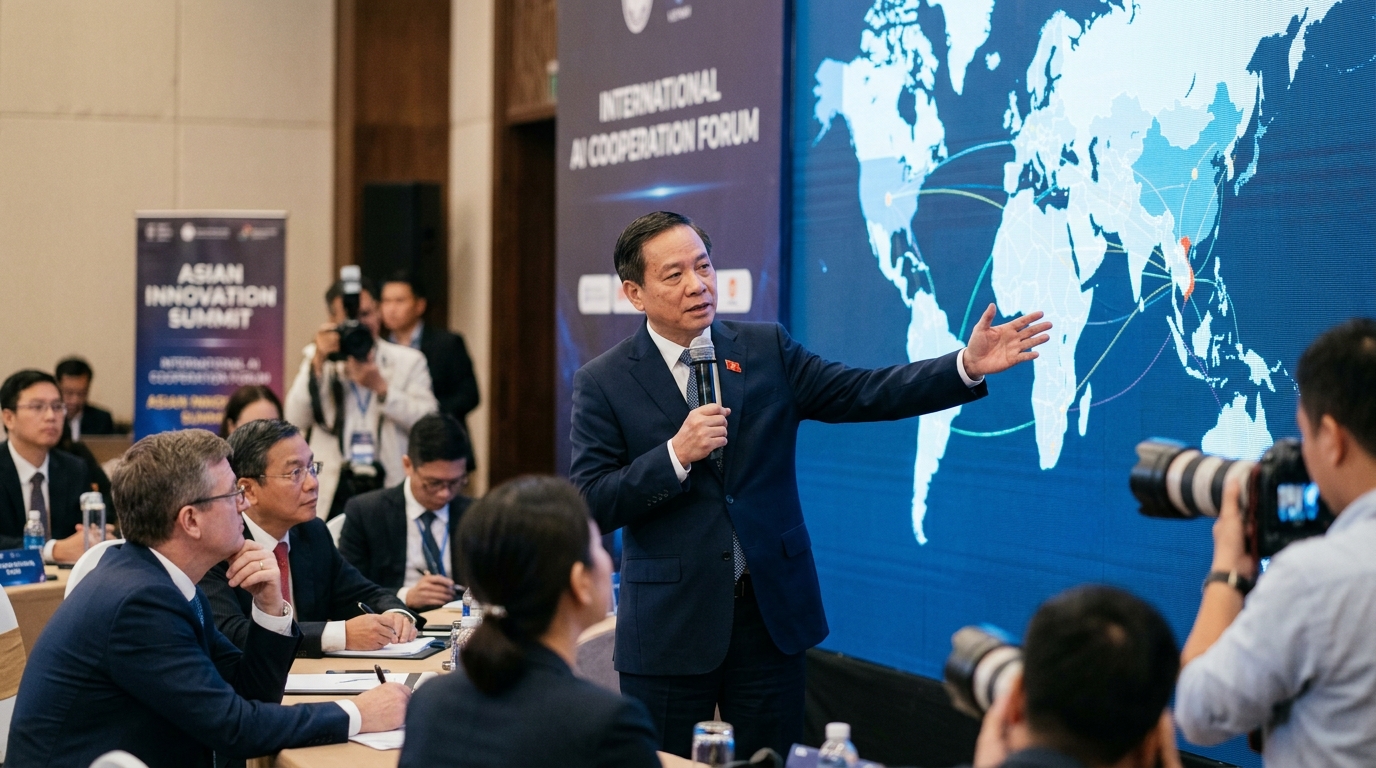
In the twilight of the first decade of the Artificial Intelligence revolution, a new player is emerging with unexpected momentum in Southeast Asia. Vietnam, a nation once synonymous with agricultural output and low-cost manufacturing, is redefining itself as a critical node in the global AI value chain. The recent moves by the Hanoi government are far from accidental; they are part of a well-orchestrated plan aimed at propelling the country into the world's top 50 AI powers by 2030.
The National Strategy and the 2030 Vision
Vietnam's pivot toward AI was codified through Decision 127/QD-TTg, which laid the groundwork for a national strategy for research, development, and application. This blueprint goes beyond mere technology adoption; it aims to create an ecosystem capable of producing 'Made in Vietnam' innovation. The government has invested heavily in data centers and high-tech infrastructure, such as the Hoa Lac High-Tech Park, which serves as the region's burgeoning Silicon Valley.
However, the secret to Vietnam's success lies not just in capital, but in human potential. Boasting one of the world's youngest populations and a robust tradition in STEM (Science, Technology, Engineering, and Mathematics), the country produces thousands of software engineers annually. The current challenge is upskilling this workforce in machine learning and natural language processing—areas where local giants like VinAI and FPT Software are already leading the charge.
'Bamboo Diplomacy' in the Digital Age
On the geopolitical stage, Vietnam practices what analysts call 'bamboo diplomacy': flexible, resilient, and rooted in neutrality. Amidst the technological cold war between Washington and Beijing, Hanoi has successfully attracted investment from both sides. NVIDIA CEO Jensen Huang’s 2024 visit, where he declared Vietnam a 'second home' for the semiconductor giant, sent a powerful signal to international markets.
At the same time, Vietnam maintains close ties with Chinese tech giants like Huawei and Alibaba, recognizing that geographical proximity and shared experiences in rapid industrialization offer unique advantages. This balance allows Vietnam to act as a bridge, avoiding the sanctions hampering other nations and ensuring access to critical resources, from high-performance GPUs to advanced algorithms.
"Artificial intelligence is not just an economic development tool for Vietnam; it is the means to ensure national sovereignty in the 21st century," states a high-ranking official from the Ministry of Science and Technology.
Domestic Champions and Real-World Applications
Private enterprise plays a pivotal role in this transformation. The Vingroup conglomerate, through VinAI, has consistently published research at top-tier global conferences, proving that the country can produce high-level scientific work. Meanwhile, Viettel, the state-owned telecommunications giant, is developing AI solutions for national defense and public administration, bolstering the nation's digital sovereignty.
The integration of AI into daily life is equally compelling. From smart agriculture in the Mekong Delta, where algorithms predict environmental shifts, to chatbots fluent in Vietnamese—a language with unique tonal complexities for machine learning—AI is being woven into the social fabric at a rapid pace. This focus on localization gives Vietnam a distinct edge over generalized Western models when it comes to regional application.
Challenges and the Future of Southeast Asia
Despite the optimism, significant hurdles remain. The shortage of specialized talent at the PhD and research level remains a primary bottleneck. Furthermore, the energy crisis and the massive electricity requirements for operating data centers are straining the country's infrastructure. Vietnam must find a balance between digital expansion and environmental sustainability.
In conclusion, Vietnam is no longer a mere observer. Through strategic patience and by leveraging geopolitical fissures, it is carving out a position of power that will define the future of technology in Asia. The AI race is a marathon, and Hanoi appears to have the stamina and the resolve to finish among the leaders, permanently altering the narrative for emerging economies.





