

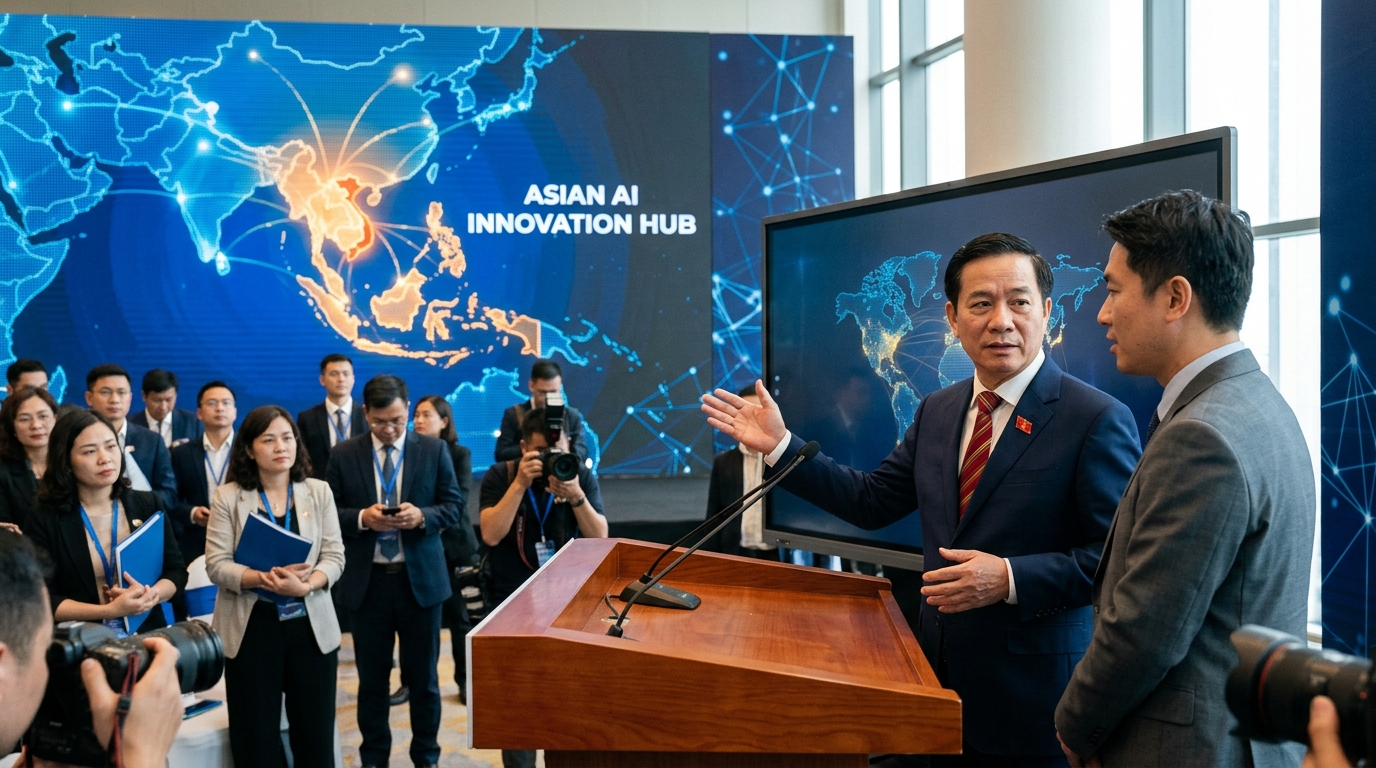
Vietnam’s image in the global collective consciousness has shifted dramatically over the past few decades. From a nation scarred by conflict, it evolved into a manufacturing powerhouse, and now, in 2026, it stands at the threshold of a new, even more ambitious transformation. The government in Hanoi is not merely seeking to assemble other people's products; it aims to become a central player on the global Artificial Intelligence (AI) chessboard. Recent reports from Vietnam.vn highlight a reality that analysts are watching closely: Vietnam is "ready" for growth fueled by AI, combining state direction with foreign investment and a young, tech-savvy generation.
The 2030 National Strategy: A Digital Manifesto
The foundation of this transition lies in the "National Strategy on Research, Development, and Application of Artificial Intelligence until 2030." This plan is not just a wish list but a roadmap with specific targets: establishing Vietnam as one of the top four AI hubs in the ASEAN region and placing it among the top 50 nations globally in AI rankings. The government is investing heavily in establishing innovation centers while simultaneously promoting the development of indigenous Large Language Models (LLMs) optimized for the Vietnamese language and culture.
The key to success lies in the concept of "Make in Vietnam." This initiative encourages local companies to develop technology from scratch rather than importing ready-made solutions. Corporations like FPT, Viettel, and Vingroup (through VinAI) are leading this charge, implementing AI solutions in agriculture, healthcare, and smart manufacturing. The use of AI to optimize production in Vietnamese factories is expected to increase the country's GDP by billions of dollars over the next decade.
Geopolitics and Semiconductor Diplomacy
In the context of US-China global competition, Vietnam has emerged as one of the most sought-after partners. The "China Plus One" strategy has led giants such as NVIDIA, Microsoft, and Google to seek an alternative for their supply chains in Vietnam. NVIDIA CEO Jensen Huang’s recent visit to Hanoi signaled the beginning of a new era: the creation of a "second home" for NVIDIA in Vietnam, aimed at developing supercomputing infrastructure and training talent.
This approach gives Vietnam a unique advantage. While remaining a significant trading partner of China, it simultaneously strengthens its ties with Washington through the Comprehensive Strategic Partnership. AI is the "weapon" with which Hanoi seeks to avoid the middle-income trap, jumping directly into the knowledge economy. However, this balance is delicate, as the country must manage pressures regarding data protection and cybersecurity in an environment of intense competition.
Obstacles on the Path to the Top
Despite the optimism, significant challenges remain. The first and foremost is human capital. Although Vietnam boasts a large number of STEM graduates, high-level AI expertise remains scarce. The country needs hundreds of thousands of AI engineers and data scientists to support its vision, requiring a radical overhaul of the education system.
Furthermore, energy infrastructure is a critical point. AI data centers require massive amounts of electricity, and Vietnam has faced grid stability issues in the past. Transitioning to green energy to power these centers is essential for attracting tech giants committed to net-zero emissions. Finally, the legal framework surrounding AI ethics and intellectual property is still in its infancy, creating an uncertainty that investors would like to see resolved soon.
Conclusion: A New Chapter
Vietnam is no longer just a player following developments; it aspires to co-shape them. Investing in Artificial Intelligence is a statement of sovereignty and economic resilience. If Hanoi manages to bridge the skills gap and maintain its geopolitical balance, the "Vietnamese Miracle" of the 21st century will be written in code and algorithms. Its journey serves as an example of how a developing economy can use cutting-edge technology to redefine its place in the world.





