

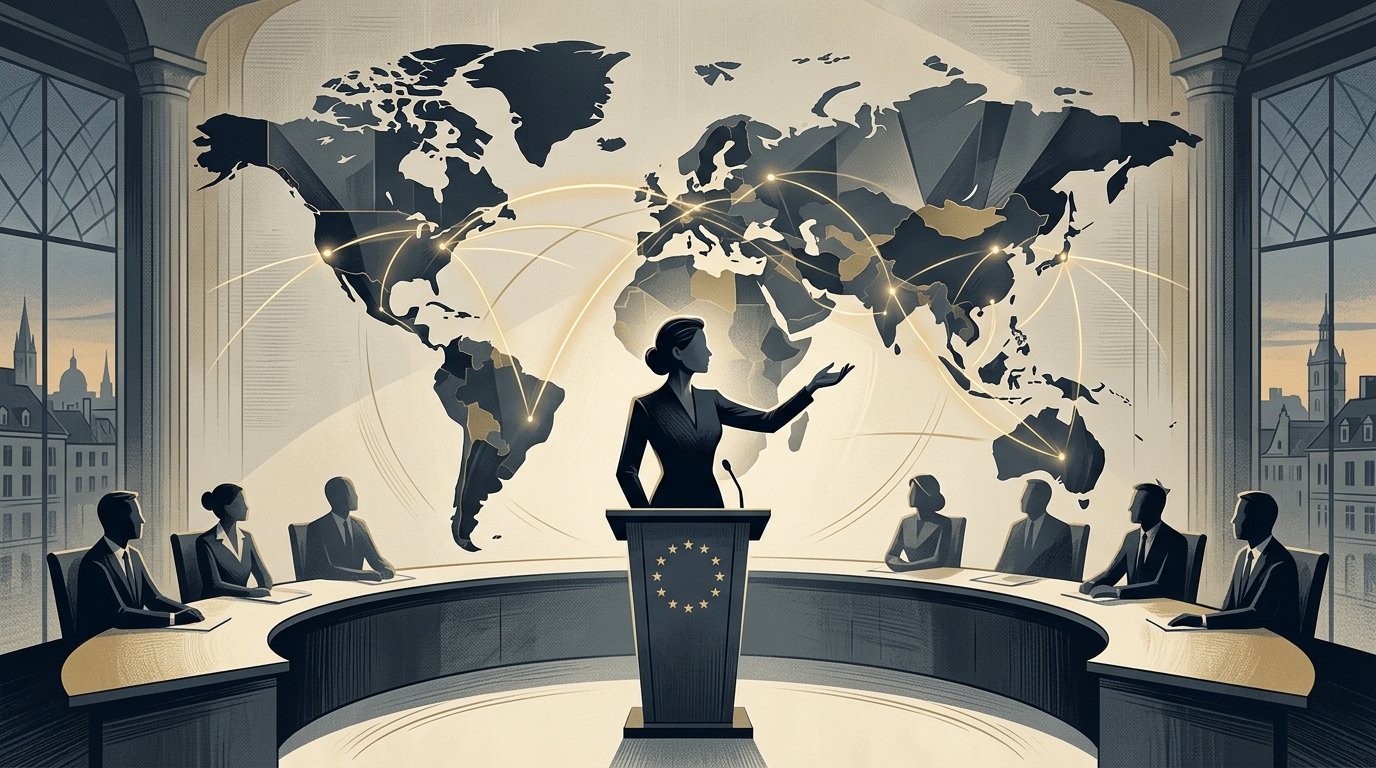
In an era of rapid geopolitical shifts, European Commission President Ursula von der Leyen chose Yerevan to deliver a powerful message: Europe can no longer rely on the "goodwill" of its trading partners for its security. The triptych she presented—energy, defense, and supply chains—is not merely a policy agenda, but an existential manifesto for the Old Continent in the 21st century.
Energy Independence as a Tool of Freedom
The energy crisis triggered by the invasion of Ukraine served as a violent wake-up call. Von der Leyen emphasized that the green transition is no longer just a matter of environmental sensitivity, but primarily a matter of national and European security. Decoupling from Russian fossil fuels was only the beginning. The next step is creating a system that does not replace one dependency with another.
"Our freedom depends on our ability to produce our own clean energy," the President emphasized.
The Commission's strategy now focuses on accelerating Renewable Energy Sources (RES) and developing hydrogen. However, the challenge remains immense: Europe must balance the need for cheap energy to maintain industrial competitiveness with the need for total autonomy from autocratic regimes.
Defense Fortification: From Blueprint to Action
For decades, Europe enjoyed the "peace dividend," leaving its security largely on the shoulders of NATO and the US. That era is definitively over. Von der Leyen is pushing for a radical overhaul of the European defense industry. Europe must learn to "spend more, spend better, and spend European."
- Joint procurement of weapon systems to reduce costs.
- Boosting domestic production of ammunition and high-tech equipment.
- Creating a single defense market to eliminate fragmentation.
The visit to Yerevan also carries symbolic weight. In a region where Russia traditionally exerted absolute influence, the EU's presence signals an intention for a more active foreign policy, backed by real power.
Supply Chains and the De-risking Strategy
The third leg of the von der Leyen doctrine concerns the resilience of supply chains. The pandemic and tensions with China highlighted Europe's dangerous dependence on critical raw materials and semiconductors. The Commission President introduced the term "de-risking"—a delicate balance between full decoupling and naive dependence.
The European Critical Raw Materials Act is the legislative weapon in this endeavor. The goal is to diversify supply sources so that no single country can use raw materials as leverage for blackmail. This requires new strategic alliances with countries in Africa, Latin America, and Central Asia.
Conclusion: Europe at a Crossroads
Implementing this triptych will not be easy. It requires massive capital, political will from member states, and a shared perception of risk. Ursula von der Leyen is attempting to transform the EU from an economic union into a geopolitical powerhouse. Whether she succeeds will determine Europe's place on the global map for decades to come. Sovereignty is not a gift; it is earned through self-sufficiency and strength.





