

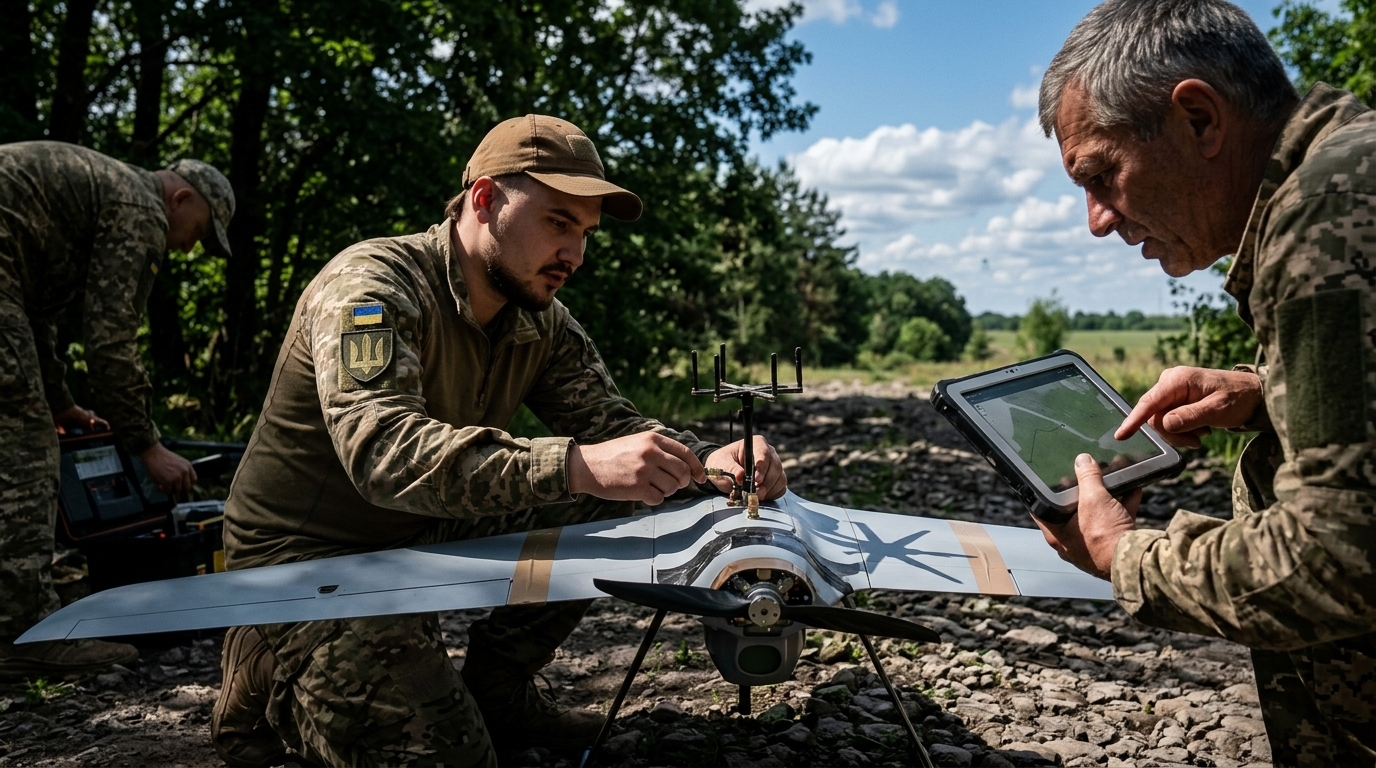
In the twilight of the first quarter of the 21st century, Ukraine is not merely defending its territorial integrity; it is fundamentally redefining the art of warfare. According to recent data, Ukrainian forces have managed to strike over 800,000 Russian targets within just six months, using unmanned aerial vehicles (drones) exclusively. This news, confirmed by Fortune and military analysts, is not just a statistical achievement but a tectonic shift in global military doctrine.
The Supremacy of Unmanned Systems
The Ukrainian government now claims that unmanned systems are responsible for 90% of the casualties inflicted on Russian forces. This percentage is staggering, considering that artillery was traditionally regarded as the "god of war." Today, that title seems to be shifting to FPV (First Person View) drones and long-range loitering munitions. The ability of a cheap commercial drone, costing a few hundred dollars, to destroy a main battle tank worth millions has upended the cost-benefit balance on the battlefield.
Kyiv's strategy is based on the "democratization of precision." While in the past only major powers with expensive missile systems could achieve precision strikes, now every platoon on the front line has its own "air force." This decentralized structure allows for rapid response to enemy movements, making traditional concentrations of troops and armor extremely vulnerable.
Industrial Scale and the 10 Million Goal
To maintain this rate of attack, Ukraine has set an ambitious goal: the production of 10 million drones within the current year. This is an effort reminiscent of industrial mobilization during World War II, with the difference that production is now scattered across hundreds of small and medium enterprises, as well as underground workshops, to protect against Russian bombardment.
The Brave1 platform, a government initiative to promote defense technology, has become the link between startups and the military. Through it, new technologies are tested in the field in real-time and integrated into production within weeks. This innovation cycle is faster than any bureaucratic procurement system in NATO or Russia.
"We are not just building drones; we are building an ecosystem for survival. Technology is our only way out against the enemy's numerical superiority," state officials from Ukraine's Ministry of Digital Transformation.
Artificial Intelligence and Electronic Warfare
The greatest challenge for Ukrainian drones is Russian Electronic Warfare (EW). Russian jamming systems often sever the connection between the pilot and the drone, rendering it useless. Ukraine's answer is the integration of Artificial Intelligence (AI). New drone models feature autonomous target recognition software, allowing the drone to complete its mission even if communication with the operator is lost.
This development raises serious ethical and strategic questions. The transition to "autonomous killing machines" is now a reality on the Ukrainian front. The AI's ability to distinguish between friendly and enemy forces in a chaotic environment is tested daily, making Ukraine the world's largest laboratory for military AI.
Strategic Depth and Geopolitical Implications
Beyond the front lines, Ukrainian drones are now striking strategic targets deep within Russian territory. Oil refineries, ammunition depots, and airbases have become permanent targets. This has a dual effect: on one hand, it causes economic bleeding for Russia by reducing energy export revenues, and on the other, it forces Moscow to withdraw air defense systems from the front to protect its infrastructure.
Internationally, the success of Ukrainian drones has led to the creation of the "Drone Coalition" by NATO member states, aiming to supply and co-develop such systems. The experience gained in Ukraine will form the basis for equipping European armies over the next decade, as the era of expensive, manned platforms seems to be giving way to swarms of cheap, expendable, and intelligent machines.




