

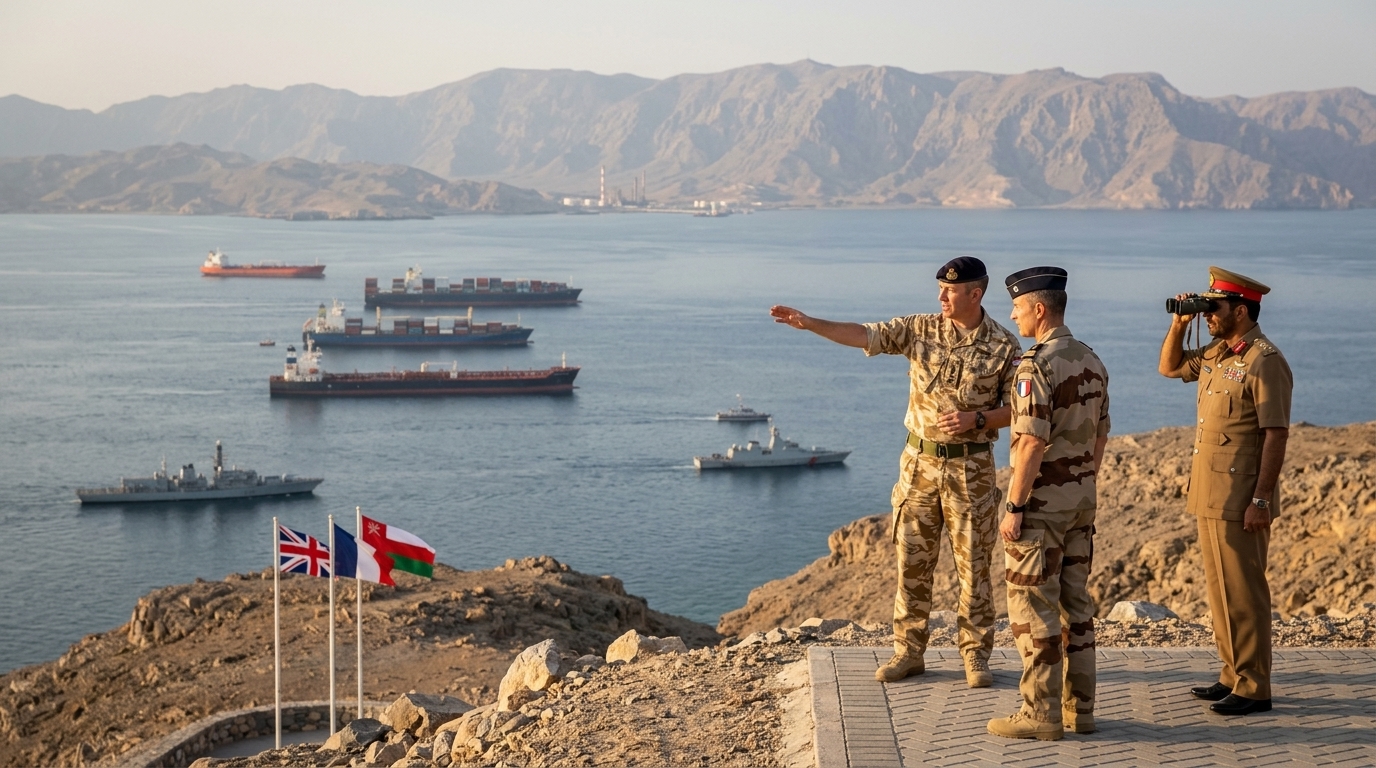
In a move that reshapes the geopolitical landscape of the Middle East, Great Britain, France, and the Sultanate of Oman have announced the formation of a joint front to protect navigation in the Strait of Hormuz. This development comes as a direct consequence of the recent, albeit fragile, agreement between Washington and Tehran, which has allowed for increased oil flows while necessitating a new security framework to guarantee the stability of global supply chains.
The Geostrategic Significance of Trilateral Cooperation
The Strait of Hormuz is the "carotid artery" of the global economy. With one-fifth of the world's oil consumption passing through this narrow passage, any instability immediately translates into shocks in international markets. The involvement of Britain and France—two traditional naval powers with a strong presence in the region—provides the necessary military weight, while Oman serves as the critical diplomatic mediator. Muscat, following its traditional policy of "neutrality and friendship to all," acts as the bridge between the West and Iran, ensuring that the new initiative is not perceived as an aggressive act by Tehran.
This cooperation is not limited to ship patrols. It includes real-time intelligence sharing, the use of advanced AI-driven surveillance systems, and the establishment of a joint operations center in Muscat. The goal is to deter asymmetric threats, such as drone attacks and tanker sabotage, phenomena that had proliferated in previous years.
The US-Iran Agreement as a Catalyst
This trilateral initiative would have been impossible without the preceding diplomatic convergence between the US and Iran. After months of back-channel negotiations, the agreement to reopen the sea route and reduce sanctions on Iran's energy sector changed the landscape. Tehran, pressured by internal economic crisis, seems to accept—at least temporarily—a role as a "responsible player" in the Strait in exchange for access to international markets.
However, suspicion remains. Britain and France seek to fill the void left by the gradual US disengagement from direct military involvement in the region. For London, this move fits into the "Global Britain" strategy, proving it remains a dominant maritime force. For Paris, it is a continuation of the EMASoH (European Maritime Awareness in the Strait of Hormuz) initiative, strengthening European strategic autonomy in areas of vital interest.
Challenges and Future Prospects
Despite the optimism, the challenges are multi-layered. The regional rivalry between Saudi Arabia and Iran, although in a period of detente, could flare up at any moment. Furthermore, the growing influence of China in the region, which is also the largest buyer of Gulf oil, creates a new dynamic. Beijing is closely monitoring the UK-France-Oman cooperation, wondering whether this move serves its own interests or constitutes a Western bulwark against Chinese expansion.
In conclusion, the creation of this joint front is a realistic response to the needs of the era. In a world where energy security is synonymous with national sovereignty, the protection of the Strait of Hormuz is no longer the responsibility of a single superpower but the product of collective action and diplomatic flexibility. The question remains whether this cooperation will stand the test of time or collapse at the first serious geopolitical crisis that challenges the resilience of the US-Iran agreement.





