

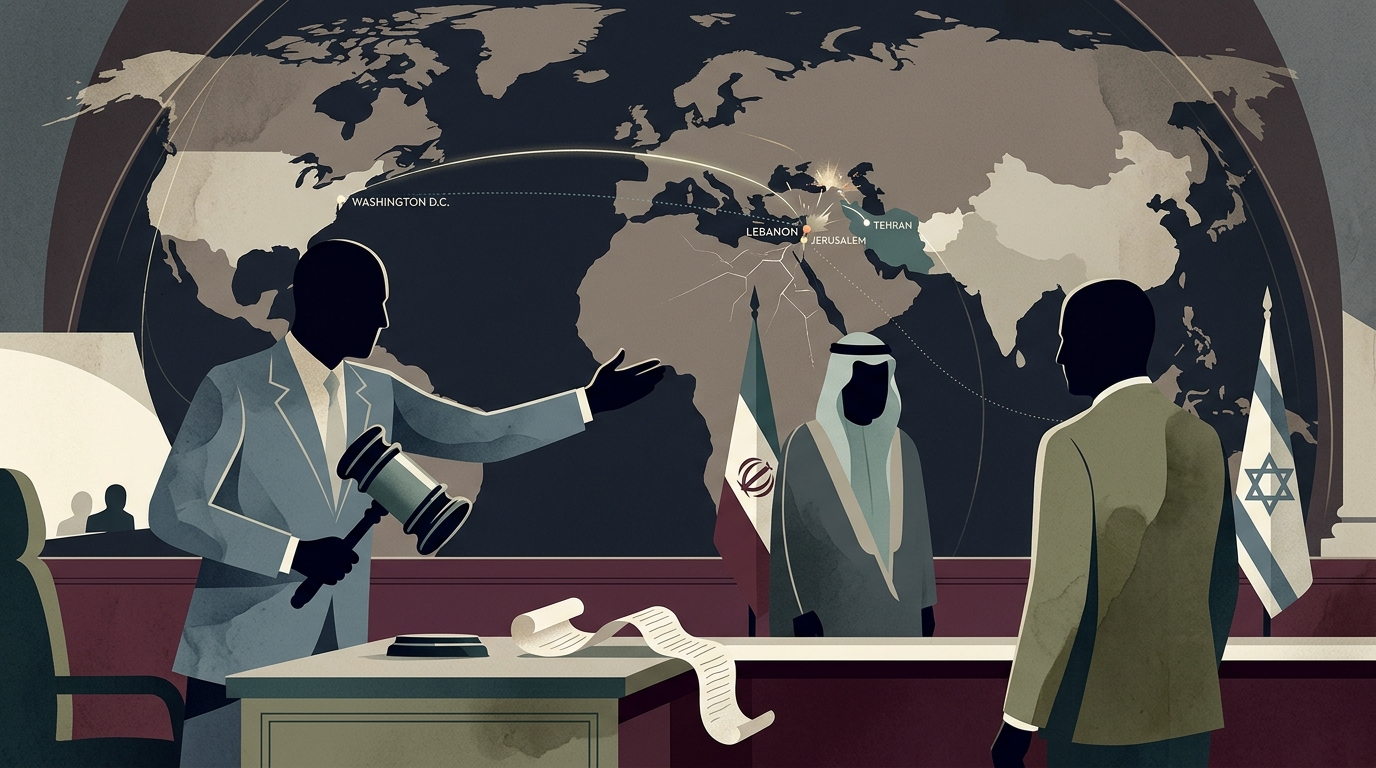
In a dramatic twist in Middle Eastern diplomacy, President Donald Trump has issued a stern, almost telepathic warning to the leadership of Israel and Iran, urging them not to "blow it" regarding the imminent ceasefire deal in Lebanon. This intervention, coming at a time when the region balances between a historic truce and a full-scale regional conflagration, underscores Trump's desire to secure a swift foreign policy victory, which he characterizes as "the beginning of ultimate peace."
However, the reality on the battlefield remains stubbornly complex. Despite personal appeals from the American President to Israeli Prime Minister Benjamin Netanyahu, Israeli forces launched a new wave of heavy airstrikes on Hezbollah strongholds in southern Lebanon and the suburbs of Beirut over the weekend. This move is interpreted by many analysts as a clear sign that Netanyahu is unwilling to cede military advantage for the sake of Washington's diplomatic timelines.
The Clash of Personalities: Trump vs. Netanyahu
The relationship between the two leaders, once characterized by absolute alignment, is now being severely tested. Trump, operating with the logic of a "deal-maker," sees the Lebanon ceasefire as an opportunity to prove that his approach to foreign policy can bear fruit where his predecessors failed. According to White House sources, the President is "incensed" by Israel's insistence on continuing operations while the text of the agreement is in the final stages of processing.
On the other hand, Netanyahu faces intense domestic pressure within Israel. His far-right coalition partners demand the complete dismantling of Hezbollah before any signature, fearing that a premature ceasefire would allow the organization to regroup. "Israel will not stop until it is ensured that the residents of the north can return to their homes safely," a senior Israeli government official stated, indirectly responding to US pressure.
The Tehran Factor and the Trump Warning
Trump's message was not only directed at Jerusalem. His reference to Iran is an attempt to curb Tehran's influence through Hezbollah. The American President appears to be using a "carrot and stick" tactic, promising economic stability in the region if the deal proceeds, but threatening stricter sanctions and military support for Israel if Iran encourages escalation.
Tehran, however, finds itself in a difficult position. While it wishes to avoid a direct conflict with the US, it cannot allow the complete humiliation of its most important ally in the region. Trump's "don't blow it" rhetoric is a blunt reminder that Washington's patience is wearing thin, but in the world of the Middle East, words often carry less weight than missiles.
The Implications of a Potential Collapse
If the deal collapses, the consequences will be catastrophic for both Lebanon and regional stability. Lebanon, already mired in an unprecedented economic crisis, cannot withstand a prolonged military conflict that destroys its remaining infrastructure. The proposed deal includes:
- Full withdrawal of Hezbollah forces south of the Litani River.
- Deployment of the Lebanese Army in the border zone.
- International oversight by a committee led by the US and France.
- Security guarantees for northern Israel.
"We are at a point where the egos of leaders collide with the survival of nations. Trump wants the glory of the peacemaker, Netanyahu wants the glory of the victor, and Lebanon simply wants to breathe," says an analyst from the International Institute for Strategic Studies.
Conclusion: A Fragile Hope
June 14, 2026, could be recorded in history either as the day a new era of peace began or as the day diplomacy was finally defeated by the war machine. Trump is betting everything on his ability to persuade through power, but in the Middle East, power is often a language that does not translate easily into peace. The coming hours will be decisive in whether the President's warning will be heeded or if it will become another footnote in the region's bloody history.




