

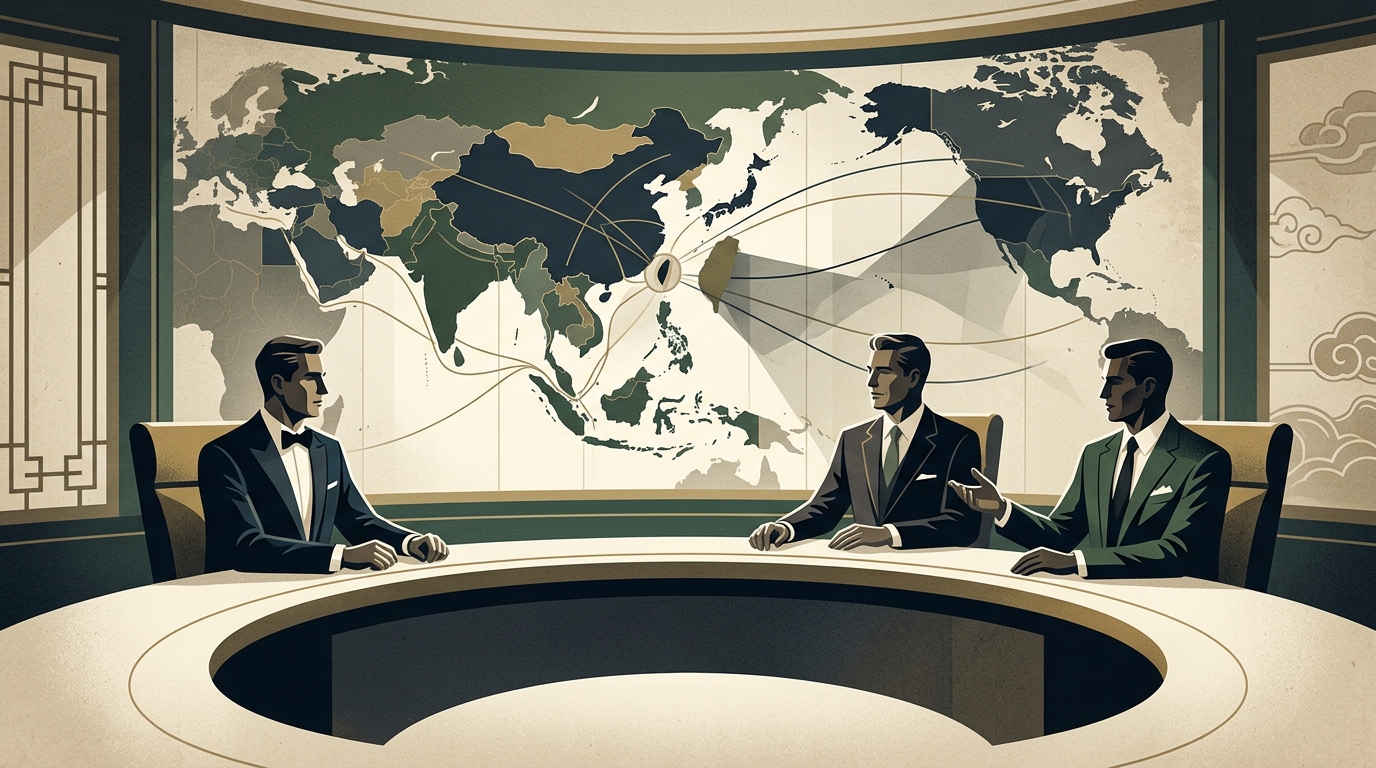
In a move that blurs the lines between state diplomacy and corporate strategy, U.S. President Donald Trump is currently in Beijing for a series of high-stakes talks with his Chinese counterpart, Xi Jinping. The presence of Elon Musk and Tim Cook by his side is not merely symbolic; it is a clear declaration that U.S. foreign policy in 2026 is inextricably linked to Silicon Valley’s interests and the global AI supply chain.
The Taiwan Thorn: Weapons as Bargaining Chips
At the heart of the agenda lies the hyper-sensitive issue of U.S. arms sales to Taiwan. Trump, faithful to his "The Art of the Deal" philosophy, appears to be approaching Taipei’s security not just as a geopolitical obligation, but as a critical bargaining chip in broader Sino-American relations. His statement that he will openly discuss the matter with Xi suggests a potential shift toward a more transactional approach, where military support might be tempered in exchange for significant trade concessions from Beijing.
Taiwan remains the "holy grail" of global semiconductor production. Any disruption to the balance in the region has an immediate impact on the global economy. However, Trump’s rhetoric implies that the island’s protection is no longer a "blank check," but part of a comprehensive overhaul of U.S. strategic priorities in Asia.
Billionaire Diplomacy: Musk and Cook
The participation of Elon Musk and Tim Cook in the delegation highlights the emergence of CEOs as shadow diplomats. Musk, with Tesla’s massive interests in China and his role in the new U.S. government structure, acts as a bridge between the two superpowers. On the other hand, Tim Cook represents Apple, a company struggling to maintain access to the Chinese market while simultaneously attempting to diversify its production lines away from the mainland.
- Musk seeks more favorable terms for Tesla and xAI, his artificial intelligence company, in the Chinese market.
- Cook is attempting to stave off new tariffs that would skyrocket the prices of Apple products in the U.S.
- Both act as guarantors of a "fragile peace" that allows commerce to continue despite political tensions.
Their presence at the negotiating table suggests that technological supremacy is now as vital as nuclear deterrence. China, for its part, sees in these entrepreneurs an opportunity to exert pressure on Washington via Wall Street.
Artificial Intelligence and the New Cold War Balance
Beyond weapons and tariffs, the grand battle is being fought over AI standards. Washington wants to restrict Beijing’s access to advanced processors, while Beijing responds with export restrictions on rare earth minerals. The Trump-Xi talks are expected to touch upon the "red line" in the development of autonomous AI weapon systems.
"We are not just negotiating trade; we are negotiating the rules of the 21st century," stated a senior official from the American delegation.
In this environment, Taiwan is not just a geographical point but the hub where military power, technological innovation, and economic survival collide. The outcome of these talks will determine whether the world is heading toward a new era of cooperation or a total technological decoupling.
Conclusion: The Return of Realism
This visit marks the end of ideological diplomacy and the return of hard-nosed realism. Trump is utilizing every available tool—from F-16 sales to Starlink access—to secure advantages for the American economy. Whether this approach will bring stability or ignite a new crisis in the Taiwan Strait remains to be seen. What is certain is that the fate of global technology and security is now being decided in closed rooms in Beijing, with the participation of the men who control our algorithms.





