

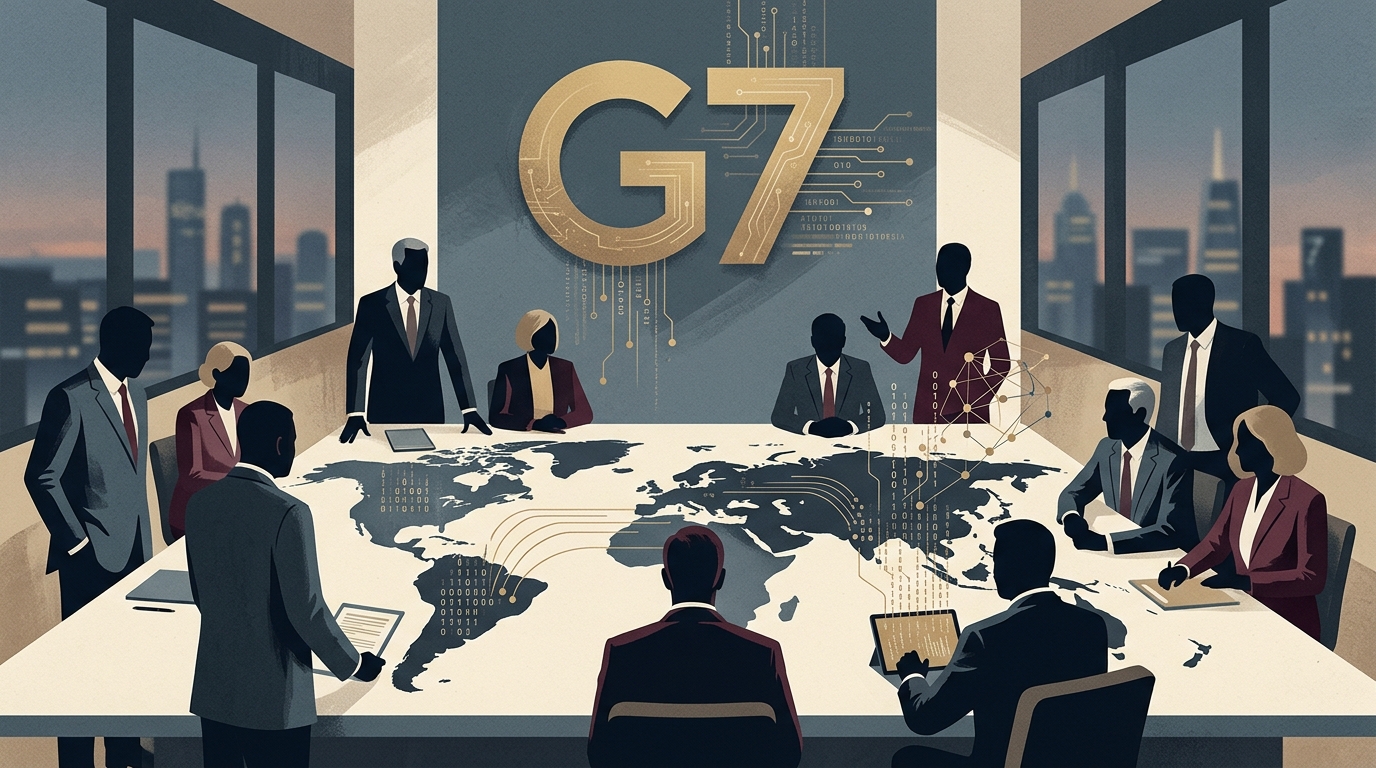
The curtain fell on the 2026 G7 summit in a manner that only Donald Trump could orchestrate: a blend of raw realism, a challenge to traditional alliances, and an unexpected focus on technological supremacy. As the leaders of the world's most powerful economies depart, the landscape of international diplomacy appears radically altered. The agenda, dominated by Iran's nuclear program, the war in Ukraine, and the unchecked rise of Artificial Intelligence (AI), highlighted the chasm between "America First" and the European desire for multilateral cooperation.
AI as the New Nuclear Weapon
For the first time in G7 history, Artificial Intelligence was not discussed merely as a tool for economic growth, but as the primary pillar of national security. President Trump made it clear that his administration views AI as an arms race that the US intends to win, even if it means bypassing the international regulatory frameworks promoted by the European Union. The American position was aggressive: fewer restrictions for Silicon Valley companies and more emphasis on integrating AI into weapons systems.
European leaders, led by the French President and the German Chancellor, tried to promote a "human-centric" approach, expressing concerns about the ethical use of algorithms and the protection of democracy. However, Washington seems to be moving on a trajectory where technological superiority is the only guarantee of power against China. This clash highlights a new form of "digital nationalism," where data and computing power become the new frontiers of sovereignty.
Ukraine: The Diplomacy of a "Hard Peace"
The issue of Ukraine was the most thorny point of the summit. Trump, faithful to his campaign promise to end the war "in 24 hours," pushed allies for a rapid diplomatic solution that many in Kyiv and Brussels consider a capitulation. His rhetoric about reducing financial aid to Ukraine unless there is an immediate negotiation with Moscow sent shivers of concern through NATO's eastern flank.
Washington's approach is based on the idea that Europe must assume the full cost of its own security. While G7 leaders tried to present a united front, behind-the-scenes deliberations revealed deep distrust. Trump seems to favor a model where Ukraine's territorial integrity could be negotiated in exchange for a long-term ceasefire, a position that directly conflicts with the West's commitments thus far.
Iran and the Return of Maximum Pressure
On the Iran front, the summit confirmed a return to the policy of "maximum pressure." The American President rejected any possibility of returning to the old nuclear deal, calling for a new, much more restrictive framework that would include Tehran's ballistic missile program and its regional influence. European partners, who for years tried to keep the diplomatic path alive, found themselves faced with a dilemma: either follow the new American sanctions or risk their own access to the US financial system.
Tension in the Middle East, combined with the underlying energy crisis, makes Iran's stance critical. The G7 concluded with a communiqué that, while condemning nuclear escalation, bears the strong signature of the American hardline. Trump's strategy is clear: isolating Tehran is the only way, even if it increases the risk of a regional conflict.
Conclusion: A Fractured G7?
The 2026 summit will go down in history as the moment the G7 ceased to function as a homogeneous group of values and transformed into a field of transactional diplomacy. Donald Trump used the summit to send a message to both enemies and friends: America will no longer be the "guarantor" of the global order without quid pro quos. Whether it is AI or security in Europe, the rules of the game have changed. The next day finds the world more uncertain, with technology as the new tool for asserting power in an international arena that increasingly resembles the Cold War competition of the 20th century, but with the speed of 21st-century algorithms.




