

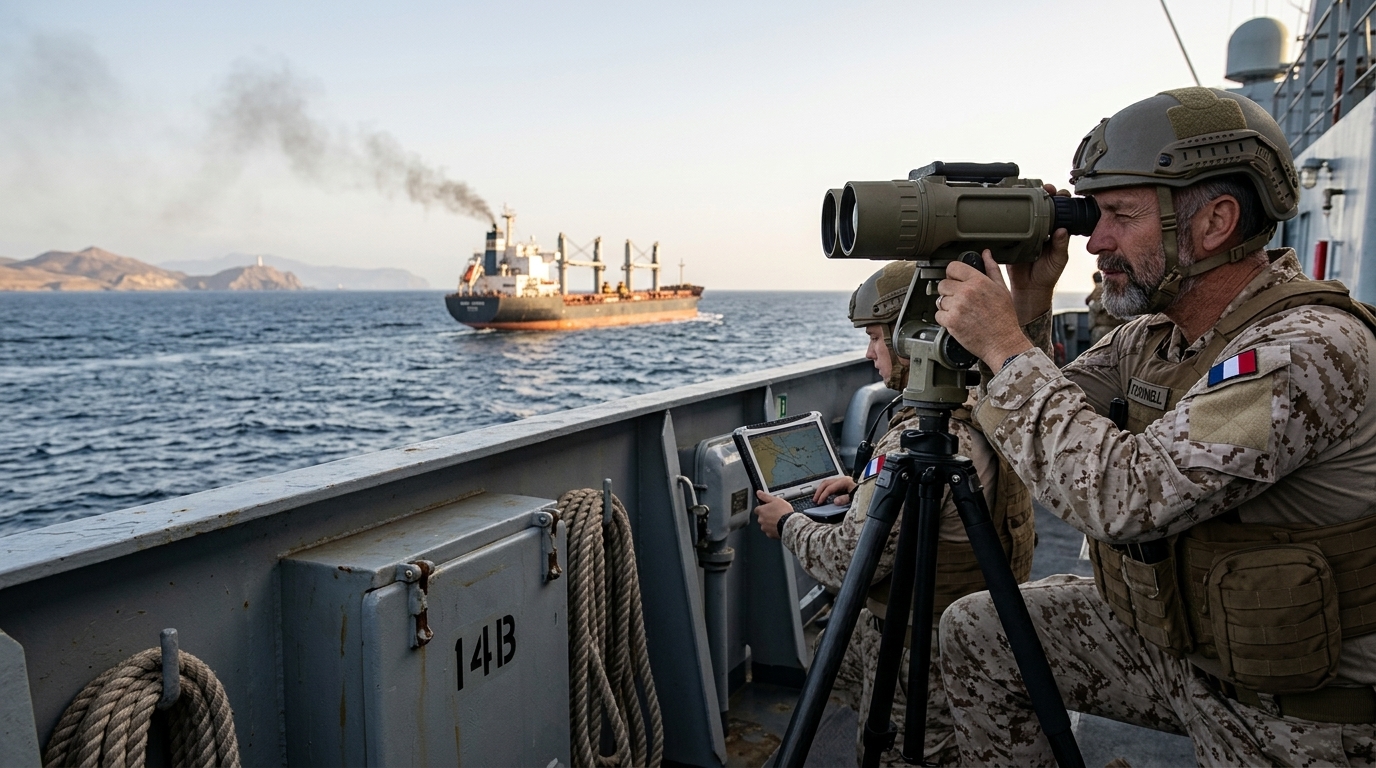
In May 2026, the world watches with bated breath as flames engulf the Persian Gulf. However, behind the smoke rising from tankers in the Strait of Hormuz, a much deeper and more strategic confrontation is unfolding. The conflict with Iran is not merely a regional crisis; it has become the catalyst for a global chess game where the United States seeks to "lock down" the planet's most critical maritime arteries, leaving China in a state of strategic asphyxiation.
The Malacca Dilemma and Asian Pressure
For Beijing, the nightmare known as the "Malacca Dilemma" has never been more real. The Strait of Malacca, connecting the Indian and Pacific Oceans, is the vital artery for 80% of China's energy imports. Under the pretext of protecting international navigation due to the Iran crisis, the US has significantly bolstered its presence in the region, creating a safety net that China perceives as a noose.
Washington's strategy is clear: leveraging the AUKUS alliance and new defense agreements with the Philippines and Vietnam, it is constructing a wall of control. Should China decide to actively support Tehran or exploit the turmoil to pressure Taiwan, the US now possesses the operational capability to sever the flow of fuel to Chinese industrial zones within hours. This is a demonstration of power that transcends conventional weaponry, striking at the very foundations of Chinese economic survival.
The Panama Pivot: Fortifying the "Backyard"
While public attention is fixed on the East, a quiet but equally critical shift is occurring at the Panama Canal. After years of increasing Chinese investment in the Canal's infrastructure, the US government has launched an aggressive diplomatic and economic counter-offensive. Citing "hemispheric national security" concerns, Washington has pushed for the cancellation of contracts with Chinese port management firms, replacing them with Western-led consortiums.
Control over Panama is not just about trade; it's about the ability to rapidly shift naval forces between the Atlantic and Pacific oceans. In a world where the war in Iran could escalate into a broader conflict, ensuring the Canal remains an "American lake" is essential for maintaining global hegemony. Recent joint military exercises in Panama send a loud message: the era of Chinese economic expansion in Central America is over.
Gibraltar and the Mediterranean as a Fortress
The third leg of this "containment" strategy is Gibraltar. As Houthi rebels and other Iranian-backed forces threaten the Red Sea, Gibraltar has become the entry point for all alternative routes bypassing Suez. The strengthening of US-UK cooperation on "The Rock" has transformed the passage into an impenetrable control filter.
- Real-time Surveillance: New AI systems track every vessel entering the Mediterranean, scanning for suspicious cargo linked to Iran or Chinese sanction-evasion schemes.
- Diplomatic Pressure in North Africa: Washington is offering incentives to Morocco to limit the use of its ports by Chinese interests, creating a "Western wall" at the Mediterranean's entrance.
- Energy Security: Gibraltar now serves as a hub for American LNG destined for Europe, replacing natural gas that once flowed through pipelines under the influence of adversaries.
In conclusion, the war in Iran has served as the perfect justification for the return of "choke point" geopolitics. The US is not just fighting Tehran; it is redrawing the rules of global circulation, ensuring that in any future conflict with China, Beijing will find itself cut off from the seas that sustain it. It is a return to classic naval power, augmented by 21st-century technology, making it clear that whoever controls the straits, controls the destiny of nations.





