

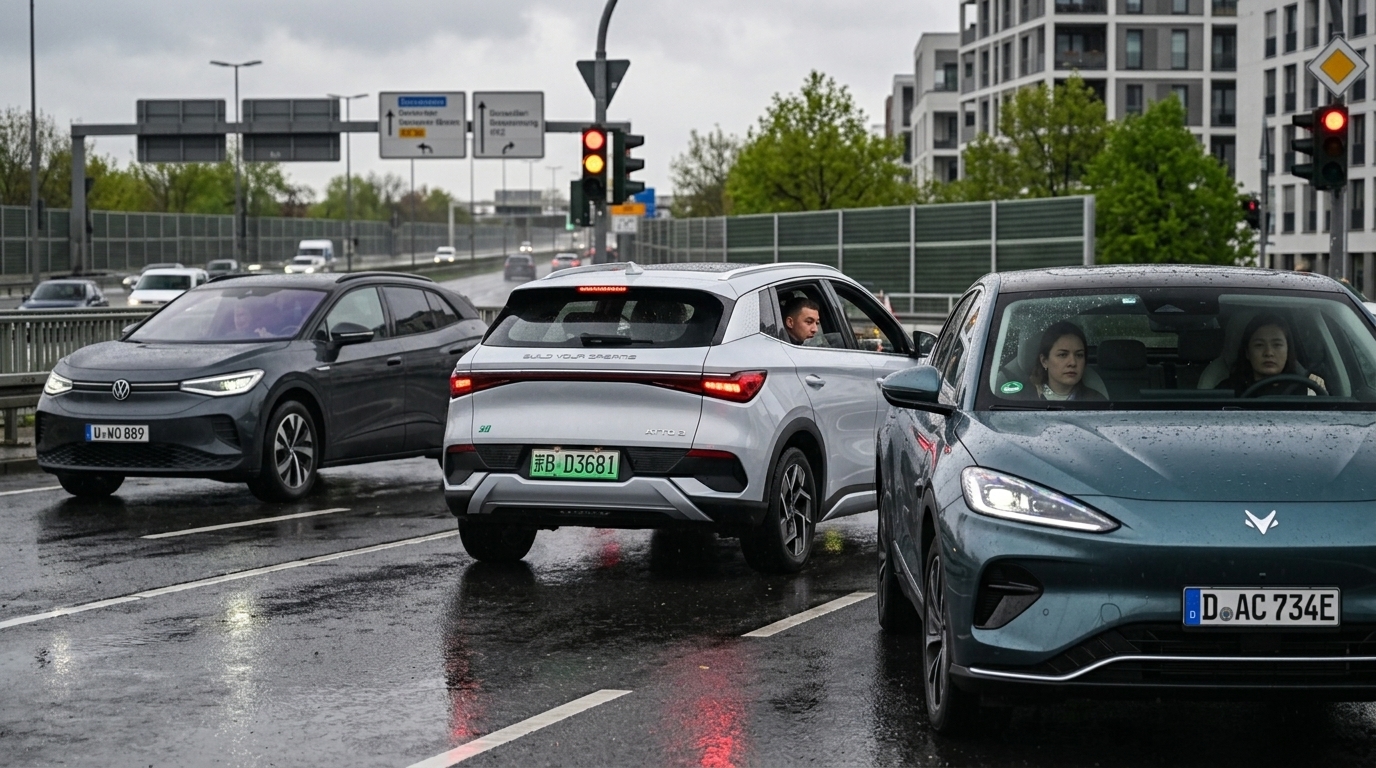
For over a century, the global automotive industry hummed to the rhythm of Detroit, Stuttgart, and Tokyo. The development cycles of a new model were a sacred rite: five to seven years of exhaustive testing, engineering perfection, and safety validation. Today, that model is crumbling. The advent of electrification and the dominance of software have imposed a new reality that many call 'Chinanization.' This is not merely about the rise of Chinese firms like BYD or Xiaomi, but the imposition of a new business paradigm based on speed, vertical integration, and treating the car as a 'smartphone on wheels.'
The End of the Seven-Year Cycle and 'China Speed'
In China, the development time for an electric vehicle (EV) has shrunk to 18-24 months. This 'China Speed' is not achieved solely through automation, but through a radical overhaul of the supply chain. While European manufacturers relied on a complex web of suppliers (Tier 1, Tier 2), Chinese players, led by BYD, produce almost everything in-house—from batteries to semiconductors. This vertical integration allows for lightning-fast design changes and the immediate integration of new AI technologies.
- Production time reduced by 50%.
- Direct access to critical raw materials (lithium, cobalt).
- Integration of AI and digital services as a core competitive advantage.
The pressure on Westerners is suffocating. Volkswagen, Mercedes-Benz, and Stellantis face a dilemma: stick to traditional methods and risk obsolescence, or 'Chinanize' by adopting faster paces and cheaper solutions, at the risk of sacrificing the quality and reliability they built over decades.
Geopolitical Chessboard and Protectionism
Chinanization is not just a technical issue; it is deeply geopolitical. The European Union and the US are reacting with tariffs, fearing that China's overcapacity will stifle their domestic industries. However, experts warn that tariffs are a temporary shield. The real battle is being fought in the arena of innovation. China is no longer just exporting cheap products; it is exporting standards. When Xiaomi unveiled the SU7, it didn't just sell a car; it sold an ecosystem connecting home, phone, and vehicle.
"The car is no longer defined by its engine, but by the lines of code that run it," a senior industry executive notes.
Reliance on Chinese technology also raises concerns about national security and personal data. Modern EVs are equipped with dozens of sensors and cameras collecting real-time data. Where is this data stored, and who has access to it? This question represents the new 'Silicon Curtain' between East and West.
The Identity Risk: Is 'Made in Germany' Obsolete?
The biggest trap of Chinanization is the loss of differentiation. If all manufacturers adopt the same platforms and software to save time, the car risks becoming a mere commodity. The driving experience, the steering feel, and the mechanical robustness—elements that characterized the European school—may be sidelined in favor of large screens and digital assistants.
Furthermore, the social dimension is immense. The shift to the Chinese production model requires fewer laborers and different skills. Thousands of jobs in traditional machining are threatened, while demand for software engineers and data analysts skyrockets. Europe must manage a violent transition that affects not only companies but its entire social fabric.
Conclusion: A Point of No Return?
Chinanization appears to be a one-way street in terms of efficiency, but it remains a trap if the West fails to add its own unique value. The survival of historic brands depends on their ability to marry 'China Speed' with Western quality and ethical data management. Competition is no longer between companies, but between two different worldviews for the future of mobility. The global auto industry isn't just turning a page; it's writing a completely new book, and the ink is Chinese.





