

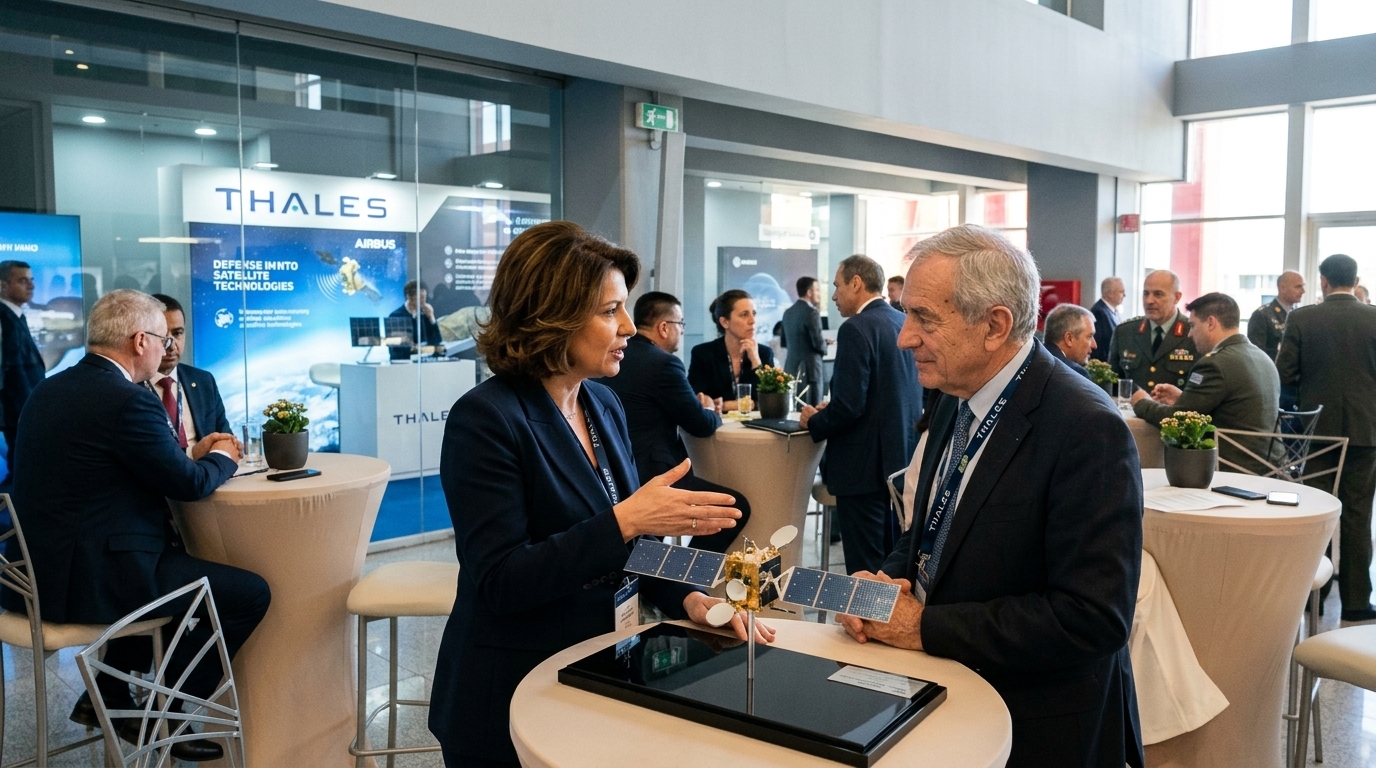
The recent strategic movements and statements from Thales executives in Athens represent more than just corporate news; they signal a structural shift in the defense doctrine of both Greece and Europe. In an era where geopolitical instability in the Eastern Mediterranean and Ukraine demands swifter reflexes, Greece is being upgraded from a mere purchaser of weapon systems to a critical link in the European defense supply chain. This partnership, anchored in the strategic relationship between Greece and France, goes far beyond the procurement of FDI frigates (Belharra) and Rafale jets, aiming for substantial technology transfer and domestic added value.
A Strategic Pivot: From Procurement to Partnership
For decades, the Greek defense industry remained trapped in a model of passive consumption. Thales' new approach, as outlined in recent high-level meetings, seeks to overturn this reality. The French multinational is systematically investing in integrating Greek companies into its global network. This is not just about maintenance; it involves the design and production of critical subsystems. The participation of Hellenic Aerospace Industry (HAI) and other private technology firms in cutting-edge programs proves that the Greek ecosystem possesses the necessary human talent.
The concept of 'European Strategic Autonomy' is ceasing to be an empty Brussels slogan and is gaining tangible form on production lines. With Thales' support, Greece can become a center of excellence for specific technologies, such as radar systems and communications, serving not only the needs of the Hellenic Armed Forces but also Europe's export requirements. Greece's geographical position, combined with technological upgrades, renders it a forward outpost of both security and industrial power.
Innovation and Digital Transformation on the Battlefield
Modern warfare is no longer conducted solely with iron and gunpowder, but with data and algorithms. Thales is bringing its expertise in 'software-defined defense' to Greece. The development of R&D centers in Athens focuses on artificial intelligence, cybersecurity, and real-time data analysis. This digital foundation is essential for operating the new Belharra frigates, which are considered the world's first 'digital ships.'
- Integration of AI in operational decision-making.
- Development of advanced electronic warfare systems.
- Training Greek engineers in cutting-edge technologies with civilian applications.
- Creating local support hubs for Thales systems across Southeast Europe.
Investment in human capital is perhaps the most significant aspect of this collaboration. Thales is not just transferring machinery but a culture of innovation. Through partnership programs with Greek universities, a new generation of scientists is being cultivated—individuals capable of competing globally, thereby mitigating the brain drain in the high-tech sector.
Geopolitical Implications and the Future of European Defense
Strengthening the Greek defense industry through Thales has clear geopolitical ramifications. A robust industrial base in Greece means greater autonomy for the EU and reduced dependence on external powers. As the United States pivots its attention toward the Pacific, Europe must be capable of protecting its own borders. Greece, as the southeastern pillar of NATO and the EU, plays a decisive role in this new security architecture.
"Greece is no longer just a strategic partner on the map, but an active participant in the technological evolution of European defense," a senior company executive noted.
In conclusion, Thales' trajectory in Greece serves as a blueprint for how major defense industries can act as catalysts for economic growth and geopolitical elevation. The challenge for the Greek side is to capitalize on this momentum, ensuring investment continuity and further deepening industrial cooperation. The wager for the next decade is for Greece not just to be 'secure,' but to be the source of security for the entire region.





