

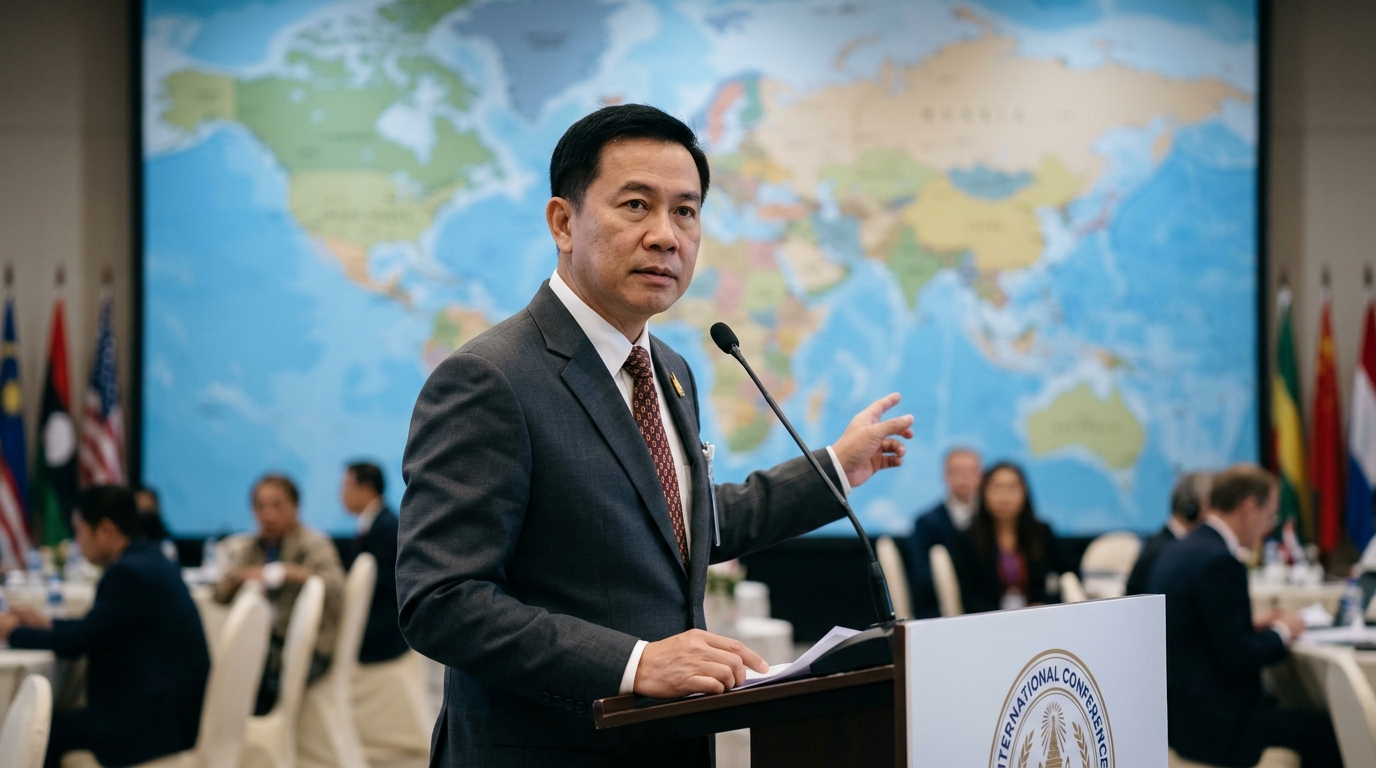
In the quiet corridors of global diplomacy and high-tech boardrooms, Thailand is often celebrated as the "Land of Smiles." However, a recent investigation by U.S. authorities suggests that behind those smiles lies a sophisticated network of "shadow trade" that threatens to upend the fragile balance of the tech war between Washington and Beijing. At the heart of the controversy is a Thai artificial intelligence firm, accused of serving as a front for the illicit transfer of advanced Nvidia semiconductors to the Chinese tech giant, Alibaba.
The Anatomy of a Bypass
This issue is far more than a mere commercial dispute; it represents a fundamental challenge to the architecture of American sanctions. Since 2022, the U.S. Department of Commerce has imposed rigorous restrictions on the export of high-performance chips, such as the Nvidia A100 and H100, to China. These components are the bedrock of modern AI, essential for training Large Language Models (LLMs) and powering advanced military applications. Alibaba, a global leader in cloud computing, is in desperate need of this hardware to maintain its competitive edge against giants like OpenAI and Google.
According to leaked information from U.S. security sources, the Thai AI firm allegedly purchased significant quantities of Nvidia chips, declaring the final destination as domestic research projects in Bangkok. However, U.S. intelligence suggests these chips never reached Thai data centers. Instead, they were covertly rerouted to Alibaba’s facilities in mainland China. This method, known as "transshipment," is the primary headache for the Bureau of Industry and Security (BIS), as tracking the final use of a product once it leaves American soil is notoriously difficult.
The Geopolitical Chessboard of Southeast Asia
Thailand’s involvement is no coincidence. The nation is a traditional U.S. ally in the region, yet it maintains deep-rooted economic ties with China. This dual identity makes it an ideal hub for such operations. Washington now finds itself in a precarious position: sanctioning the Thai firm risks alienating a strategic partner in the Indo-Pacific. Failing to act, however, sends a message that its sanctions are merely "paper tigers."
- The mounting pressure on Alibaba to secure alternative sources of compute power.
- The role of third-party nations (Malaysia, Vietnam, Thailand) as "grey zones" for trade.
- Nvidia's struggle to monitor the downstream resale of its high-demand products.
- The potential for secondary sanctions on Asian financial institutions that facilitated these transactions.
This incident underscores the inherent failure of the "decoupling" theory. In the globalized economy of the 21st century, technology flows like water; it finds the path of least resistance, even through the smallest cracks in legal frameworks. For Alibaba, access to these chips is a matter of existential survival. Without them, their "Tongyi Qianwen" model will stagnate, and China risks losing its footing in the AI revolution.
Implications for the Global Market
Markets are watching closely. If the Thai firm’s guilt is proven, a wave of tightened export controls is expected, affecting not just Thailand but the entire semiconductor ecosystem. Nvidia, while not accused of direct wrongdoing, is under increased scrutiny from regulators demanding more stringent "Know Your Customer" (KYC) protocols for hardware sales.
"Technological sovereignty is no longer decided solely in laboratories, but in the shadow routes of logistics. Whoever controls the flow of silicon, controls the future," notes a senior security analyst in Washington.
In conclusion, this case serves as a critical wake-up call. The U.S. may need to re-evaluate its strategy, moving from broad prohibitions to a more targeted and perhaps diplomatic approach. For now, Bangkok remains silent, while Alibaba continues to bolster its infrastructure, leaving the world to wonder: how many more chips are currently traveling in containers toward an unknown destination?





