

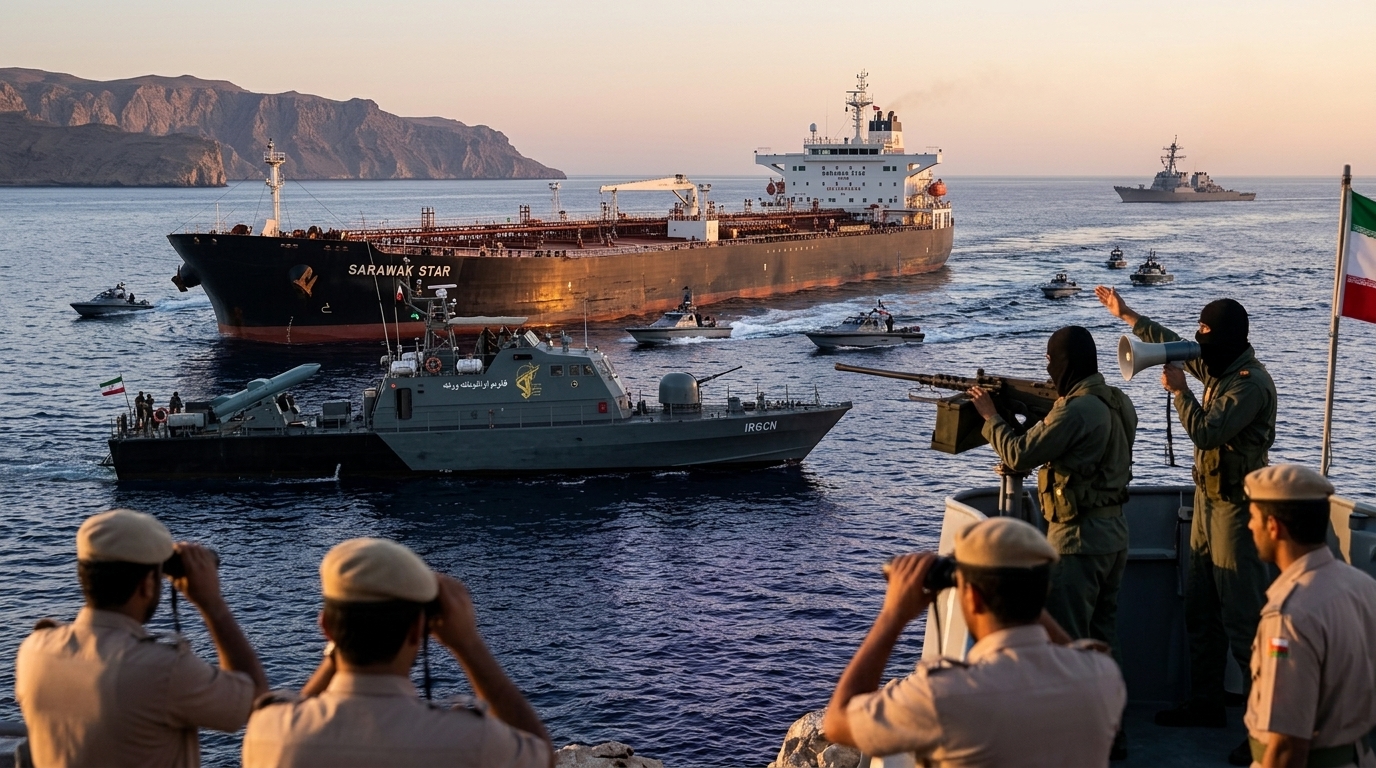
The international maritime community is once again on high alert as reports from maritime security firms indicate that Iran’s Islamic Revolutionary Guard Corps (IRGC) has begun issuing direct warnings to merchant vessels transiting the Strait of Hormuz. This move, occurring amidst intense geopolitical shifts in the Middle East, is not merely a localized harassment but a clear threat to global energy security and the freedom of navigation.
The Strategic Weight of the Strait of Hormuz
The Strait of Hormuz is the world’s most vital oil transit chokepoint. At just 21 miles wide at its narrowest point, it sees the passage of approximately 20% to 30% of the world’s total liquid fuel consumption daily. Its geographic position, sandwiched between Oman and Iran, makes it a permanent flashpoint. For Iran, controlling the strait serves as the ultimate bargaining chip against Western sanctions and the U.S. military presence in the region.
Recent IRGC warnings, according to reports by Ambrey and other international security organizations, instruct vessels to steer clear of Iranian territorial waters and follow specific routes, often under the threat of seizure or "inspection." While this "hybrid warfare" tactic at sea has been repeatedly employed by Tehran, the current frequency and intensity of these messages suggest a new phase of escalation.
Greek Shipping at the Center of the Storm
For Greece, which holds the world’s largest merchant fleet, these developments have a direct and profound impact. Greek shipowners control a massive percentage of the tankers carrying crude oil from the Persian Gulf to markets in the West and Asia. Every incident in the Strait of Hormuz causes war risk insurance premiums to skyrocket, increasing transportation costs and, consequently, prices at the pump for the end consumer.
Guidelines for captains are now extremely stringent: heightened bridge lookouts, avoidance of communication with unauthorized stations, and close monitoring of updates from the UKMTO (United Kingdom Maritime Trade Operations). However, the psychological pressure on crews is immense, as the possibility of a sudden boarding by IRGC commandos remains a visible scenario, as witnessed in previous incidents involving Greek-managed vessels.
The Geopolitical Chessboard and Western Response
This escalation cannot be viewed in isolation from the broader context of Iran-West relations. With nuclear negotiations stalled and tensions with Israel reaching a fever pitch, Tehran is utilizing shipping as a lever of pressure. The presence of the U.S. 5th Fleet in the area serves as a deterrent, but the geography of the strait allows Iran to conduct "hit-and-run" operations that are difficult to prevent without a full-scale military confrontation.
Analysts believe that Iran seeks to send a message of power, demonstrating its ability to "turn off the tap" of the global economy at any moment. On the other hand, the international community is attempting to balance the need for protecting navigation with the avoidance of a general conflict that would send oil prices soaring above $120 a barrel, triggering a global recession.
Conclusion: A Fragile Balance
The future of navigation in the Strait of Hormuz remains uncertain. As geopolitical rivalries intensify, the seas are increasingly becoming proxy battlegrounds. For shipping companies, the challenge is to maintain operational continuity in an environment where the rules of international law are often bypassed by the force of arms. Vigilance and international cooperation remain the only tools to prevent a crisis that could paralyze the global economy.





