

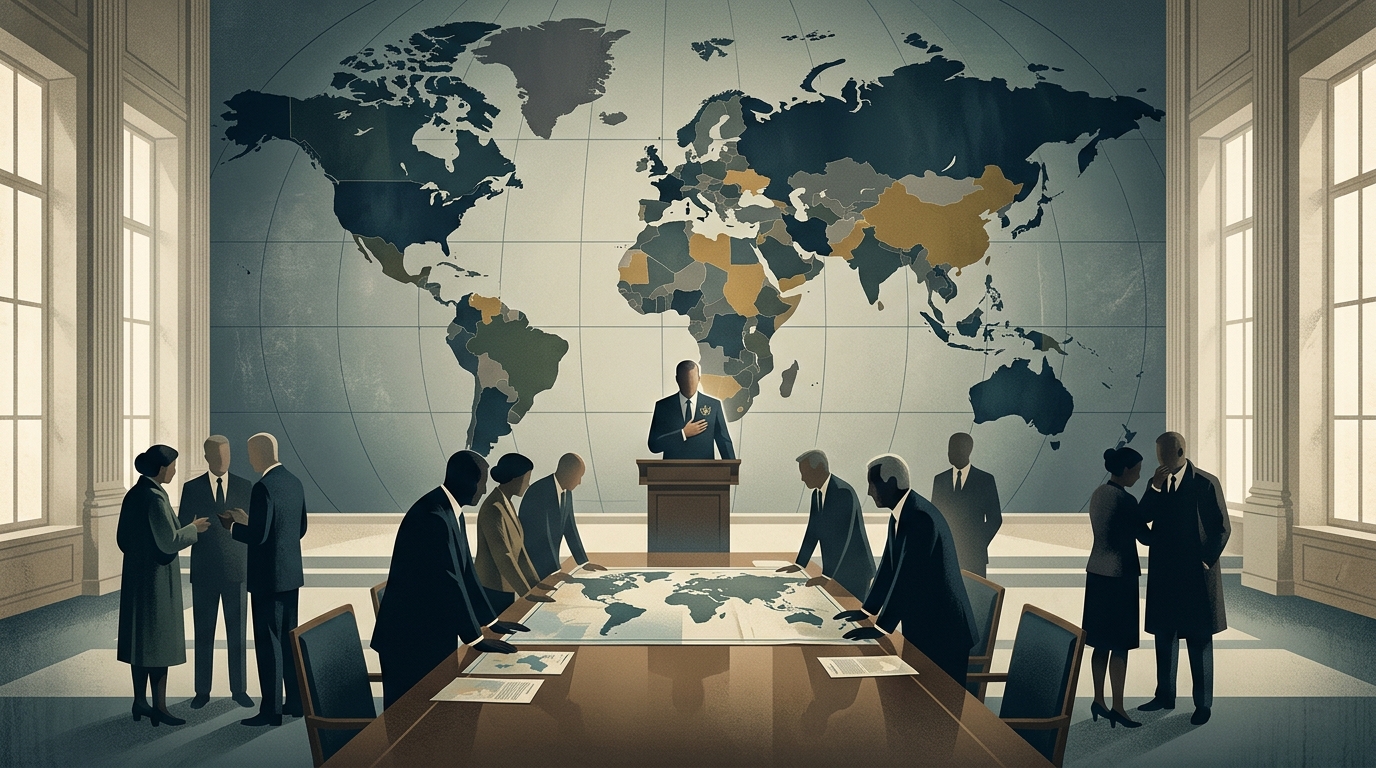
The news of Keir Starmer’s resignation as Prime Minister of the United Kingdom, delivered on Monday afternoon, struck Westminster like a lightning bolt, though the tremors within the Labour Party had been visible for months. After just two years in power, the man who promised an "era of stability" following the chaos of the Conservative years has become the sixth Prime Minister to exit 10 Downing Street in a decade. Britain is now preparing for its seventh change of leadership since the historic 2016 referendum, confirming a chronic institutional and political instability that seems to have become the new normal for the United Kingdom.
The Fall of a Technocrat
Keir Starmer took the reins with a landslide majority, promising to govern with the clinical precision of a prosecutor. However, the reality of governance proved far more complex. His failure to reignite the economy, combined with a controversial stance on foreign policy and internal dissatisfaction over the slow pace of re-engagement with the European Union, eroded the confidence of his parliamentary group. The final straw was the recent local elections, where Labour saw its support collapse in the traditional industrial heartlands of the North.
In his resignation speech, Starmer spoke of the need for "new energy" and admitted that the weight of the Brexit legacy remains an obstacle that no government has yet managed to fully overcome. His departure opens a Pandora’s box for a succession battle that is expected to be fierce and ideologically charged.
The 'King of the North' in the Spotlight
The name dominating every conversation is Andy Burnham. The Mayor of Greater Manchester, widely known as the "King of the North," has emerged as the clear favorite. Burnham has managed what Starmer failed to achieve: maintaining an authentic connection with the working class while presenting a modern, progressive profile. His rhetoric focuses on decentralizing power from London and reinvesting in regional infrastructure—a message that resonates deeply in a nation divided between a booming capital and a neglected North.
However, a Burnham candidacy is not without hurdles. Many in Westminster view him as a "Labour populist" and fear his northern focus might alienate voters in the South. Furthermore, internal rivals like Rachel Reeves and Angela Rayner are expected to push their own agendas, creating a backdrop of internal strife that could last for weeks.
Geopolitical Implications and the EU Relationship
The leadership change in Britain is not merely a domestic affair. Brussels is watching with bated breath, as the next occupant of Downing Street will be tasked with negotiating the next phase of UK-EU relations. Burnham has advocated for closer cooperation, leaving the door open to joining the Customs Union—a move that could trigger a political earthquake but also provide the necessary boost to British industry.
Meanwhile, Washington is looking for a stable partner in a period of global uncertainty. The instability in London weakens Britain’s position on the international chessboard, making the "special relationship" with the US more fragile than ever. The next Prime Minister will have to prove that Britain remains a reliable player and not the "sick man of Europe" perpetually searching for its identity.
"Britain doesn't just need a new Prime Minister; it needs a new orientation. The era of half-measures is over," a senior Labour source stated, capturing the mood of the moment.
In the coming days, the procedures for electing a new leader will accelerate. The question remains: can the "King of the North" unite a fragmented nation, or is Britain doomed to remain in a cycle of political upheaval?




