

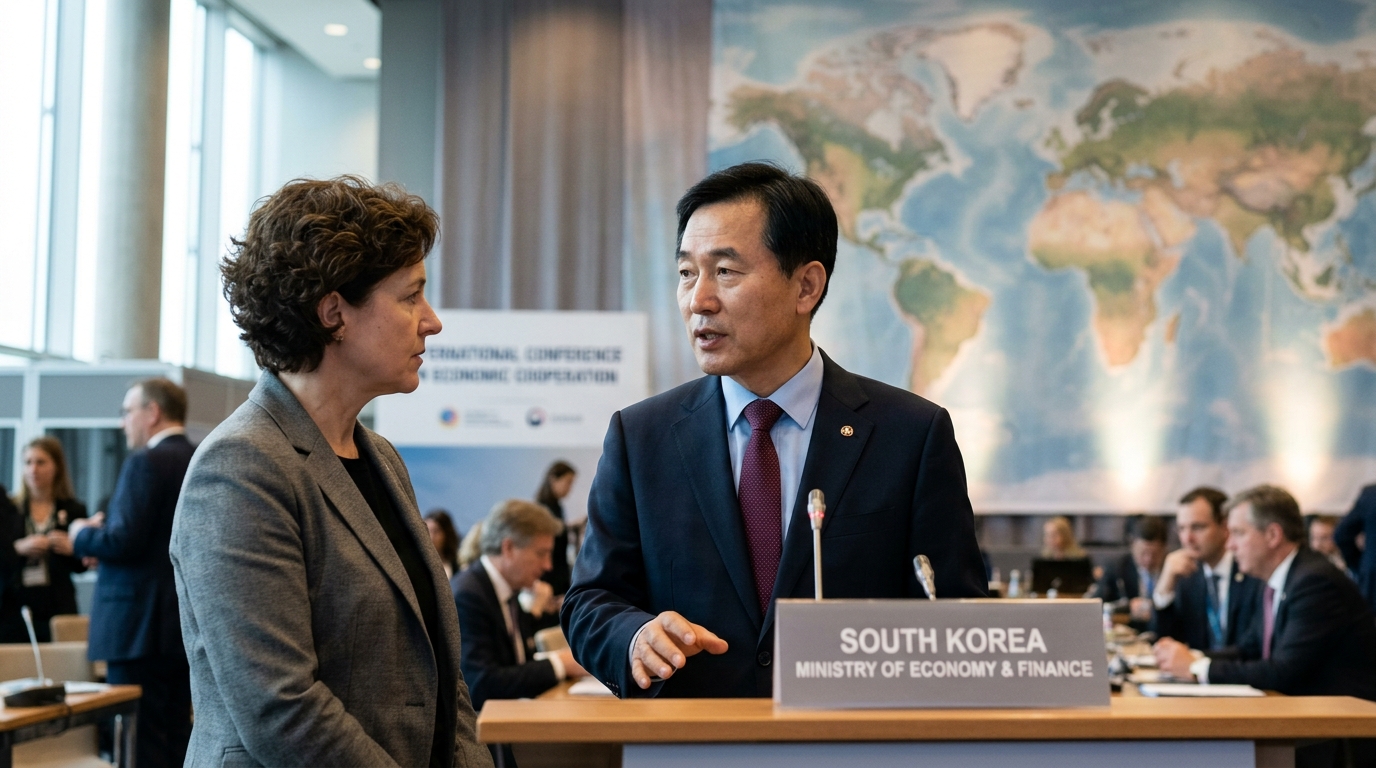
In a move that underscores the pivotal role of technology in 21st-century national sovereignty, the South Korean government has announced its intention to channel unexpected tax revenues from the booming semiconductor industry into a new, state-led growth fund. The news, first reported by Yonhap News on Sunday, July 5, 2026, citing the presidential chief of staff, signals a radical shift in the nation's fiscal strategy.
South Korea, home to giants like Samsung Electronics and SK Hynix, sits at the heart of the global supply chain. With global demand for AI chips reaching historic highs in the first half of 2026, corporate profits have surged, leading to a "tax windfall" that Seoul does not wish to merely consume, but to invest strategically.
The 'Silicon Shield' Strategy
The proposed fund is not just a financial reservoir; it is a tool for economic diplomacy and national security. According to government sources, the fund will focus on financing long-term infrastructure projects, strengthening the domestic startup ecosystem, and protecting the country from the volatility caused by the ongoing US-China trade rivalry. South Korea recognizes that its dependence on semiconductor exports is simultaneously its greatest strength and its greatest vulnerability.
By investing chip profits into other sectors—such as quantum computing, biotechnology, and renewable energy—Seoul seeks to diversify its economic mix. The fund is also expected to support the construction of the semiconductor "Mega Cluster" outside Seoul, a massive project aimed at making the country the undisputed leader in next-generation chip manufacturing by 2030.
Geopolitical Implications and Global Competition
This move comes at a time when the United States and the European Union are offering billions in subsidies to attract chipmakers to their shores. South Korea, while a close ally of the West, feels the pressure to maintain its own competitive edge. Creating a growth fund from tax revenues is a more "sustainable" approach compared to direct borrowing or the subsidies that often cause friction at the World Trade Organization.
- Boosting domestic R&D for low-power, energy-efficient AI chips.
- Providing low-interest loans to SMEs within the chip supply chain.
- Creating a strategic reserve to handle future crises in raw material markets.
"This is not just about wealth management; it is about ensuring our survival in a world where technological supremacy equals political power," a senior Seoul official stated.
Challenges and Internal Politics
Despite the positive outlook, the plan is not without its critics. Political analysts point out that concentrating such large amounts of capital under state control carries risks of corruption or mismanagement, given the historical relationship between the government and the large family-owned conglomerates (chaebols). Furthermore, there is the question of whether these funds should be directed toward solving the country's acute demographic crisis, as it faces the lowest birth rate in the world.
However, the government maintains that economic growth through technology is the only way to fund the welfare state in the future. With AI transforming every aspect of the economy, South Korea is betting everything on the "digital oil" of the 21st century, hoping that the fruits of today's success will nourish generations to come.





