

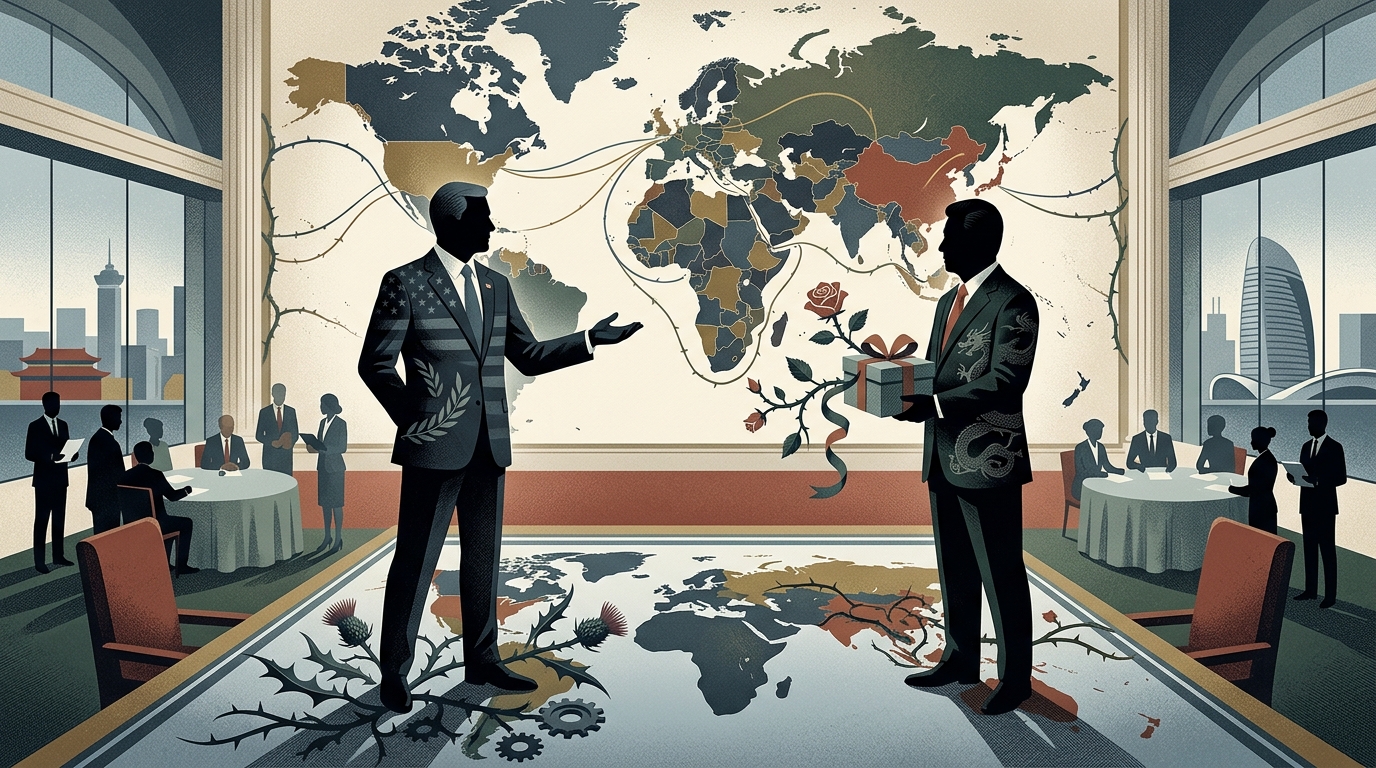
The Beijing summit between Donald Trump and Xi Jinping was far more than a routine diplomatic exercise; it was a carefully choreographed display of power within a shifting global landscape. Despite the warm optics and rhetoric surrounding a "new era of cooperation," the reality emerging from behind the closed doors of the Great Hall of the People reveals deep-seated suspicion, particularly in the realms of technology and trade imbalances. The "soft diplomacy" observed on the surface served primarily as a smokescreen for renegotiating the red lines that will define the latter half of the 2020s.
AI as the New Frontier of Conflict
Artificial Intelligence (AI) sat at the heart of the discussions. While both leaders agreed on a framework of "non-binding guidelines" for AI safety, the true substance lies in the fierce competition for semiconductor dominance. Trump made it clear that U.S. export restrictions on advanced chips would remain firmly in place, citing national security concerns. Conversely, Xi Jinping emphasized that China's technological isolation would not lead to a retreat but would instead accelerate domestic innovation. This clash over "digital sovereignty" represents the most significant thorn in the relationship, as Big Tech companies from both nations lobby for market access while their respective governments construct increasingly high barriers.
Trade Deficits and the Shadow of Tariffs
Despite high expectations for a "grand bargain" to reduce the U.S. trade deficit with China, the actual results were modest. The agreements signed focused largely on energy and agricultural products—sectors traditionally used to provide a veneer of progress. However, the issue of tariffs remains an open wound. Washington maintains that China continues to unfairly subsidize its industries, particularly in electric vehicles (EVs) and green energy, creating a glut that threatens Western markets. The absence of a clear commitment to scale back these subsidies suggests that the economic war has not ended; it has merely entered a phase of "managed tension."
Geopolitical Red Lines: Taiwan and Iran
The geopolitical chessboard remains fraught with danger. On Taiwan, positions remain entrenched: Xi reiterated that it is an "internal matter," while Trump maintained strategic ambiguity regarding the extent of U.S. support, indirectly linking it to trade concessions. Regarding Iran, Washington urged Beijing to leverage its influence to curb regional instability in the Middle East. China responded by stating that stability requires respect for the sovereignty of all nations and the removal of unilateral sanctions. The mutual distrust is palpable, as each side views the other's maneuvers as an attempt to contain their respective spheres of influence.
The Aftermath: A Fragile Balance
The takeaway from the Beijing summit is that the global order is shifting toward a model of "managed competition." The illusion of full cooperation has vanished, yet there is no appetite for a total rupture that would devastate the global economy. The two superpowers have essentially agreed to disagree, keeping communication channels open to prevent an accidental military escalation. However, for the business world and global investors, uncertainty prevails. While "soft diplomacy" may offer a temporary respite, the structural flaws in the U.S.-China relationship are so profound that they require far more than a handshake in Beijing to resolve.
- AI supremacy is now viewed as a core pillar of national power and security.
- Trade friction is shifting from consumer goods to high-tech and green transition sectors.
- Taiwan remains the most volatile flashpoint in Sino-American relations.
- Leader-level diplomacy acts as a pressure valve but fails to address structural divides.





