

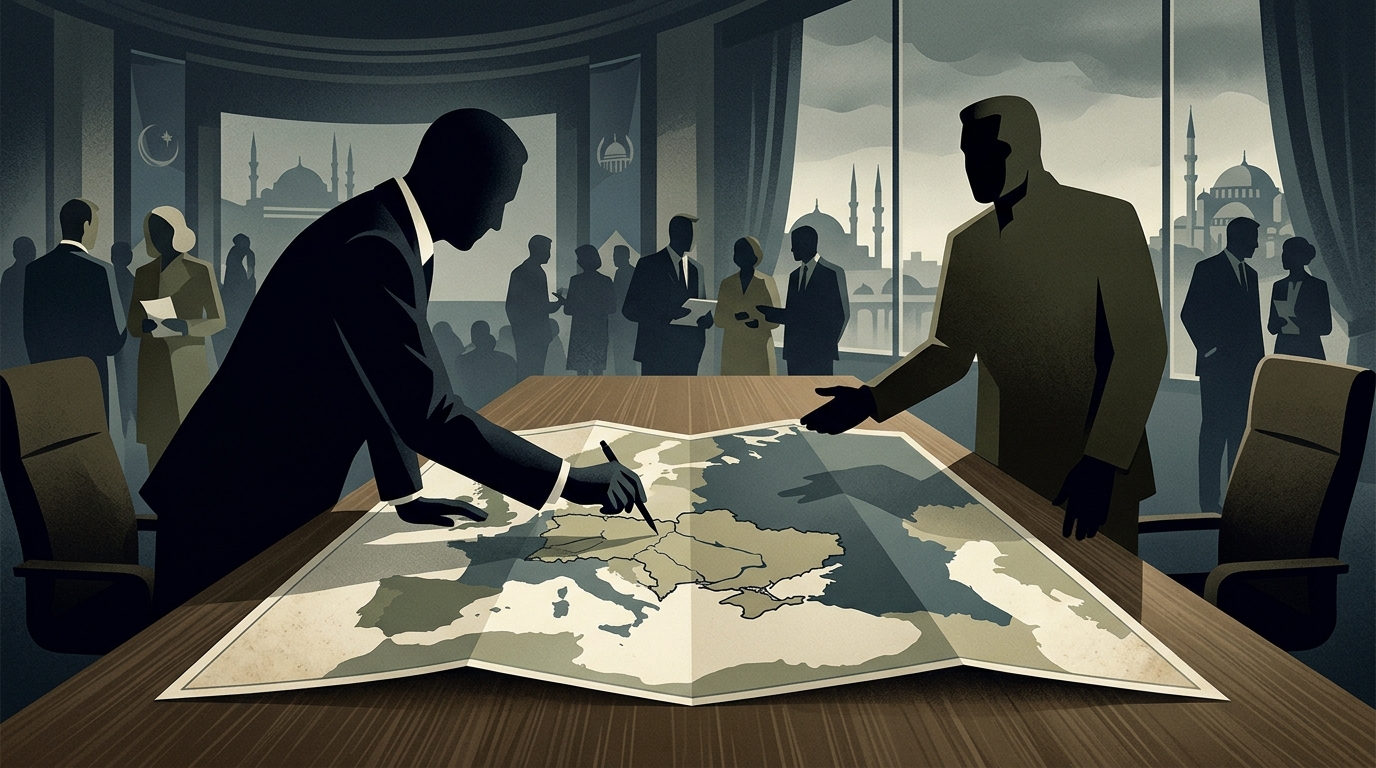
In the geopolitical landscape of July 2026, news of a telephone conversation between Russian President Vladimir Putin and his American counterpart Donald Trump is not merely a diplomatic update; it is a seismic event rearranging the power balances across Eurasia. Just days before the critical NATO Summit in Ankara, the two leaders chose to bypass traditional institutional channels to discuss the "thorn" of the war in Ukraine—a move sending shivers through European capitals and Kyiv alike.
The Return of 'Strongman' Diplomacy
Donald Trump’s approach to the Ukrainian conflict has always centered on the concept of "the deal." In his second term, the American president appears to be accelerating efforts to end hostilities, even if it means alienating his closest European allies. The communication with the Kremlin signals a definitive shift from the policy of "unwavering support" for Kyiv toward a policy of "realist compromise."
According to Kremlin sources, the discussion lasted over an hour and focused on a ceasefire framework that could be presented as a fait accompli at the Ankara Summit. Trump appears to be pushing for a model that "freezes" the conflict along current front lines—a proposal Moscow views with interest, as it would allow Russia to maintain control over occupied territories, at least temporarily. This direct line of communication undermines the collective bargaining power that NATO has attempted to maintain since 2022.
The Ankara Factor and the NATO Summit
The choice of Ankara as the summit venue is no coincidence. Recep Tayyip Erdoğan has successfully positioned Turkey as the ultimate mediator—a bridge between the West and Russia. The Putin-Trump call provides Erdoğan with the necessary diplomatic capital to present Turkey as the only venue where "Great Peace" can be brokered. For Turkey, this is a moment of triumph, validating its balanced (and often controversial) foreign policy.
However, this strategy creates a profound rift within the Alliance. Baltic states and Poland view this direct communication as a form of "betrayal" of NATO’s core principles. For Warsaw and Tallinn, any agreement made without Ukraine's full participation and without the total withdrawal of Russian troops is a recipe for future instability. The Ankara Summit is expected to be the most contentious in decades, with Trump pushing for a reduction in military aid and Europeans struggling to salvage what remains of transatlantic unity. The specter of a "new Yalta" looms over the proceedings.
Kyiv Facing an Impasse
For Volodymyr Zelenskyy’s government, the news of the Putin-Trump call is a nightmare scenario. Ukraine, which relies almost entirely on American military and financial aid, faces the prospect of being forced into a compromise that amounts to territorial mutilation. Trump’s previous assertions about "ending the war in 24 hours" are now taking shape, but on terms that Kyiv finds unacceptable. The leverage has shifted; the threat of a funding cutoff is the sword of Damocles hanging over the Ukrainian presidency.
Ukraine’s strategy is now shifting toward building a "European front" that could continue support even without the United States. However, with Germany and France grappling with their own internal economic and political crises, Europe’s ability to substitute for American power remains highly questionable. The telephone call between the two leaders highlights a bitter reality: Ukraine's future may be decided in an office in Mar-a-Lago or the Kremlin, rather than on the battlefields of Donbas. The agency of the Ukrainian people is being squeezed by the gravity of superpower interests.
Geopolitical Implications and the Day After
If the Trump-Putin rapprochement leads to a formal deal, the world of 2027 will be radically different. Such a development would signify the acceptance of "spheres of influence" as a legitimate tool of international politics, returning diplomacy to an era of great power partitioning. Furthermore, it would send a loud message to China regarding the West’s resolve—or lack thereof—to defend national sovereignty against revisionist powers.
The Ankara Summit will be the final test. Will NATO manage to impose a common line, or will we witness the official beginning of a new era where bilateral deals between superpowers override multilateral alliances? What is certain is that the road to Ankara now passes through a new, controversial "peace" that may prove more dangerous than the war itself. The global order is no longer being maintained; it is being renegotiated in real-time.




