

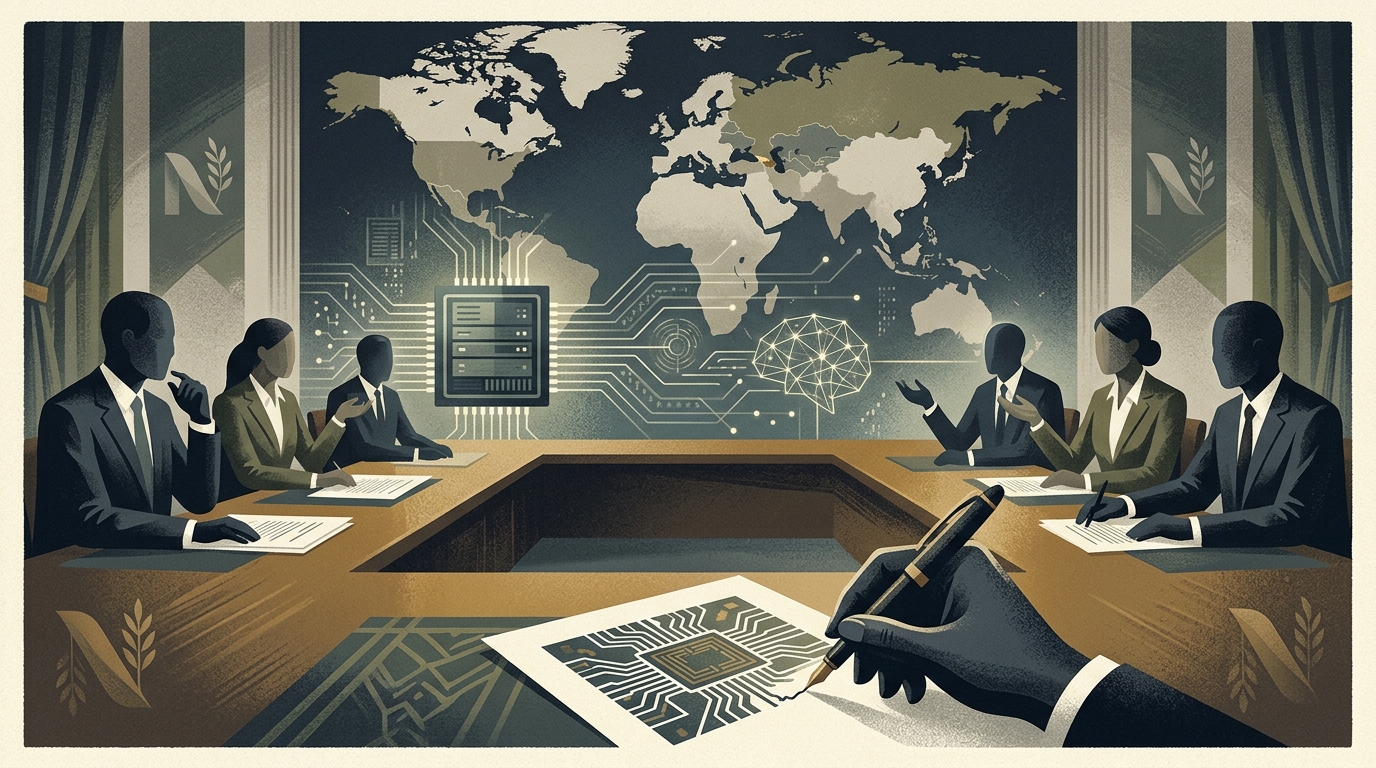
For decades, geopolitical power was measured in weapons, loans, and energy access. In the age of Artificial Intelligence, a new and highly valuable "currency" is emerging: advanced chips. According to a Wall Street Journal report, the Trump administration used access to Nvidia’s technology as the critical incentive to persuade Armenia to move forward with a historic peace deal with Azerbaijan.
'Chip Diplomacy' in the Caucasus
When the Trump administration took office in early 2025, it prioritized resolving the South Caucasus conflict, which has spanned over 35 years and claimed 40,000 lives. American negotiators realized that Armenian Prime Minister Nikol Pashinyan needed a tangible "peace dividend" to offset the domestic political cost of the agreement.
The solution came through Project Firebird. Washington offered Armenia export approval for tens of thousands of advanced Nvidia GB300 processors—technology that was previously out of reach for Yerevan. The approval was granted immediately following the preliminary peace agreement in August 2025.
Project Firebird: A $5 Billion Data Center
The result of this deal is taking shape in the city of Hrazdan. This is the site of Firebird, a massive data center with a budget exceeding $5 billion. Its specifications are formidable:
- Installation of 70,000 Nvidia AI servers by the end of 2027.
- Utilization of Grace Blackwell and Vera Rubin architectures.
- Total computing power of approximately 300 MW.
Nvidia CEO Jensen Huang described the project as the first step in connecting the region to the global AI economy.
Infrastructure and Strategy
The deal was not limited to chips. It also includes the "Trump Route for International Peace and Prosperity," an infrastructure corridor (railways, roads, pipelines) connecting Azerbaijan to the Nakhchivan enclave through Armenian territory. Construction is slated to begin in early 2027.
Washington’s logic is clear: the more the region's economies are linked to high technology and the US, the higher the cost of returning to hostilities. Chips are no longer just components; they are strategic tools for peace.





