

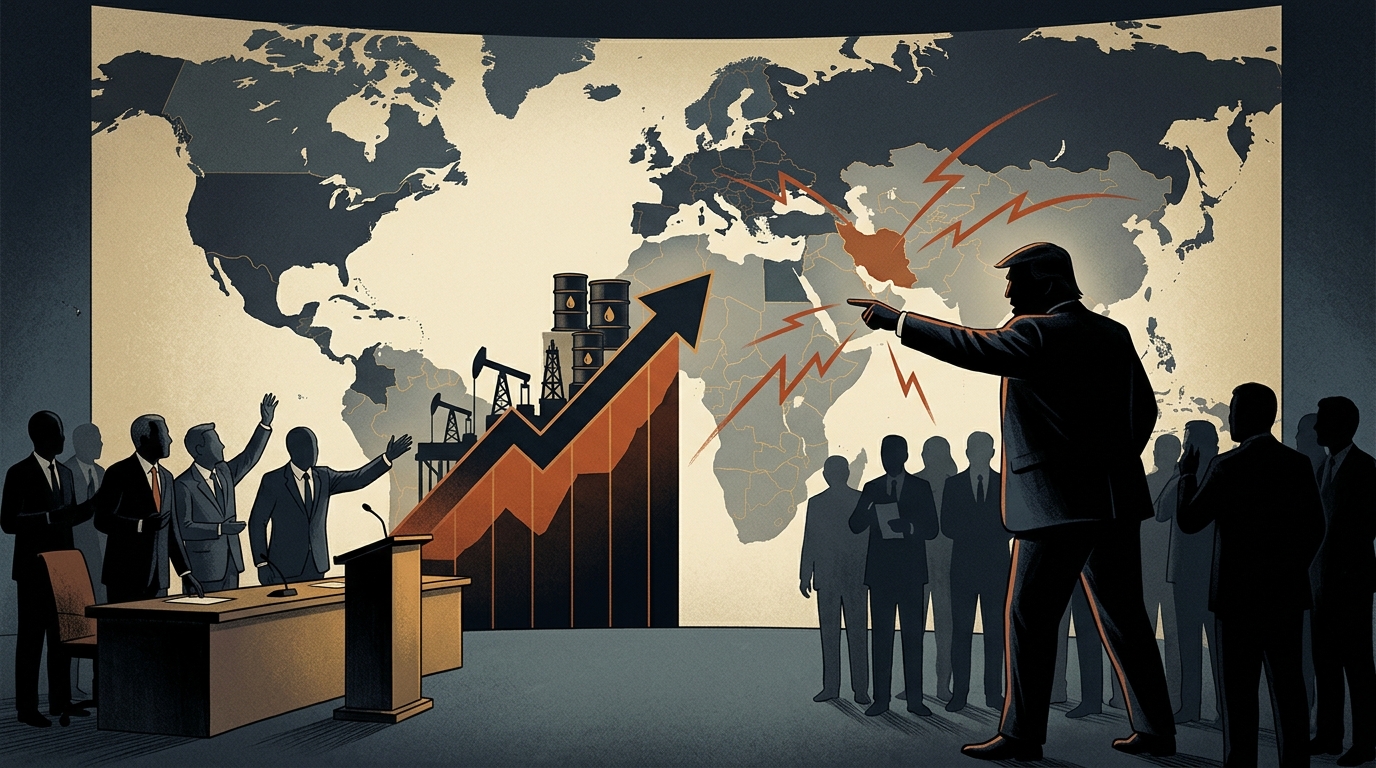
In a period where global geopolitics increasingly resembles a minefield, the recent statements by U.S. President Donald Trump have added fuel to the fire of an already volatile Middle East. The phrase "nothing will remain," used by the White House resident regarding the possibility of an Iranian provocation, is not merely verbal hyperbole but the official reinstatement of the "maximum pressure" doctrine in an even more aggressive form. The catalyst was a murky drone incident near the Barakah nuclear power plant in the United Arab Emirates, an event interpreted by Washington as a direct threat against its strategic partners in the region.
The Rhetoric of Total Destruction
Trump's return to power in 2025 brought a radical shift in U.S. foreign policy. Unlike the diplomatic approach of previous years, the current administration appears to favor "brinkmanship." The warning that Iran will face the total elimination of its infrastructure if it dares to strike American interests or allies has sent shivers of concern through European capitals. Analysts point out that this rhetoric aims to intimidate Tehran; however, the risk of a miscalculation is higher than ever.
Iran, for its part, denies any involvement in the UAE incident, calling it a "provocation aimed at justifying an attack." Nevertheless, the deployment of sophisticated AI-driven drones by forces aligned with Tehran has changed the landscape. The ability of these unmanned aerial vehicles to fly under radar and target critical energy infrastructure makes the threat tangible and immediate, forcing the U.S. to bolster its military presence in the Persian Gulf.
Market Reaction and "Black Gold"
Predictably, oil markets reacted instantaneously. Brent crude prices surged by over 4% within hours of Trump’s remarks, as investors fear a potential disruption of flow through the Strait of Hormuz. The Strait remains the most critical transit point for global energy trade, and any military engagement there could send prices into triple digits, threatening the global economic recovery.
According to financial analysts, the current rise is not just due to fear of supply shortages but also the so-called "geopolitical premium." Markets are now pricing in the possibility of a full-scale war. Furthermore, the use of AI algorithms in stock and commodity trading accelerates these fluctuations, as systems automatically react to keywords like "nuclear," "Iran," and "destruction," creating a vicious cycle of instability.
Artificial Intelligence and Modern Conflict
A unique aspect of this crisis is the role of technology. In the UAE incident, the drone's interception was made possible by a new AI-based defense system that identified the drone's signature within seconds. Washington has invested billions in "autonomous defense," arguing that this is the only way to protect energy infrastructure from asymmetric threats. However, the same technology is being utilized by the opposing side to execute precision strikes.
The international community watches with bated breath. While Trump insists on a hardline stance, China and Russia are calling for restraint, viewing the American posture as an attempt to impose total hegemony over energy markets. The question remains whether the rhetoric of "total destruction" will serve as a deterrent or if it will become the self-fulfilling prophecy of a global conflict that no one can truly win.





